Master Strategic Order Flow Trading
by Mike Valtos
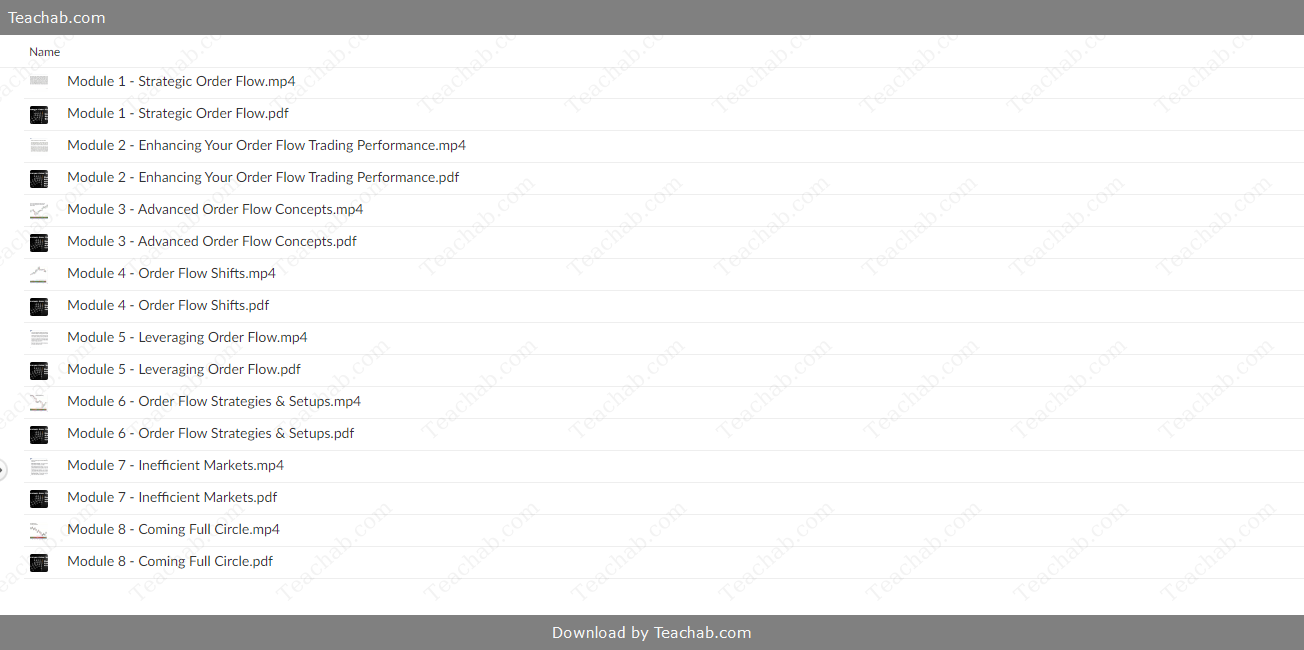
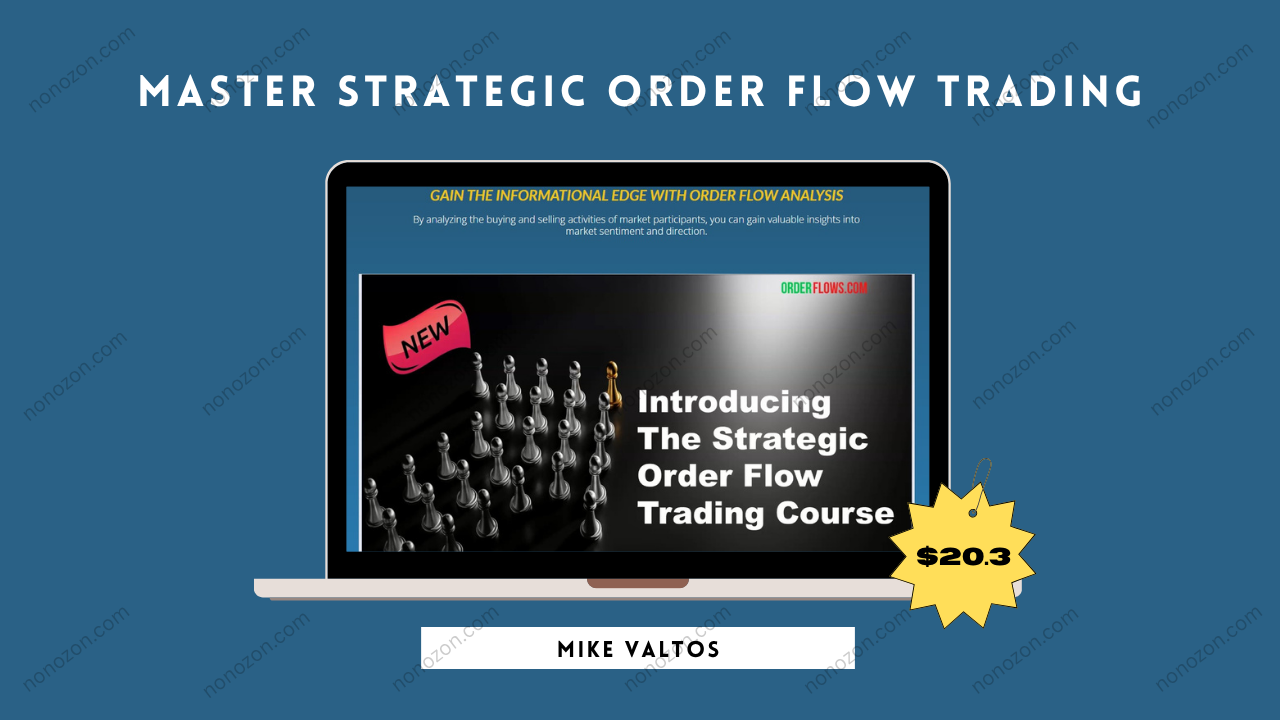
Master Strategic Order Flow Trading Review by Mike Valtos
Check proof of content here:
In today’s fast-paced trading environment, truly understanding the inner workings of market mechanics is critical for success. Mike Valtos’s Master Strategic Order Flow Trading course offers a deep dive into the complexities of order flow trading, providing traders with a structured methodology to analyze market dynamics, participant behavior, and the psychological factors driving price movements. Focusing on real-time data and actionable tactics, Valtos’s program equips both beginners and experienced traders with the skills to navigate complex markets confidently.
Unlike traditional trading methods that rely on lagging indicators and price charts, order flow trading emphasizes the actual buying and selling activity shaping market movement. By mastering order flow, traders gain a unique perspective into the forces that influence market sentiment, enabling more timely and informed decisions. This review explores the course’s core concepts and practical strategies that can transform conventional trading approaches into groundbreaking systems.
Key Concepts of Order Flow Trading
To begin mastering order flow trading, traders must first understand its foundational principles. These concepts illuminate the buying and selling activity behind market prices, providing clearer insight into market intentions.
Understanding Order Flow Dynamics
Order flow dynamics represent the continuous stream of buy and sell orders flowing through the market. Much like a river’s current, these orders reflect the intentions and sentiment of market participants. By monitoring the order book—a digital ledger showing current buy and sell orders—traders can discern whether the market is bullish or bearish.
Key Dynamics to Watch:
Market Depth and Liquidity: The Depth of Market (DOM) reveals pending orders at various price points, highlighting areas of significant buying or selling interest. High liquidity generally means tighter spreads and smoother trade execution.
Volume Analysis: Volume tracks the number of contracts traded over a given period. Elevated volume at specific price levels often signals strong buying or selling pressure.
Time and Sales Data: Known as the 'tape,' this real-time record of executed trades helps identify buying momentum and market shifts.
Imbalances: Disparities between buy and sell orders may signal potential reversals. For example, a buy imbalance indicates aggressive buying support, while a sell imbalance suggests resistance.
Mastering these dynamics sharpens traders’ ability to predict price moves and respond proactively.
Instant Download Master Strategic Order Flow Trading by Mike Valtos
The Importance of Market Imbalances
Market imbalances reveal real-time supply and demand disparities, acting as early indicators of price movements. Similar to a seesaw, prices tend to move toward equilibrium when an imbalance occurs.
Aggressive buying exceeding selling can drive prices upward. Excess sell orders may trigger sharp price declines.
Detecting Imbalances Involves:
Monitoring executed trades to uncover buying or selling surges.
Using volume profiles to identify critical price levels.
Conducting sentiment analysis to anticipate market reactions.
Effectively leveraging imbalances can provide traders with timely entry and exit opportunities.
Instant Download Master Strategic Order Flow Trading by Mike Valtos
Differentiating Buy and Sell Orders
Grasping the distinction between buy and sell orders is crucial for interpreting market sentiment. Buy orders reflect demand; sell orders indicate supply.
Psychological Edge:
A surge in executed buy orders may suggest bullish sentiment. Increased sell orders alongside declining prices often indicate bearish conditions.
Key Analysis Points:
Aggregate Volume: Pinpointing where most buying or selling occurs helps identify support and resistance.
Order Shadowing: Tracking institutional or "smart money" activity offers clues about market direction.
Frequency Patterns: Recognizing recurring order execution patterns reveals prevailing market moods.
This insight allows traders to adopt a more strategic and informed market engagement approach.
Strategies for Effective Order Flow Trading
Order flow trading strategies capitalize on real-time market participant behavior to seize trading opportunities. Flexibility and rapid decision-making are key.
Short-Term Trading Techniques
Footprint Charts: Visualize executed trade volumes at specific prices to assess buying and selling pressures.
Imbalance Recognition: Quickly spotting significant buy/sell disparities can signal imminent price moves.
Time and Sales Monitoring: Watching large trades reveals potential institutional activity.
Combining with Technical Analysis: Using order flow signals alongside technical indicators improves decision accuracy.
Risk Management: Clear stop-loss and take-profit rules maintain discipline during volatile conditions.
Long-Term Trading Approaches
Understand Market Participants: Align strategies with behaviors of institutional and retail players.
Identify Points of Control: Key volume-based support and resistance zones.
Analyze Sustained Imbalances: Detect long-term supply and demand trends.
Track Delta Shifts: Monitor net buying/selling pressure for broader trends.
Incorporate Trend Analysis: Align with market momentum for better timing.
Patience: Avoid overreacting to short-term volatility.
Scalping with Order Flow
Scalping demands rapid entry and exit on small price changes by leveraging order flow:
Use real-time order flow data to act quickly.
Detect momentum shifts for fast trades.
Utilize footprint charts to guide precise entries.
Spot immediate imbalances indicating short-term opportunities.
Continuously refine strategies through experience.
Valtos’s emphasis on employing these strategies underscores how understanding market order flow can lead to effective scalping.
Tools and Software for Order Flow Analysis
Equipping oneself with the right tools for order flow analysis can dramatically enhance trading performance. Here are several recommended platforms and software that specialize in order flow analysis:
Recommended Trading Platforms
- NinjaTrader
- Features: Advanced charting tools, robust market depth feature (DOM), and customizable strategies.
- Pricing: Starts at $1499 for a lifetime license or $99 per month.
- MotiveWave
- Features: Order flow suite, advanced charting, volume profile analysis, and customizable indicators.
- Pricing: Subscription ranges from $24 to $159 per month.
- Quantower
- Features: Multi-asset trading with a user-friendly interface and synchronous connections.
- Pricing: Ranges from $40 to $100 per month.
- ATAS
- Features: Focuses on order flow and volume analysis with detailed footprint charts.
- User Experience: Intuitive design catering to both novice and expert traders.
- Orderflows Software
- Features: Real-time market analysis and charting capabilities integrated with NinjaTrader.
- Interface: Minimalist approach to avoid clutter, enhancing decision-making clarity.
- Trader Dale’s Order Flow Software
- Features: Visualizes trading orders and identifies institutional activity with comprehensive training included.
- Pricing: Lifetime access for $497.
By leveraging these tools, traders can enhance their analysis capabilities, ultimately leading to improved trading outcomes.
Essential Order Flow Indicators
Incorporating these indicators enhances analysis:
Footprint Charts: Volume detail by price level.
Volume Profile: Volume distribution over price.
Depth of Market (DOM): Real-time order book view.
Market Delta: Net buy vs. sell pressure.
Power Trades: Highlights large, fast trades.
Advanced Charting Techniques
Utilize software with advanced visualization to improve market interpretation:
NinjaTrader: SuperDOM and order flow features.
Bookmap: Volume dots for real-time depth visualization.
Jigsaw Trading: Comprehensive tools and training.
Quantower: Broker integrations and advanced tools.
Analyzing Market Sentiment Through Order Flow
Order flow reveals market sentiment beyond price charts:
Identify trends via trading volumes and order behavior.
Detect supply-demand imbalances for trading opportunities.
Use footprint charts to visualize live market participation.
Combine order flow with technical indicators for a comprehensive view.
This nuanced understanding helps improve timing and risk management.
Psychological Aspects of Order Flow Trading
Market psychology heavily influences trading outcomes:
Order flow reflects real-time sentiment shifts.
Relying on data reduces emotional decisions driven by fear or greed.
Recognizing behavioral patterns enhances anticipation of market moves.
Understanding these aspects strengthens trading discipline and strategy.
Impact of Major Players on Market Movements
Institutional traders influence markets with large orders:
Look for iceberg orders hiding true size.
Their activity affects liquidity and price momentum.
Tracking major players’ positioning reveals key support and resistance levels.
Valtos’s course emphasizes adapting strategies based on these insights.
Backtesting Order Flow Trading Strategies
Backtesting order flow trading strategies is paramount for evaluating effectiveness using historical data. This process allows traders to analyze how their strategies would have performed in different market conditions.
Importance of Backtesting
Evaluates Profitability and Risk: Understand how strategies perform under various conditions.
Builds Confidence: Encourages adherence to tested plans.
Stress Tests: Identifies weaknesses in extreme markets.
Sets Realistic Expectations: Prevents over-optimism.
Key Metrics for Evaluation
Certain key metrics help traders assess their strategies’ effectiveness during backtesting:
- Win-Loss Ratio: A high win-loss ratio suggests a successful strategy, but it should be analyzed alongside other metrics.
- Profit Factor: This indicates the ratio of total profit to total loss, with factors greater than 1.0 being potentially profitable.
- Maximum Drawdown: Measuring the largest decline in account balance helps assess risk exposure during adverse market conditions.
- Annualized Return: Provides a comparison against benchmarks or market indices, indicating expected yearly returns.
- Sharpe Ratio: Evaluates risk-adjusted returns, where a higher Sharpe ratio signifies better performance relative to volatility.
- Risk-to-Reward Ratio: Favorable ratios, such as 2:1, suggest excellent potential gains compared to risks.
Incorporating these metrics while avoiding common pitfalls ensures a comprehensive evaluation of order flow trading strategies, enhancing reliability and optimal returns.
Advanced Techniques in Order Flow Trading
As traders become more adept, employing advanced techniques such as reading the tape and implementing statistical models can broaden their analytical capabilities significantly.
Reading the Tape
Reading the tape revolves around real-time transaction monitoring. By prioritizing transaction size, speed, and volume, traders can decode market sentiment and predict price shifts.
- Components of Tape Reading:
- Time and Sales Data: Provides clues about trading activity and potential price actions.
- Order Book Analysis: Enabling traders to visualize liquidity concentration for optimum entry and exit points.
- Strategies for Tape Reading:
- Identify Imbalances: Spotting disparities between buy and sell orders allows traders to discern market direction and react accordingly.
- Monitor Speed of Orders: Recognizing urgency through the speed of orders can indicate imminent price changes.
By mastering tape reading, traders enhance their market understanding and cultivate more strategically informed trading decisions.
Implementing Statistical Models
Statistical models bolster order flow trading by generating predictive insights based on historical data and order trends.
- Regression and Time Series Analysis: Help uncover relationships and patterns in market behaviors, revealing predictive opportunities.
- Machine Learning Techniques: Advanced algorithms identify non-linear correlations, maximizing predictive capabilities.
- Risk Management: Utilizing statistical methods helps in assessing trade risk and implementing appropriate stop-losses and position sizing.
Combining Order Flow with Technical Analysis
Integrating order flow with technical analysis provides nuanced insights into market dynamics:
- Confirmation of Signals: Order flow data supports and confirms signals provided by traditional technical indicators, enhancing their reliability.
- Market Sentiment Insights: Gaining real-time insights into market sentiment augments the analytical process, confirming market behavior trends.
- Support and Resistance Levels: Combining order flow with technical analysis enables identification of strong support and resistance zones, enhancing trading strategies.
Valtos’s focus on these advanced techniques emphasizes how traders can navigate intricate market dynamics and refine their methods for successful trading outcomes.
Conclusion
Mastering order flow trading requires a commitment to understanding the granular mechanics underpinning market movements. Mike Valtos’s course Master Strategic Order Flow Trading serves as an essential framework, offering insight into dynamic market behavior, trading psychology, and the application of sophisticated strategies for both short-term and long-term trading.
Through the integration of advanced tools, backtesting methodologies, and a profound comprehension of market sentiment, traders stand equipped to seize opportunities presented by order flow dynamics. This holistic approach not only fosters improved trading performance but also cultivates enduring success within the ever-evolving world of financial markets. Aspiring traders who seek excellence would find immense value in the lessons articulated in Valtos’s program, propelling them toward sustainable trading mastery.