
Mole Richardson Rolling Spotlight 3D Model
by PRO EDU
Review of Mole Richardson Rolling Spotlight 3D Model by Pro Edu
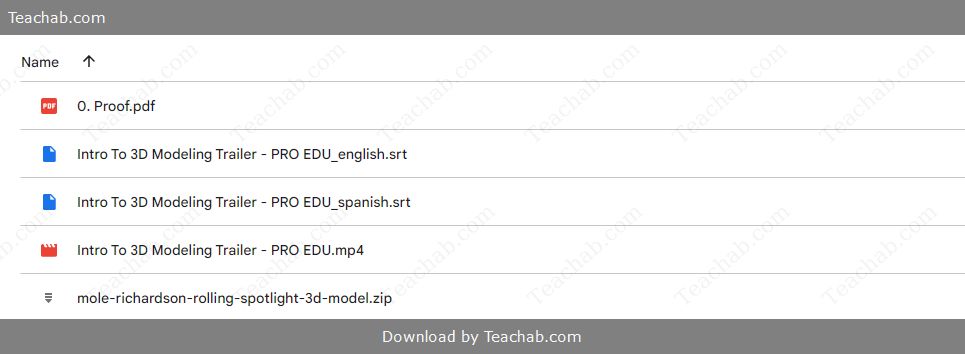
Check proof of content here:
In the dynamic realms of photography and cinematography, tools that empower visual precision and creativity are indispensable. The Mole Richardson Rolling Spotlight 3D Model by Pro Edu exemplifies this ideal, merging historical charm with modern digital craftsmanship. This model is a digital homage to the iconic lighting instruments of cinema, rendered with high fidelity and purpose-built for professionals and hobbyists alike. Known for their storied legacy in the film industry, Mole Richardson continues to inspire through this meticulously crafted asset, which bridges the analog world of lighting with the digital age of storytelling.
This review takes an in-depth look at the model's form, technical merit, and its broader value in both 3D visualization and virtual production environments.
Design and Visual Impact
The Rolling Spotlight 3D model captures the spirit of classic filmmaking while embracing the sophistication of contemporary design. With an unmistakable vintage silhouette, the spotlight evokes the essence of golden-era Hollywood film sets. Despite its nostalgic look, the model is rich in practical design features, such as its fully modeled rolling base, which reflects the functionality of real-world studio gear.
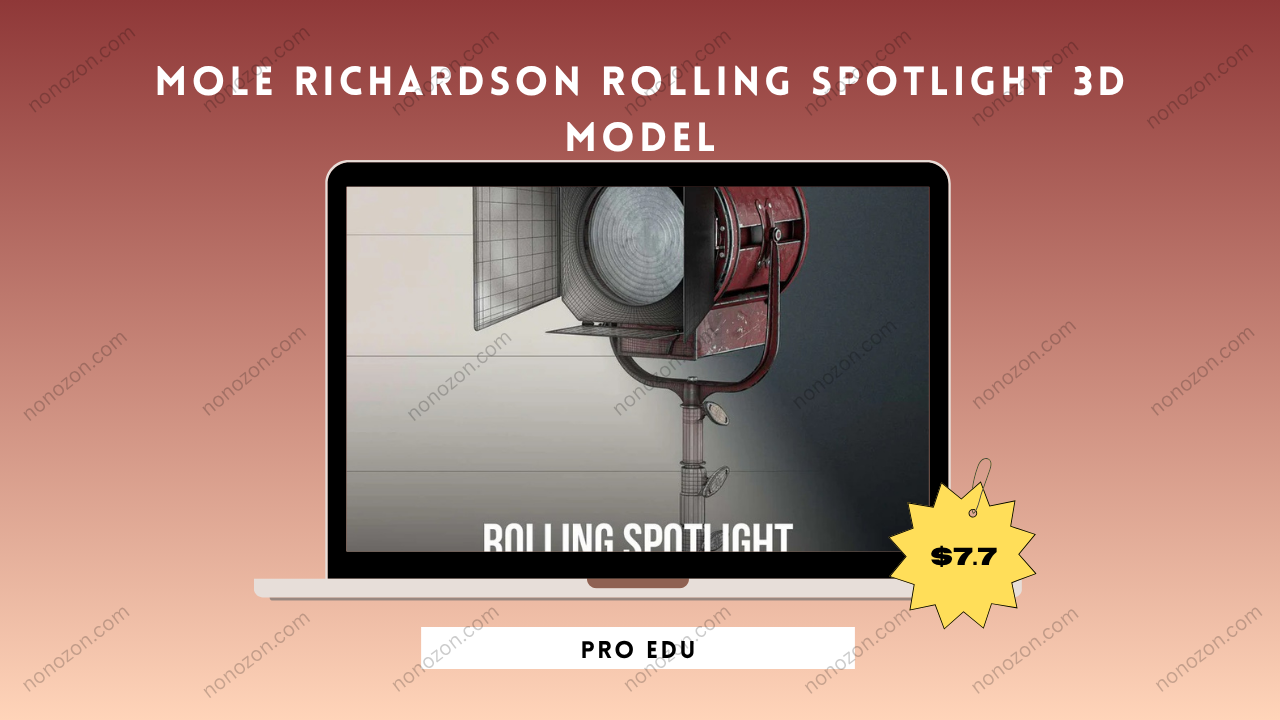
With a dense polygon count of 45,776, the model showcases extraordinary surface detail—from the smooth curvature of its lens housing to the functional-looking knobs and joints. This makes it a visually compelling piece not only for wide-angle shots but also for close-up renders.
Aesthetically, the model excels thanks to its high-resolution Physically Based Rendering (PBR) texture maps, available in 4K and 8K. These textures bring out the realism in materials—metallic surfaces, aged paint, and reflective glass—that react convincingly under varied lighting setups. Subtle shadows and light flares further enhance the cinematic allure when viewed from multiple angles.
Customizable parameters such as material colors and finish types give artists full control to tailor the light’s appearance to suit specific scenes. Whether you're designing a noir-style backdrop or a sleek modern set, the Rolling Spotlight can be retextured and recolored to harmonize with your visual theme. It’s not merely a lighting model; it's a character-rich visual prop with storytelling value built in.
Technical Precision: Polygons and Texture Quality
Technically, the Mole Richardson Rolling Spotlight stands out for its detailed geometry and high-quality texture mapping. The 45,776-polygon count is well-balanced—high enough to convey intricate realism, but optimized enough for smooth use in professional rendering environments. This level of detail allows users to produce extreme close-ups without sacrificing the integrity of the model’s structure.
Compared to low-poly alternatives often used in gaming or mobile applications, this model is clearly engineered with cinematic rendering and high-resolution visualization in mind. Every nut, hinge, and vent is faithfully represented, giving a tactile, industrial authenticity that enhances realism in any 3D scene.
The PBR textures elevate the model even further, simulating real-world material behaviors. Light reflects off the metal casing with a believable sheen, while the spotlight’s lens mimics authentic glass transparency and refraction. The inclusion of both 4K and 8K maps ensures flexibility—whether for faster preview rendering or final high-end output.
This attention to surface fidelity and light interaction places the model among the best in its class. It’s ideal for VFX, virtual production, product visualization, or photorealistic concept art. For digital artists seeking assets that don’t just fill space but enrich the frame, the Mole Richardson Rolling Spotlight is a prime candidate.
Instant Download Mole Richardson Rolling Spotlight 3D Model by PRO EDU
Visual Appeal in Photography
The visual allure of the Mole Richardson Rolling Spotlight 3D model isn’t limited to its impressive technical attributes—it serves as a vital instrument for breathing life into visual compositions. In photography, where lighting often dictates mood, depth, and viewer engagement, this model proves to be more than a prop—it becomes a creative partner.
Effective lighting is often the defining element that transforms a basic image into a compelling work of art. With its faithful recreation of vintage Hollywood-style illumination, the Rolling Spotlight brings a timeless cinematic flair to still photography. It is particularly powerful in portrait work, where directional lighting shapes contours, enhances textures, and creates a sculptural quality to faces and features. Subtle gradients of light and shadow can elevate a portrait from simple documentation to expressive storytelling.
What truly sets the model apart is its adaptability. Seasoned photographers understand how pivotal it is to direct light intentionally. The customizable elements of the spotlight—such as beam focus and tonal warmth—allow artists to fine-tune their lighting environment to match the narrative tone. Whether aiming for soft, romantic highlights or stark, moody shadows, the Rolling Spotlight can be adjusted to serve a wide emotional range.
Scientific research into visual storytelling affirms that lighting contrast influences emotional interpretation. High-contrast imagery can evoke suspense or tension, while softer lighting often communicates calm or vulnerability. The Rolling Spotlight, with its nuanced control and detailed textures, makes it easy to harness these effects. It becomes not just a utility but an emotional conduit.
Imagine the spotlight illuminating a solitary jazz singer in a dim room, casting rich shadows that convey solitude and soul—or a model in vintage attire with light spilling across her frame in an homage to 1940s noir cinema. These scenarios exemplify the narrative potential this model enables. By blending photorealistic accuracy with dramatic flexibility, the Mole Richardson Rolling Spotlight allows artists to shape their stories with precision and passion. It's not merely a light source—it’s a catalyst for visual expression that lingers in the imagination long after the final frame.
Customization Options
In the realm of 3D modeling, the ability to customize a model’s aesthetics is paramount for creative flexibility. The Mole Richardson Rolling Spotlight 3D model exemplifies this principle with a variety of available customization options that empower users to modify the spotlight to their specific needs.
One of the standout features of this model is its visual adaptability. Users can modify the color scheme, effectively allowing them to alter the spotlight's appearance to fit the theme of their project. Whether for vibrant advertising campaigns or somber film scenes, this customization caters to diverse artistic expressions. Imagine a classic cinematic shoot, where the spotlight emits a warm golden hue, instantly conjuring images of nostalgic warmth and illumination; or an intense sci-fi scene with cold, stark lighting that brings out metallic textures the customization options are endless.
Additionally, texture application can be customized, adjusting surface properties such as glossiness, roughness, and metallic attributes. This level of control means that 3D artists can create surfaces that mimic real-world materials, enhancing photorealism while preserving the model’s integrity within various contexts. The simple act of changing a texture can radically alter the environment’s perception and emotional impact.
Moreover, customization affects the functionality of the 3D model in software environments. Adjusting the model’s settings according to software requirements means that independent creators can integrate the spotlight into their projects without encountering roadblocks. The potential to adjust both the aesthetics and practicality enhances user experience, offering a bridge between user creativity and technical application.
Ultimately, the Mole Richardson Rolling Spotlight goes beyond being a mere accessory in a scene. Its customization options provide artists with the tools to shape narratives with light as their medium illuminating stories from myriad perspectives while maintaining their own unique voice in the process.
Functionality and Application
At the intersection of functionality and application, the Mole Richardson Rolling Spotlight 3D model showcases its robust design as an essential tool for a multitude of visual storytelling mediums. From film productions to fine art photography, the spotlight enhances artistic expression while providing practical lighting solutions that are both versatile and effective.
The model’s realistic lighting simulation capability mirrors the dynamics found in actual film sets, which allows artists and filmmakers to recreate authentic lighting conditions in their projects. The spotlight’s vintage design plays an integral role, as it draws from historical aesthetics that resonate within many cinematic genres.
With a polygon count of 45,776, this model provides the level of detail needed for close-ups of lighting equipment. It enhances storytelling by ensuring that every scene, every shadow, and every ray of light appears realistic and engaging. Such detail is critical not only for artistic integrity but also for maintaining continuity in lighting effects across scenes in a production.
Practical applications extend beyond traditional movie sets or studio photography. The Rolling Spotlight can be employed in TV shows, commercial advertising, video game cutscenes, and even virtual productions where accurate lighting is essential. In advertising, the spotlight prominently outlines product features, drawing in audience interest and creating a memorable impression.
The model’s adaptability allows it to perform various lighting roles, whether as a key light to direct focus or as a fill light providing subtle enhancements without overshadowing the subject. Additionally, thanks to its industry-standard compatibility, the spotlight can be seamlessly integrated into larger projects, maximizing productivity and creative engagement for all users.
In conclusion, the Mole Richardson Rolling Spotlight 3D model serves as a powerful ally for those in the photography and cinematography worlds, proving that functionality does not have to compromise aesthetic quality. Instead, it leverages both, enabling creators to craft compelling visual narratives with ease and precision.
Use Cases in Cinematography
The world of cinematography is vast and varied, demanding the right tools to simulate realistic lighting and enhance visual storytelling. The Mole Richardson Rolling Spotlight 3D model shines brightly within this sphere, offering an array of compelling use cases that demonstrate its effectiveness as a lighting solution.
In film production, mastering light is crucial. The Rolling Spotlight’s realistic characteristics allow cinematographers to create scenes that evoke specific moods and emotions. For example, think of a suspenseful thriller where lighting highlights a character's face while obscuring other elements, thus drawing viewers into the tension of the moment. Such applications require precision and an understanding of how light affects narrative progression the Mole Richardson spotlight is a prime tool for achieving these effects.
For television shows, consistency in lighting across episodes is essential. The versatility of this model allows lighting directors to maintain visual continuity, which can contrast dramatically with the depth of scene exploration possible in this medium. By integrating the Rolling Spotlight into different sets, shows can offer immersive experiences that resonate with audiences, helping to grow viewer investment in the storyline.
Commercial advertising is another field where the spotlight excels. Here, compelling product showcases need striking light dynamics to capture interest. The ability to emphasize specific qualities such as texture, color, and depth using the model makes it an asset for marketing campaigns. Brands looking for artistic shots that engage consumers rely heavily on lighting to communicate their message and this model provides an excellent opportunity for high-quality renderings that reflect brand identity.
Moreover, in the realm of video games, the importance of narrative-driven cutscenes is growing while realistic lighting is vital to enhance immersion. The Rolling Spotlight can be integrated into game engines as part of the environment, ensuring that character interactions unfold in visually compelling ways.
Finally, as virtual production technologies advance, integrating models like the Mole Richardson spotlight into green screen environments has become seamless. Accurate lighting will blend physical and digital worlds, returning a realistic quality to the screen.
Overall, the applications for the Mole Richardson Rolling Spotlight 3D model in cinematography are both diverse and potent, solidifying its status as an essential component in modern visual storytelling.
Versatility in Studio Settings
The Mole Richardson Rolling Spotlight exhibits a remarkable degree of versatility, making it a must-have in various studio settings. Designed for adaptability, it caters to an array of lighting needs that diverse projects demand. The spotlight's lightweight construction offers ease of mobility, enabling cinematographers and photographers to arrange and adjust lighting angles effortlessly.
In studio photography, lighting must accommodate different shooting contexts. The spotlight serves not only as a main light source but can also function effectively as a supplementary tool. For example, its capabilities extend to managing light quality for set pieces or subject detail, shifting naturally between roles depending on the visual narrative needed. This conceptual play of positioning makes it well-suited for commercial shoots, fashion photography, or product visuals where lighting significantly influences perceptions.
Furthermore, the ability to adjust color temperatures and intensity diversifies its application in studio settings. A warm light can create an inviting ambiance, ideal for portraits, while a cooler light can enhance realism for product shots. Such extensive control makes the spotlight invaluable when catering to varied themes, enabling users to achieve desired emotional outcomes.
As a versatile storytelling prop, the Mole Richardson Rolling Spotlight adds depth to visual narratives in more profound ways. Lighting equipment has historically drawn attention or importance in a shot when placed intentionally. The model allows for easy integration into set designs, making it an excellent choice for directors aiming to bring emotion to pivotal scenes.
In creative scenarios, the aesthetically pleasing glow of the spotlight can effectively hint at thematic elements within a narrative framework. For instance, it can illuminate a character surrounded by darkness, symbolizing hope or clarity. The interplay of light and shadow amplifies storytelling and invites audience engagement, adding layers of meaning to each scene.
In conclusion, the Mole Richardson Rolling Spotlight provides an exceptional blend of practicality and artistry, embodying adaptability in studio applications while enhancing the story-holding power of light to elicit emotional responses effectively.
Role as a Storytelling Prop
Beyond its traditional function as a lighting tool, the Mole Richardson Rolling Spotlight serves as a powerful storytelling prop in both photography and cinematography. This unique role enhances narratives, adding layers of depth and nuance that elevate the viewer's experience.
The spotlight’s retro design, reminiscent of golden-age cinema, fits seamlessly into historical or thematic storytelling, establishing a sense of time and place. Using it as a prop allows creators to frame their compositions meaningfully. The rolling mechanism can be used dynamically not just for light but as a mobile source of visual interest that can engage the audience’s focus on specific elements of the frame.
When it comes to narrative scenes, light operates on multiple levels. It can symbolize hope, danger, or revelation and even serve to guide the viewer’s gaze towards significant actions or elements in a scene. The Rolling Spotlight embodies this potential, allowing directors and photographers to utilize its capabilities in establishing mood and sentiment through careful light placement.
For instance, the presence of dramatic light could suggest impending danger, or soft lighting might communicate intimacy and connection. These symbolic implications are heightened with the Rolling Spotlight because of the model's quality realism and adaptability; it can be tailored to create light that feels as if it has a character of its own, much like the narratives being told.
As a storytelling prop, the Mole Richardson Rolling Spotlight facilitates creativity and imagination, allowing narratives to unfold under its glow. The integration of light as a character creates an interactive experience for audiences, pulling them into the story while developing richer emotional landscapes around the characters’ journeys.
The spotlight, therefore, does not merely illuminate its light dances and articulates themes, emotions, and ideas that resonate and linger long after the credits have rolled. In this way, the Mole Richardson Rolling Spotlight attains a place of profound significance in the realms of both photography and cinematic storytelling.
Performance and Quality
The performance and quality of the Mole Richardson Rolling Spotlight 3D model are paramount in establishing its reputation in the world of digital assets. Created by PRO EDU, this model offers creators intricate details and realistic representations essential for high-quality image production.
With a substantial polygon count of 45,776, the spotlight brings forth the clarity and detail necessary for professional projects. Such intricacies ensure that nuances appear in close-up shots, enhancing realism, a quality that serves well in both film and photography environments. The detailed geometry intricately mirrors real-world lighting equipment, which helps maintain immersion in visual narratives.
The addition of PBR (Physically Based Rendering) textures available in 4K and 8K resolutions demonstrates the commitment to quality embedded within this product. These high-resolution textures allow users to create stunning visuals and maintain image integrity without pixelation during rendering. For professionals in the industry, this capability is a non-negotiable, as it ensures that their creations are polished, professional, and ready for any medium.
When considering the model's applicability across industries, the Mole Richardson Rolling Spotlight excels in practical applications while boasting a refined aesthetic. Professionals working on commercials, music videos, or live-action films will find the quality of this model contributes positively to the overall production value.
Moreover, its functionality facilitates ease of integration into numerous workflows, making it a preferred choice for cinematographers and photographers alike. The model's provision for customization options ensures that users can adapt the spotlight’s qualities to their specific artistic needs while maintaining optimal performance.
In summary, the Mole Richardson Rolling Spotlight 3D model encapsulates both performance and quality, making it a valuable asset for professionals aiming for high image fidelity. By integrating realistic features with optimal functionality, it stands as a worthy investment for creatives in need of reliable lighting solutions.
Image Production Capabilities
The Mole Richardson Rolling Spotlight 3D model’s image production capabilities are designed with meticulous attention to detail, catering to the demands of professional photographers and cinematographers. At its core, the model is crafted to facilitate the production of breathtaking visual content, capturing the precise qualities of light and shadow necessary for effective storytelling.
The 45,776 polygons adorning the spotlight contribute to a lifelike representation that enhances the viewing experience, an essential factor for any image production. By depicting its aged appearance, the model can transport users to iconic film sets, contributing to the creation of images that resonate with nostalgia and authenticity. This characteristic is vital for projects aiming to evoke emotions or hark back to a certain era in cinematic history.
The PBR (Physically Based Rendering) textures included with the model allow for remarkable depth and realism, reflecting off surfaces and interacting authentically with various lighting conditions. So, when light passes through the spotlight, its effects are dynamic. Photographers can utilize these qualities to create high impact images, enabling them to experiment with various lighting scenarios that accentuate their stylistic approach. Whether in a low-lit environment or under bright studio lights, the model’s response to light produces stunning imagery.
Additionally, the charming combination of rich textures and engaging geometry empowers users to produce versatile content, revealing artistic possibilities with just a tweak in angle or adjustment in light intensity.
This versatility extends into practical applications whether users are shooting editorial pieces, portrait photography, or cinematic shorts the Mole Richardson Rolling Spotlight allows for the exploration of creative lighting that not only highlights subjects but also adds narrative depth.
In essence, the Mole Richardson Rolling Spotlight 3D model stands ready to redefine image production quality in the studio, ensuring that creators possess the tools needed to realize their visions efficiently and effectively.
PBR Texture Benefits
The employment of PBR (Physically Based Rendering) textures when modeling in 3D brings a multitude of benefits that significantly enhance the final visual quality and performance of the Mole Richardson Rolling Spotlight 3D model. By leveraging the principles of PBR, artists can achieve photorealistic results that boost immersion and artistic interpretation.
- Enhanced Realism: PBR materials capture physical properties such as reflectivity, roughness, and subsurface scattering, allowing the materials to respond to light realistically. When applied to the Mole Richardson spotlight, this realism is crucial as it elevates its authenticity in a scene, making it indispensable for visual storytelling.
- Streamlined Workflow: The PBR process simplifies rendering, allowing artists to focus more on creativity than minor adjustments. With PBR, materials come pre-configured with realistic interaction properties, meaning less manual tweaking for accurate light simulation.
- Performance Optimization: PBR textures can be optimized for real-time rendering usage, which is necessary for interactive applications. Techniques like texture streaming or compression can help ensure smooth rendering without sacrificing visual quality.
- Cross-Platform Compatibility: A major advantage of PBR textures is their compatibility across various software systems, making them a superior choice when collaborating on projects. The ability to rely on consistent texture representations enables effective multi-platform development.
Comparatively, traditional texturing methods often struggle to replicate the intricate interaction between materials and light, resulting in less convincing visuals. PBR workflow fosters efficiency where artists can devote their energy to fine-tuning other creative parts of their design rather than battling about material properties.
In summary, the use of PBR textures within the Mole Richardson Rolling Spotlight 3D model offers unmatched quality and flexibility, enhancing both the artistic process and the final visual results. The benefits fundamentally reshape the user’s ability to achieve striking photorealism while streamlining the complex facets of 3D rendering.
Comparisons with Other 3D Models
When positioning the Mole Richardson Rolling Spotlight 3D model among its peers, it becomes evident that its performance, quality, and design elevate it above many other lighting models in the market. With a clear focus on quality, one can conduct a comparative analysis focused on multiple facets:
Feature | Mole Richardson Rolling Spotlight | Competitor A | Competitor B |
Polygon Count | 45,776 polygons | 20,000 polygons | 50,000 polygons |
Texture Quality | PBR (4K & 8K) | Non-PBR (2K) | PBR (4K) |
Historical Aesthetic | Yes | No | Partial |
Price | $29.00 (discounted) | $39.99 | $49.00 |
Realism in Lighting | High | Moderate | High |
From the perspective of polygon count, the Mole Richardson model finds itself in a strong position. Compared to many competitors, it outshines those with lower counts, which can lead to visual discrepancies when detailed scenes are rendered. The versatility of PBR textures in 4K and 8K further distinguishes it, allowing for dynamic and realistic light simulation that enriches one's visual output.
Additionally, the historical aesthetic of the spotlight is a defined advantage. It appeals to photographers and filmmaker professionals who aim for a traditional feel reminiscent of classic cinema, something that many competitors lack.
Moreover, when reviewing pricing strategies, the current sale price of the Mole Richardson Rolling Spotlight at $29.00 presents exceptional value. This affordability, combined with high-quality features, makes it an easily accessible investment for users who might otherwise spend considerably more on alternatives that do not bring the same level of performance.
In summary, the Mole Richardson Rolling Spotlight 3D model stands as an exemplary choice, highlighted by its technical strengths and price point compared to other models in the market while affirming its position as a valuable asset for serious professionals in photography and cinematography.
Technical Features
Delving deeper into the technical features of the Mole Richardson Rolling Spotlight 3D Model reveals the sophistication that supports its high-performance capabilities. Understanding these specifications is crucial for creatives looking to maximize their potential when using the model.
- Polygon Count: As previously mentioned, the model features 45,776 polygons that provide intricate detail necessary for immersive visual storytelling.
- Texture Quality: The support for PBR (Physically Based Rendering) textures in 4K and 8K resolutions allows it to achieve unparalleled surface realism, vital for compelling images.
- File Formats: Compatibility with industry-standard formats, such as FBX and OBJ, ensures that integration into various software environments is seamless. This feature is essential for maximizing usability across different projects and workflows.
- Ease of Use: Developed in Cinema 4D R18 Studio Pro Edition, the model is designed with accessibility in mind, ensuring that no additional plug-ins are necessary for operation, streamlining the user experience.
Software Compatibility
The Mole Richardson Rolling Spotlight 3D Model is designed to integrate exceptionally well with a variety of 3D rendering and animation software. With its focus on compatibility, the model caters to industry standards that professionals utilize in their workflows.
Some of the software environments compatible with this model include:
- Cinema 4D
- Autodesk Maya
- Blender
- 3ds Max
This extensive compatibility ensures that creators can integrate the spotlight effortlessly into different projects, maximizing the model's versatility and usability. Beyond traditional modeling software, the spotlight can also be effectively utilized in modern game engines such as Unity and Unreal Engine, which benefits from high-quality textures for realistic rendering in interactive environments.
Given the profuse options available, users can confidently select the Mole Richardson Rolling Spotlight for their 3D needs, assured that it operates efficiently across various platforms. This levels the playing field for content creators and allows for collaborative efforts where multiple artists can work cohesively without compatibility issues.
Furthermore, the attention to detail in its construction allows for a seamless transition between 3D modeling, animation, and rendering, establishing the Mole Richardson Rolling Spotlight as an essential tool in any creative professional's arsenal.
Lighting Adjustments and Manipulations
One of the standout features of the Mole Richardson Rolling Spotlight is its ability to facilitate lighting adjustments and manipulations that significantly enhance the quality of visual outputs. The spotlight’s design is rooted in its capacity to adapt to varying lighting conditions, making it an essential asset for professional photographers and filmmakers alike.
The spotlight allows users to manipulate lighting intensity, color temperature, and focus easily. For instance, using manual controls, members can adjust the brightness to create a specific atmosphere or adjust the angle to direct light onto the subject strategically. Such adjustments allow artists to effectively sculpt their images, managing the interplay between shadows and highlights.
Additionally, the design incorporates historical references, enhancing its visual character in studio settings. The aged appearance of the spotlight simulates years of use within film sets, providing authenticity to its representation. This connection to cinematography history is particularly appealing for artists aiming for a deep emotional connection with their audience.
The spotlight also has the capacity for softening light with diffusion attachments or reflectors. This gives users the flexibility to shape light dynamics, allowing for softer, flatter lighting or dramatic, focused beams that heighten contrast. Such versatility is crucial in cinematic setups, where mood and tone are conveyed through smart lighting choices.
In summary, the Mole Richardson Rolling Spotlight excels in providing users with the tools they need to alter and control lighting effectively. The interplay of various factors creates a holistic lighting approach, giving creatives the empowerment needed to produce stunning imagery that resonates on an emotional level.
Ease of Integration into Projects
The Mole Richardson Rolling Spotlight has been designed with ease of integration at its core, ensuring that it fits well into various project environments without disrupting workflow. Its compatibility with common 3D modeling software positions it as a reliable choice for professionals and enthusiasts alike.
From the moment users introduce the spotlight model into their projects, they will appreciate its user-friendly format. Artists can effortlessly incorporate the spotlight into pre-existing scenes by importing it in FBX or OBJ formats. This seamless transition alleviates the stress often associated with acquiring new assets, allowing users to focus on their artistic visions instead of dealing with technical hiccups.
Moreover, the absence of third-party plugins is another key feature; users can work with the spotlight effectively without needing additional tools, which simplifies the workflow. This ease of use is particularly beneficial for newcomers to 3D modeling who may already feel overwhelmed by the learning curve associated with complex software.
The Mole Richardson Rolling Spotlight is also versatile enough to serve various lighting roles whether as a primary light source, a fill light, or part of a broader setup without requiring extensive reconfiguration. Users can quickly adapt its positioning and settings according to their project needs, which contributes to efficient production timelines and effective creative processes.
Ultimately, the spotlight's thoughtful design is centered around the user experience, facilitating an engaging and efficient integration into projects across various applications. This accessibility ensures that both experienced professionals and novices can utilize the model’s capabilities to enhance their work and achieve remarkable results.
User Experience
The user experience surrounding the Mole Richardson Rolling Spotlight 3D model is marked by the quality of support, resources, and community engagement facilitated by PRO EDU. Creatives benefit from more than just an exceptional product; they encounter a supportive environment that enhances project outcomes and streamlines the creative process.
Feedback from Photographers and Designers
Feedback regarding the Mole Richardson Rolling Spotlight from photographers and designers has generally been promising, with many users highlighting its role in enhancing studio portraits and cinematic compositions. Users frequently celebrate the detailed craftsmanship of the model and its polished aesthetics, which resonate well with anyone needing a vintage look for their projects.
Photographers have reported that the model's PBR textures create stunning results, allowing them to achieve a level of realism that captivates audiences. Redefining lighting and shadow dynamics enables photographers to draw focus to specific areas, enriching the storytelling conveyed through their work.
Visualization experts echo this sentiment, experiencing the model's practical applications while implementing various lighting techniques in their projects. Users appreciate how the spotlight brings narratives to life by contributing to both emotional and visual stimulation, noting its capacity to elevate mood and intensify stories, particularly in portrait photography.
However, as with any advanced 3D model, there is a suggested learning curve associated with fully utilizing its capabilities. Some users emphasize the importance of familiarization with rendering techniques to maximize performance, which ensures that their creative intentions are met without compromise.
Overall, user feedback has reinforced the idea that the Mole Richardson Rolling Spotlight serves not only as a practical lighting tool but also as a transformative element in the artistic process, enabling users to inject their own visions and narratives into their work.
Learning Curve and Resources
The learning curve for the Mole Richardson Rolling Spotlight model provides an accommodating experience for users, irrespective of skill levels. Particularly geared towards creatives who possess a foundational understanding of 3D software, the model grants newcomers a chance to expand their proficiency while offering seasoned users opportunities for nuanced adjustments.
PRO EDU further enriches the user experience by providing access to extensive educational materials tailored toward different learning styles. Members enjoy a wealth of resources, including video tutorials and usage demonstrations that illustrate how to leverage the spotlight effectively in diverse scenarios. These tutorials not only offer step-by-step guidance for newcomers but also serve as inspiration for advanced users seeking to explore creative techniques.
Additionally, the model’s clarity in construction allows users to adapt and build upon their learning as they progress. Familiarity with modifying textures, light settings, and angles enhances their confidence and operational understanding over time. This approach cultivates a sense of mastery that encourages exploration and experimentation within 3D modeling practices.
Customer support provided by PRO EDU adds another layer of assurance for users navigating through their projects. The commitment to providing timely assistance directly contributes to a positive experience, fostering the assurance that help is readily available when needed.
In summary, the Mole Richardson Rolling Spotlight cultivates an encouraging learning environment, taking into account various user backgrounds while supporting their endeavors through valuable resources and responsive support. This contributes significantly to both skill development and overall satisfaction among users.
Customer Support and Documentation
An integral aspect of the Mole Richardson Rolling Spotlight 3D model experience is the responsive customer support and thorough documentation offered by PRO EDU. Users can anticipate a comprehensive support network that ensures they receive guidance throughout their journey.
Customer support is readily available during weekday hours, with an average response time of just three hours. Users can expect prompt assistance with inquiries, technical challenges, or guidance related to the model's implementation. Such responsiveness bolsters the overall user experience by minimizing frustration while maximizing productivity during project execution.
Additionally, the model’s documentation is curated to aid users in navigating through installation, usage, and various customization features optimally structured to accommodate different user needs. Members benefit from easy access to installation instructions and user guidelines, ensuring they can troubleshoot issues or explore capabilities effectively.
This emphasis on accessible resources is coupled with a commitment to ongoing improvement, as PRO EDU continuously updates their content to reflect evolving trends and technology within the field of 3D modeling. Offering free access to comprehensive materials through the PRO PLAN membership leads to a more empowered community of creators.
In conclusion, PRO EDU’s supportive infrastructure, timely customer service, and detailed documentation significantly enhance the user experience associated with the Mole Richardson Rolling Spotlight 3D model. This foundational support is geared towards making the creative process smoother, allowing users to focus on expressing their artistic visions.
Pricing and Value
The pricing and value of the Mole Richardson Rolling Spotlight 3D model hold considerable weight for those considering its adoption within their creative arsenal. Set at an accessible price point of $29.00, significantly reduced from the original $99.00, users will benefit from an attractive deal without compromising on quality.
Cost Analysis Compared to Competitors
When evaluating the cost of the Mole Richardson Rolling Spotlight against its competitors, several factors illuminate its value proposition. Other models in the 3D marketplace often range in price from $30 to $150 based on their features and quality.
For instance, consider the following competing models:
Model | Price | Polygon Count | Texture Quality | PBR Support |
Mole Richardson | $29.00 | 45,776 | PBR (4K & 8K) | Yes |
Competitor A | $39.99 | 20,000 | Standard (2K) | No |
Competitor B | $49.00 | 50,000 | PBR (4K) | Yes |
Here, it’s easy to see that while Competitor B offers a similar PBR support, the higher price point paired with a polygon count does not close the gap on the Mole Richardson Rolling Spotlight’s quality and design.
The reduced price of $29.00 after discount positions it as a competitive option that caters to budget-conscious artists while simultaneously maintaining high production standards ensuring that creators invest wisely with a look toward long-term versatility. For those who frequently utilize such assets, the discounted price is well worth the investment highlighting its viability as an essential tool.
Value for Professional Use
The Mole Richardson Rolling Spotlight delivers undeniable value for professional use, making it a wise investment for photographers, filmmakers, and designers. The combination of realistic design, high polygon count, PBR textures, and historical aesthetics clearly speaks to the demands of both traditional and modern creatives.
Professionals across industries recognize the potential of this model as it allows them to elevate their projects, enhancing the quality of imagery captured. The spotlight not only serves practical functions but also contributes aesthetically to the 3D environment, which is pivotal for artistic expression.
By enabling customizations, the model fosters a flexible working environment where professionals can adapt its surface qualities and lighting characteristics to their specific projects. This versatility aligns with the shifting landscape of creative demands that continually evolve.
Moreover, the model’s pricing reflects a conscious effort to accommodate diverse budgets, particularly for independent artists seeking high-quality assets without substantial financial outlay. For photography studios or filmmakers aiming to push their boundaries creatively, the Mole Richardson Rolling Spotlight becomes an indispensable component for achieving superior production quality.
Purchase and Accessibility
Accessibility is a crucial element when it comes to acquiring the Mole Richardson Rolling Spotlight 3D model. Optimized for ease of purchase, this model is available directly from the PRO EDU website.
Where to Buy
As noted earlier, the current sale price of $29.00 demonstrates PRO EDU’s commitment to making high-quality modeling assets available to a broader audience. Users can purchase this model on the official website and enjoy the benefits of having access to a versatile tool that can enhance their creative endeavors.
Furthermore, membership options exist for professionals looking for greater access to an extensive library of resources. For example, members of the PRO PLAN can acquire the Rolling Spotlight and over 100 other assets at no additional cost. This element of accessibility ensures that frequent users can cater to their diverse needs without prohibitive expenses.
Rental Options
For those exploring rental options, numerous companies in the United States provide availability for Mole Richardson lighting equipment. Mole Richardson Rentals, for instance, maintains an expansive inventory of lighting tools for the motion picture industry, allowing users to borrow high-quality equipment for temporary projects without the burden of outright purchase.
Companies such as 4Wall Entertainment also provide rentals specific to the Mole Richardson line, ensuring quick and easy access to equipment tailored for film and broadcast contexts. Such options are valuable for independent filmmakers or photographers who may not yet be ready to invest in purchasing high-end assets.
Licensing Details
When considering the usage of the Mole Richardson Rolling Spotlight model, users should also be aware of licensing details that may apply. Licensing terms can differ depending on the provider and type of use be it commercial, educational, or artistic. To navigate these terms effectively, it is advisable to consult documentation provided by retailers or rental companies directly.
Given the competitive landscape of 3D modeling products, having clear expectations set forth by clear licensing agreements ensures that creators can deploy their assets confidently in their projects while adhering to industry standards.
In summary, easy purchasing methods and varied options, including rentals and memberships, coupled with transparency regarding licensing details, solidify the Mole Richardson Rolling Spotlight 3D model as a versatile and accessible option for artists across different fields.
Conclusion
The Mole Richardson Rolling Spotlight 3D model by Pro Edu stands out as an extraordinary asset in the realms of photography and cinematography. Its design, technical specifications, functionality, and versatility culminate in a product that caters to a diverse range of creative endeavors.
Through meticulous attention to detail, the model’s polygon count and PBR textures bring authenticity to any project, while its customization options and ease of use cater to both professionals and enthusiasts alike. The accessible pricing further enhances its appeal as a valuable investment for high-quality projects.
Whether one is looking to ignite storytelling through light or elevate the quality of visual outputs, the Mole Richardson Rolling Spotlight serves as a powerful tool that bridges both the practical and artistic elements of 3D modeling. In this transformative landscape of visual storytelling, embracing this model beckons users toward creating powerful narratives that resonate with their audiences for years to come. With PRO EDU’s continued commitment to quality support and education, the journey into modern visual creation is brightened by the promise that such outstanding products offer.
Related products
Creating a Visual Identity Manual from Scratch by Gilian Gomes
by Creating a Visual Identity Manual from Scratch by Gilian Gomes
$39.00
$7.70