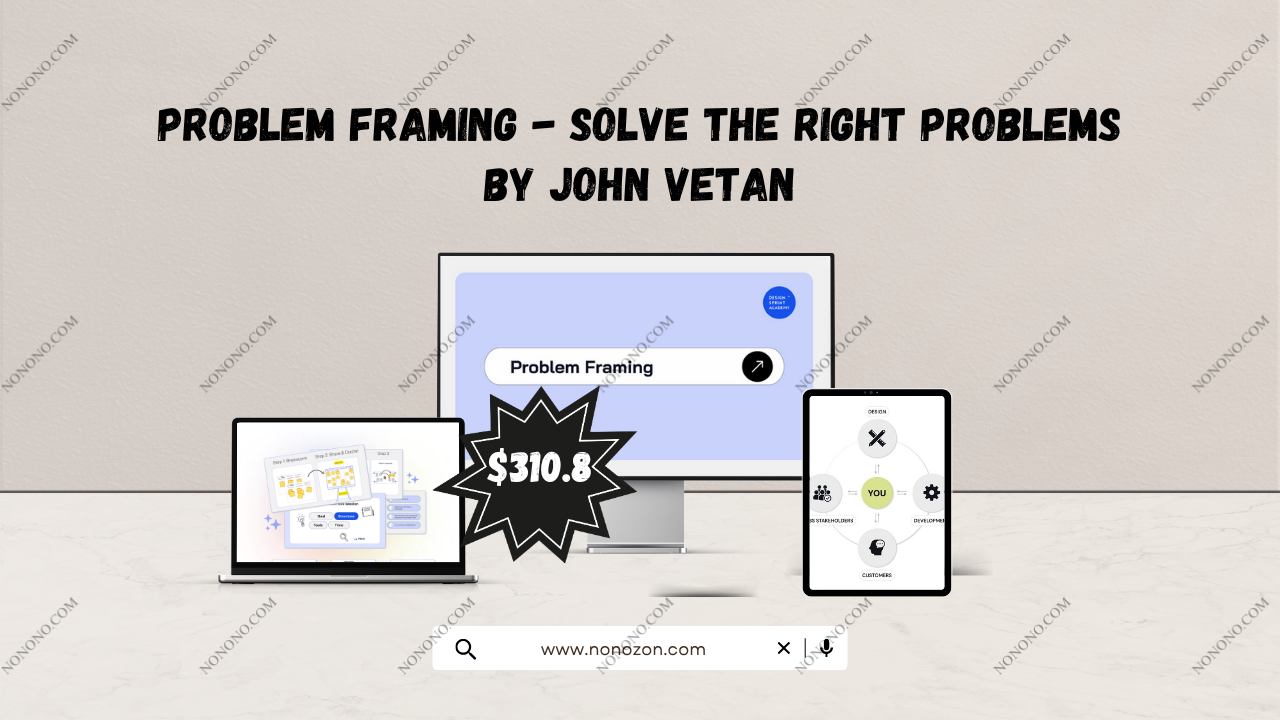
Problem Framing - Solve The Right Problems
by John Vetan
Problem Framing - Solve The Right Problems by John Vetan For Digital Download!
Check Proof of Content here:
Review: Problem Framing: Solve the Right Problems by John Vetan – A Comprehensive Overview
In the dynamic realm of product development, the ability to solve problems effectively—and more importantly, the right problems—has become a critical skill. John Vetan’s course, Problem Framing: Solve the Right Problems, stands out as a vital resource for product leaders who want to strengthen their discovery and decision-making capabilities. By blending facilitation strategies with practical discovery tools, this course empowers professionals to manage stakeholder complexities and align on core issues before jumping into solution mode.
This comprehensive review unpacks the course structure and methodology, shedding light on how it equips product managers to make better decisions and drive meaningful outcomes by focusing on what truly matters.
Course Structure and Key Modules
The course is structured into five focused modules spread across six hours of self-paced video content. Designed as a guided journey, each section builds on the previous to develop a solid foundation in problem framing and facilitation. Here's a breakdown of what each module covers:
1. Introduction to Problem Framing
The opening module establishes the core principle of the course: aligning on the problem before proposing solutions. Vetan presents scenarios that illustrate the common pitfalls teams face when misalignment leads them down the wrong path. This module sets the tone by urging participants to slow down and ensure that all stakeholders share a common understanding of the problem space before jumping into ideation.
By the end of this module, learners understand the importance of collaborative alignment—an essential step toward productive problem-solving in product organizations.
2. Identifying Opportunities
In this module, the course introduces structured methods to spot and prioritize challenges worth solving. Vetan incorporates frameworks such as the Cynefin Framework and the 4U Framework, which help participants assess complexity and urgency. These tools guide users in categorizing problems as simple, complicated, or complex—and in selecting appropriate strategies for each.
The emphasis here is on discernment: not all problems are created equal, and successful product leaders must learn to separate noise from opportunity. This structured approach allows teams to focus their energy on high-impact challenges.
3. Deep Dive into Fact-Finding
Next, the course transitions to the Fact-Finding phase, where participants learn how to gather meaningful insights about their users. This module highlights research techniques that help teams uncover real needs, rather than relying on assumptions.
By learning how to identify key customer segments and access relevant data, participants become better equipped to frame problems in ways that are grounded in reality. Vetan’s approach reinforces the idea that accurate, customer-centric insights are the foundation of meaningful product development.
4. Planning for Workshops
Preparation is key when bringing stakeholders together for collaborative problem-solving. This module focuses on how to prepare for successful framing workshops by collecting data, identifying key participants, and crafting inclusive environments where diverse perspectives can be shared.
Vetan emphasizes the importance of proactive engagement—understanding different stakeholder lenses and anticipating potential sources of bias. Participants learn how to set the stage for productive dialogue and build trust among contributors, ensuring that workshop outcomes are informed and actionable.
5. Conducting a Problem Framing Workshop
The final module ties all prior lessons together, guiding learners through the practical execution of a problem framing workshop. Vetan outlines best practices for facilitating effective conversations, aligning interests, and synthesizing input into a clear and actionable problem definition.
Participants leave with a proven methodology for crafting specific, measurable, and relevant problem statements—statements that become the bedrock for future ideation and development work. The emphasis on facilitation, structure, and stakeholder alignment ensures that teams avoid wasted effort on misaligned initiatives.
Resources and Community Support
A standout aspect of the course is the robust suite of resources and peer support available to participants. In addition to the video modules, learners receive access to facilitation templates, customizable workshop decks, and a global community of practitioners eager to exchange ideas and offer feedback.
These materials are designed for immediate application, enabling learners to integrate their knowledge into day-to-day practice. Whether you’re running your first workshop or refining an existing discovery process, the resources and community interaction serve as ongoing support mechanisms.
Real-World Outcomes and Testimonials
The real-world impact of Vetan’s course is backed by glowing testimonials from over 800 product professionals across industries. Many share stories of how problem framing helped them navigate ambiguity, reduce friction among stakeholders, and steer high-stakes projects toward more effective solutions.
A recurring theme in participant feedback is the ability to save both time and effort by solving the right problem the first time. From startups to large enterprises, product leaders have cited the course as instrumental in shifting from reactive tactics to deliberate, evidence-based decision-making.
Final Thoughts: A Strategic Investment in Product Leadership
To conclude, Problem Framing: Solve the Right Problems is more than just a course—it’s a strategic toolkit for modern product leaders. With its blend of facilitation methods, discovery frameworks, and real-world application, John Vetan has created a resource that can fundamentally shift how teams tackle complex challenges.
Participants come away not only with skills to structure better workshops, but with a mindset that values clarity, alignment, and intentionality. In a world where misdiagnosed problems can cost organizations dearly, this course provides a roadmap for getting it right from the start.
For anyone involved in product management, innovation, or strategy, investing in this course may be one of the most impactful decisions you make.