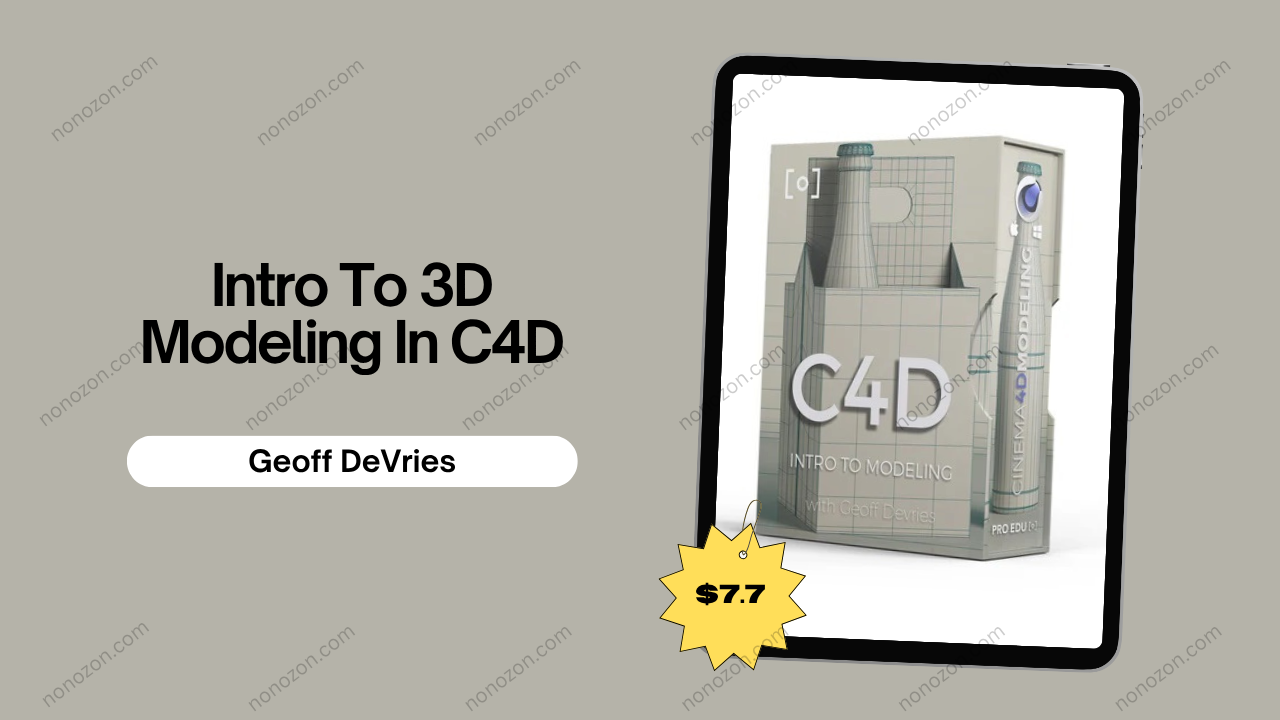
Intro To 3D Modeling In C4D
by Geoff DeVries
Introduction to 3D Modeling in Cinema 4D by Geoff Devries
Check proof of content here:
In the renaissance of digital creativity, where imagination meets technology, 3D modeling stands as a powerful method for bringing ideas to life. Whether in the realms of gaming, animation, or product design, mastering 3D modeling is akin to possessing a magic wand that can craft worlds, objects, and characters from mere thoughts. This is where the “Intro to 3D Modeling in Cinema 4D” course by Geoff Devries comes into the frame. This course promises to unravel the complexities of 3D modeling, providing a solid foundation for beginners who aspire to become proficient digital artists.
What distinguishes this course is its structured approach aimed at demystifying the Cinema 4D interface, a staple in professional 3D modeling. Geoff Devries, a seasoned expert in the field, transforms the learning experience into a journey filled with practical insights and engaging exercises. From the initial setup of the workspace to the intricacies of texturing and rendering, this course encapsulates every crucial element needed to embark on a successful career in the CGI industry. As we dive deeper, we will explore the course's key features, its comprehensive learning materials, and the benefits it offers to aspiring 3D artists.
Key Features of the Course
The “Intro to 3D Modeling in Cinema 4D” course is not just an educational offering; it's a gateway to a new realm of creativity and expression. One prominent aspect of this course is its structured content, designed to take learners through a systematic journey. The course comprises 49 instructional videos amounting to about 8 hours, covering everything essential one needs to know about 3D modeling. Think of this course as an architect's blueprint each module carefully laid out to build a strong and robust structure of knowledge.
Another standout feature is the hands-on projects integrated into the curriculum. Students are guided through the process of modeling a glass water bottle, not just learning the technical aspects but also applying their skills in real-world scenarios. This practical approach encourages learners to engage with the software, moving beyond theory to actual creation a bit like learning to ride a bike. At first daunting, but once the balance is found, the thrill of creating comes alive.
The course also excels in providing access to professional techniques. Devries draws from his extensive experience to impart insights into industry-standard methodologies. Learning about topology, texturing, and lighting elevates a novice’s ability substantially. As the saying goes, “You need to learn the rules like a pro, so you can break them like an artist.” This course strikes that balance beautifully, offering the essential foundational knowledge while also encouraging creativity.
Moreover, flexibility is an inherent aspect of the course methodology. With the capability to stream or download lesson content, students can learn at their own pace, making it accessible for those juggling busy lives. The course also aims to be inclusive, offering closed captions in Spanish, which expands its reach to a global audience, thereby reflecting the universality of creativity.
In summary, the key features of the course collectively provide a robust framework that ensures anyone stepping into the world of 3D modeling is equipped with both the tools and inspiration necessary for success. Whether you are looking to become a professional in the field or simply wish to explore your creative instincts, this course serves as a comprehensive launchpad.
Instant Download Intro To 3D Modeling In C4D by Geoff DeVries
Comprehensive Learning Materials
The success of any educational endeavor hinges on the quality of learning materials provided. In the case of the “Intro to 3D Modeling in Cinema 4D” course by Geoff Devries, the materials are rich and thoughtfully prepared. The course is structured to ensure concepts flow logically, akin to a well-written novel where each chapter builds upon the last, creating a narrative that is easy to follow.
One remarkable aspect is the variety of media utilized within the course. There’s a combination of video instructions, downloadable resources, and supplementary materials that offer a multi-dimensional approach to learning. This multi-faceted delivery caters to different learning styles, much like how a buffet allows diners to pick what pleases their palate. Users can opt to watch, listen, or engage with hands-on projects according to their preferences.
Moreover, the actual content breakdown within the course showcases essential topics that are vital for beginners. For instance, students delve into the crucial areas of workspace setup, understanding the interface, and basic modeling techniques. Each segment is designed to build competence from familiarization with Cinema 4D's layout to mastering particular tools like the Extrude and Bevel functions.
The course also places great emphasis on real-world application. The inclusion of practical examples, such as modeling everyday objects, ensures that students internalize their skills and can apply them immediately. This real-world focus not only facilitates learning but inspires confidence in applying these skills in both personal and professional projects.
Lastly, the course offers ongoing updates and resources, a crucial feature in the ever-evolving world of 3D modeling. Students can stay on top of industry trends and advancements, ensuring they remain competitive in the job market. This commitment reflects the core philosophy that education does not end upon course completion but rather is a continuous journey.
In summary, the comprehensive learning materials provided in Devries’s course form a vital part of the learning experience, fostering a nurturing environment for all aspiring 3D artists.
Interactive Tutorials and Exercises
The effectiveness of a course is often defined by its ability to foster creativity and engage its learners. The "Intro to 3D Modeling in Cinema 4D" course by Geoff Devries shines in this regard through its interactive tutorials and hands-on exercises. This aspect of the course can be likened to learning to swim; while watching someone swim is instructive, it is only through diving in that one truly learns to navigate the water immersing oneself in the tasks allows the knowledge to take root.
Interactive tutorials serve as a cornerstone of the learning experience. They are not mere lectures but vibrant demonstrations that encourage student participation. The essence of this interactive learning environment lies in the hands-on exercises that accompany each tutorial, allowing students to apply concepts immediately. As learners work alongside Devries, they sharpen their skills while reaping the benefits of guided practice a critical feature for anyone venturing into the intricacies of 3D modeling.
Furthermore, delineating complex ideas into digestible tutorials is crucial. Each tutorial breaks down sophisticated concepts into manageable chunks, ensuring that students are not overwhelmed. Think of it as climbing a mountain. Each tutorial is a way to ascend, moving from one ledge to the next, gaining confidence and strength with every step taken. This gradual approach leads to a more profound understanding and the capacity to tackle more advanced challenges as the course progresses.
The exercises included in the course target real-life scenarios. By modeling a glass water bottle not only do students learn technical skills but they also engage in problem-solving a vital aspect of any creative endeavor. Each successful project reinforces the student’s confidence and mastery of the tools within Cinema 4D. As they complete these tasks, learners can visualize their progress, cultivating a sense of accomplishment.
Finally, this interactive method creates a community of learners who can share their creations, challenges, and triumphs. A collaborative culture fosters an environment rich in creativity and support, ultimately enhancing the learning experience. Students can gain insights not only from the instructor but from their peers as well, just as a creative ensemble produces a richer symphony than a solo performance.
In conclusion, the interactive tutorials and exercises present in the “Intro to 3D Modeling in Cinema 4D” course serve to elevate the educational journey, engaging students in a dynamic learning environment where theory and practice intertwine.
Access to Professional Techniques
When exploring the landscape of professional 3D modeling, the importance of mastering professional techniques cannot be overstated. In Geoff Devries's course, “Intro to 3D Modeling in Cinema 4D,” students are not just learning how to use software they are diving into the intricacies of industry-standard methodologies. What sets this course apart is its robust presentation of techniques that professionals employ daily, allowing students to build a strong foundation that is immediately relevant to the industry.
One notable aspect is the course's emphasis on the technical aspects of modeling that many beginner courses overlook. For instance, Devries covers essential skills such as topology, which is crucial for creating models that animate smoothly. By understanding flow and edge loops, learners can build models that not only look good in still frames but also perform well when animated. This foundational skill transforms their modeling capabilities, paving the way for diverse applications in animation and visual effects.
Additionally, the course provides insights into texturing and material application, which are critical components of 3D modeling. Students learn how to enhance their models' visual appeal through thoughtful use of textures akin to how a painter selects colors to evoke emotion and depth in their artwork. Techniques around UV unwrapping and practically applying textures turn simple geometric shapes into visually rich models ready for marketing or storytelling.
Furthermore, the focus on lighting and rendering techniques is exceptional. The importance of how a model is illuminated cannot be understated; it greatly impacts the viewer's perception. Throughout the course, students explore various rendering styles and lighting setups that can dramatically alter the mood and context of their 3D scenes. Learning to manipulate light is analogous to understanding the role of light in photography; it can make or break the final output.
As a bonus, this course also prepares students to navigate the demands of real-world projects. Devries shares industry insights, providing students with an unfiltered view of the expectations they may face in professional environments. Understanding how to adapt their skills to meet project requirements prepares students for successful careers in CGI, bridging the gap between education and employment.
Through focused instruction on professional techniques, this course equips students with not merely the ability to use tools, but to wield them with the confidence and expertise of seasoned professionals. The inclusion of such comprehensive instruction places this course firmly at the forefront of 3D modeling education.
Essential Tools and Techniques
When embarking on a journey into the intricate world of 3D modeling, having access to essential tools and techniques is vital. In the context of Geoff Devries's course, “Intro to 3D Modeling in Cinema 4D,” students are introduced to the fundamental tools that form the backbone of the modeling process. Just as a painter knows their brushes, a 3D modeler must be adept with their software tools to create compelling designs.
The course emphasizes the importance of workspace setup and navigation. Students begin by familiarizing themselves with the interface of Cinema 4D, learning to tailor their workspace to suit personal preferences. An organized workspace is akin to a well-arranged kitchen for a chef; it facilitates creativity and efficiency in production. By learning the ins and outs of the interface, students prepare themselves for a smoother workflow, reducing frustration when diving into complex modeling tasks.
One of the most crucial components covered is the manipulation of primitive objects and polygons. These are the building blocks of any 3D model. Understanding primitive shapes and how to combine and transform them into complex designs is essential. For example, the course provides in-depth guidance on creating and editing splines, which serve as versatile tools for shaping and forming intricate models. By mastering these tools, learners cultivate the foundational skills necessary to bring their ideas from concept to reality.
Additionally, the tutorial covers various modification tools that allow users to sculpt and refine their models. Familiarity with tools like Extrude, Bevel, and Loop Cut becomes essential in the modeling process. These features enable learners to add depth and dimension to their designs, resulting in visually appealing and intricate creations. Practicing with these tools is akin to learning the movements of an instrument; precision and finesse come with practice and understanding.
Another vital aspect of this course is the discussion of workflow efficiency through keyboard shortcuts and techniques. Learning shortcuts can save significant time during the modeling process, allowing artists to focus on creativity rather than technical navigation. Just as memorizing the keys of a piano enables a musician to play more fluidly, knowing shortcuts empowers 3D artists to navigate their software with confidence and speed.
Throughout this instructional journey, students engage in practical examples that culminate in creating basic models, providing a hands-on application of the tools covered. By bridging theory and practice, learners develop a well-rounded understanding of essential tools and techniques, laying the groundwork for advanced modeling endeavors.
In summary, the essential tools and techniques presented in Devries's course are central to the learning experience. They empower students to transform their imaginative ideas into stunning 3D models through practical instruction and hands-on experience.
Understanding Cinema 4D Workspace
Before embarking on the exciting journey of 3D modeling, mastering the environment in which you will work is crucial. In the course “Intro to 3D Modeling in Cinema 4D,” Geoff Devries expertly guides learners through understanding the Cinema 4D workspace an essential foundation that serves to streamline the process of creating captivating 3D models. Navigating this workspace effectively can be compared to learning to pilot a ship; the more familiar you are with the controls, the smoother your journey will be.
At the outset, the course emphasizes the importance of customizing the workspace to align with individual preferences and project needs. Each student learns how to arrange various panels and windows to develop a layout that suits their workflow. Familiarity with components like the Object Manager, Attribute Manager, and Viewports is crucial, as these are the central hubs where the action unfolds in Cinema 4D. Like different instruments in a band, each panel serves a unique purpose but contributes to the overall harmony of the user experience.
Moreover, an essential aspect of modeling is viewport navigation. The tutorial teaches students the keyboard shortcuts for zooming, panning, and rotating the view, enabling them to traverse the 3D space with ease. This efficient navigation mirrors that of a seasoned driver who knows how to control their vehicle, navigate traffic, and anticipate obstacles. As students hone these skills, they cultivate a sense of confidence that allows creativity to flourish.
The course content also introduces learners to the essential tools necessary for effective modeling. Understanding primitive objects is of utmost importance, for they serve as the basic building blocks from which complex models are formed. Abstracting these shapes into more detailed figures requires knowledge of both polygons and splines, concepts that are effectively introduced in this course. Students gain hands-on experience manipulating these tools, ensuring that they grasp their functionality before advancing to more intricate tasks.
Additionally, object manipulation is a key focus area where learners discover how to move, scale, and rotate objects within the workspace. The tutorial provides step-by-step procedures for achieving precise placements and adjustments, much like teaching a student how to correctly position the strings on an instrument. The ability to manipulate objects accurately is foundational to creating compelling 3D models.
The culmination of these elements leads to a final segment that allows students to apply all they have learned to create basic models. By doing so, they cement their understanding of the Cinema 4D workspace while simultaneously practicing their modeling skills. As they continue through the course, the skills developed during this foundational segment serve as an invaluable springboard into more advanced techniques.
In summary, understanding the Cinema 4D workspace not only sets learners up for success in the course but also enhances their overall modeling capabilities, enabling them to navigate the digital realms with agility and expertise.
Target Audience and Prerequisites
The “Intro to 3D Modeling in Cinema 4D” course is primarily tailored to a diverse audience eager to explore the world of 3D modeling. On one end of the spectrum, beginners who are new to the field can find a perfect introduction to the subject matter. On the other end, intermediate users who already possess some foundational skills can further enhance their existing knowledge. This ensures that the course caters to a wide array of learners, akin to a versatile toolkit that can address various needs.
For those entering the realm of 3D modeling, the course serves as a comprehensive springboard. Beginners can step confidently into the world of modeling, equipped with the essential skills needed to navigate the complexities of Cinema 4D. The structured lessons ensure that even those unfamiliar with 3D concepts can grasp them as they progress through the material. The course doesn’t assume any prior knowledge, making it attainable for complete novices.
While the course is designed with accessibility in mind, having some familiarity with computing and design concepts can enhance the learning experience. It is particularly beneficial for individuals looking to transition from traditional design practices into the digital realm, as the principles learned can be applied broadly across various design disciplines. The features of the course, such as interactive tutorials and hands-on exercises, will help bridge this transition seamlessly.
Furthermore, photographers who want to expand their skill sets to include CGI-related work will also find this course advantageous. The focus on practical projects, including the creation of commercial product shots, aligns perfectly with their needs. Capturing stunning visuals is essential in photography, and understanding how to construct and present a product in the CGI space equips photographers with a competitive edge.
Ultimately, the course seeks to equip learners with the skills needed not only to create 3D models but also to apply them in a variety of practical scenarios. By mastering this foundational knowledge, individuals can enhance their portfolios and expand their career prospects within the burgeoning field of CGI.
In summary, the diverse target audience and thoughtfully considered prerequisites make the “Intro to 3D Modeling in Cinema 4D” course accessible and valuable to anyone looking to immerse themselves in the exciting world of 3D modeling.
Beginners and Intermediate Users
Understanding the audience profile for Geoff Devries’s “Intro to 3D Modeling in Cinema 4D” course reveals much about its structure and content delivery. It primarily targets beginners and intermediate users, providing a rich learning environment that fosters growth at varying levels of proficiency. This dual focus ensures that a diverse array of learners can find value in the course, much like a library caters to readers of all interests and ages.
For beginners, this course serves as a stepping stone into the world of 3D modeling. Novice users often feel daunted by the technical nuances of software like Cinema 4D, yet this course delicately dismantles perceived barriers. By introducing fundamental concepts in a straightforward, digestible manner, students can gradually build their confidence as they experiment with various tools and techniques. Each lesson is crafted to empower learners with the foundational knowledge needed to explore their creative instincts effectively.
On the flip side, intermediate users are also positioned to benefit significantly from the course. For those who have a basic understanding of modeling principles, the course acts as an opportunity to solidify and refine existing skills. The blend of fundamental instruction with advanced techniques ensures that learners can deepen their mastery. Intermediate students can grasp advanced modeling strategies that may have previously seemed elusive, enhancing their professional profiles.
The course also embraces the spirit of lifelong learning, recognizing that the realm of 3D modeling is dynamic and constantly evolving. The inclusion of professional techniques and industry-standard methodologies prepares students for real-world applications, equipping them with tools to adapt their skills as they progress. This mindset fosters a commitment to continuous growth, alerting both beginners and intermediate learners that they are part of a larger community of creatives who are constantly evolving.
Moreover, engaging in hands-on projects allows both new and seasoned creators to experiment within a safe environment. The practical exercises incorporated throughout the course encourage experimentation with different tools and methods, thereby nurturing creativity and innovation. This empathetic learning experience acknowledges that mistakes are an essential part of the creative process and fosters resilience and adaptability both vital traits for success in any field.
By offering a program that addresses both ends of the learner spectrum, Geoff Devries’s course successfully caters to a community of aspiring modelers. Whether you are just starting your journey or looking to enhance your skills, this course provides a structured pathway toward success in 3D modeling.
Required Software Knowledge
Before embarking on the journey through “Intro to 3D Modeling in Cinema 4D,” it is essential to have a foundational understanding of the necessary software knowledge that bolsters the learning experience. Although the course is aimed at individuals with varying levels of familiarity with 3D modeling, certain software-related proficiencies enhance the overall educational outcome. Much like how learning a language requires familiarity with grammar and vocabulary, mastering Cinema 4D necessitates basic technical knowledge to coexist with creative enthusiasm.
First and foremost, learners are encouraged to have a basic understanding of computer operations. Familiarity with navigating file structures, installing programs, and handling software interfaces is crucial. Much like riding a bike, having a grasp on the underlying mechanisms allows for a smoother experience once learners start modeling with Cinema 4D. As students transition into modeling, they won't waste precious time troubleshooting basic software issues that can detract from creative efforts.
Another vital area of focus is understanding 3D modeling terms and concepts. Learners should come into the course with an interest in or at least awareness of 3D modeling principles. Familiarity with terminology such as vertices, edges, and faces will significantly aid comprehension throughout the tutorials. For example, when Devries discusses manipulation techniques, the ability to visualize these concepts in context allows learners to absorb the information quickly, drawing parallels to their own creative processes.
In addition, a nexus between artistic and technical knowledge benefits participants greatly. An understanding of basic graphic design principles, such as composition, color theory, and lighting, enriches the modeling experience. While the course focuses on technical execution, integrating these artistic strategies elevates students' work. Think of it as having both the canvas and the right colors technical knowledge allows for creating shapes while artistic principles guide how those shapes interact and resonate visually.
Furthermore, to maximize learning, participants should ensure that their computer systems meet the necessary technical specifications to run Cinema 4D smoothly. This is akin to having the right tools for any craft; without proper resources, even the most gifted artisans are limited in what they can achieve. Familiarizing oneself with system requirements before enrolling in the course will ensure students can engage with the material without interruptions.
In conclusion, while the course is designed to welcome beginners and intermediate users alike, a basic level of software knowledge enhances the experience significantly. With the right technical foundation, students can channel their creativity more freely and fully immerse themselves in the world of 3D modeling.
Course Structure and Content Delivery
The structure and content delivery of the “Intro to 3D Modeling in Cinema 4D” course provided by Geoff Devries offer a comprehensive and engaging educational experience tailored to beginners and intermediate users alike. Essentially, the course acts as a blueprint for learners, meticulously guiding them step by step through the labyrinth of 3D modeling techniques, much like a well-organized roadmap leading to a treasure trove of knowledge.
A key structural component of the course is its 49 videos, totaling around 8 hours of content. This extensive library ensures a well-rounded educational experience, where students are not only introduced to fundamental concepts but also guided through practical applications. Just as a comprehensive textbook covers theory and practice, Devries’s extensive video library facilitates deep learning and understanding.
In terms of content focus, the course combines both theoretical insights and practical skill-building exercises. Learners will engage in lessons that encompass everything from setting up the workspace to modeling techniques and unwrapping objects for texture mapping. This structured approach allows students to build their skills progressively, starting from simple concepts and gradually moving toward more complex modeling tasks. For example, students begin their journey by familiarizing themselves with basic shapes and then advance to creating more intricate designs over time.
The content delivery format is another hallmark of the course. Devries ensures that all videos are accessible for streaming or downloading, allowing learners to engage with the material at their convenience. This flexibility caters to a wide range of learning preferences, accommodating those who thrive on self-paced education while also offering the opportunity for collaborative learning experiences within peer groups.
Additionally, the course provides English closed captions and Spanish subtitles for broader accessibility. This commitment to ensuring that language barriers do not inhibit learning showcases a thoughtful approach to course design. By creating an inclusive environment, the course facilitates broader engagement and allows more students to benefit from Devries’s expertise.
Students will particularly appreciate the emphasis on hands-on learning through practical examples and projects within the course structure. By creating a glass water bottle model and related packaging, students are guided through tasks that mirror what they will encounter in real-world projects. This real-life application promotes active learning and encourages students to experiment with their newfound skills.
In summary, the course structure and content delivery of Geoff Devries’s “Intro to 3D Modeling in Cinema 4D” are designed to facilitate a smooth and comprehensive learning experience, ultimately equipping students with the necessary skills to excel in 3D modeling.
Video Tutorials Breakdown
The "Intro to 3D Modeling in Cinema 4D" course boasts an extensive and thoughtfully crafted video tutorial breakdown that plays a crucial role in the learning experience. Each video tutorial serves as a building block in a larger educational framework, combining to create a cohesive understanding of the Cinema 4D software. Just as a mosaic transforms individual tiles into a stunning image, these tutorials collectively nurture learners on their journey to mastering 3D modeling.
The course is structured into 49 individual video tutorials, lasting approximately 8 hours in total. This format ensures a comprehensive approach to learning, dividing complex aspects of 3D modeling into manageable segments. Each video focuses on specific topics, allowing students to absorb knowledge without becoming overwhelmed. As learners progress, they can quickly revisit topics as needed much like flipping through the pages of a guidebook.
One notable feature of the video tutorials is their step-by-step instruction, which is especially beneficial for beginners. As Devries walks students through various techniques such as modeling a glass water bottle he encourages learners to follow along in real-time. This hands-on approach transforms passive viewing into an interactive experience and enables students to practice each skill while it is being taught. The emphasis on doing rather than just watching cultivates a deeper understanding that theory alone cannot achieve.
Additionally, the variety of topics covered in the videos reflects the comprehensive nature of the course. Students explore workspace setup, essential modeling techniques, texturing and applying materials, and more. Each video builds on previous lessons, ensuring that learners can witness their growth over time. This well-structured progression keeps motivation high and illustrates real-world applications.
Another valuable element is the inclusion of visual aids and demonstrations within the tutorials. Devries often illustrates complex concepts using graphics and examples drawn from real-world projects, aiding in comprehension. This tactile learning tool can significantly enhance engagement, as students can visualize what they are learning.
Finally, the videos are designed with accessibility in mind. Learners can access the tutorials at their convenience, with options for streaming or downloading available. This flexibility allows students to tailor their learning experience to their schedules, making it easier to fit the course around personal and professional commitments.
In essence, the video tutorials breakdown in the “Intro to 3D Modeling in Cinema 4D” course is meticulously structured to create a positive and effective learning environment, driving students toward success proficiently.
Duration and Format of Lessons
The “Intro to 3D Modeling in Cinema 4D” course offers a thoughtfully designed structure in terms of lesson duration and format. This focus on balancing lesson length with content density creates a suitable learning environment for both beginners and intermediate users. Much like a well-crafted meal, the right mixture of ingredients creates a satisfying, nourishing experience for learners.
Each of the 49 videos within the course is designed to encapsulate specific topics without overwhelming the viewer. The total duration of the course is approximately 8 hours, with each video ranging between 10-20 minutes on average. This thoughtful duration allows learners to digest the material effectively without feeling lost or fatigued. Short, manageable lesson lengths lend themselves to a more focused learning atmosphere, where students can concentrate on specifics without distraction.
Moreover, offering these short lessons encourages active engagement. Students can tackle one video at a time, reflecting on the new skills they are developing. This incremental approach, where each lesson builds on the last, promotes retention of information and allows for more significant leaps in competence over time. Just as small, consistent steps along a path can lead to substantial progress, so too do these short sessions contribute to a greater understanding of 3D modeling.
The format of the lessons further supports diverse learning preferences. Students can opt to watch the videos on their own schedules an invaluable feature for those managing busy lives. This degree of flexibility facilitates an individualized learning experience, as students can choose when to engage deeply with the material, allowing for deeper reflection or review as needed.
Additionally, the lessons encourage hands-on practice as learners are guided through practical applications of the concepts discussed. Students aren’t just passively absorbing information; they are actively creating alongside Devries. This interactive element adds immediate relevance to each lesson and reinforces learning by encouraging experimentation and exploration.
Access to closed captions in English and translations in Spanish further enhances accessibility by accommodating different language speakers. This commitment to inclusivity ensures that more students can benefit from the course, expanding its reach and fostering a diverse learning community.
In summary, the thoughtfully structured duration and format of lessons in Geoff Devries’s “Intro to 3D Modeling in Cinema 4D” course cater to a wide audience while emphasizing the importance of both consistency and flexibility in the learning process.
Practical Examples and Projects
One of the most impactful aspects of Geoff Devries's “Intro to 3D Modeling in Cinema 4D” course is its focus on practical examples and projects. These real-world applications serve to bridge the gap between theory and practice, allowing learners to see the relevance of the skills they are acquiring. Just like an architect must apply blueprint designs to physical structures, students in this course learn by doing, creating tangible models that demonstrate their capabilities.
A central project featured in the course is the modeling of a glass water bottle. This task encapsulates a broad range of modeling techniques, guiding students through everything from initial setup to the final touches of texturing and rendering. As they navigate this project, learners gain hands-on experience that mirrors the processes they will encounter in real-world contexts. This foundational project serves as an excellent launching point, allowing students to cultivate their skills meaningfully.
Additionally, the course encourages learners to consider the broader implications of their work. Beyond simply modeling the product, students are guided to think about aspects such as packaging design and commercial presentation. This holistic approach reinforces the understanding that 3D modeling is not just about creating objects but also about considering how they fit within a larger narrative or marketing strategy. The packaging designs culminate in a comprehensive product shot that aligns with industry applications, fostering connections between artistic creation and presentation.
Also noteworthy is the emphasis on problem-solving throughout projects. Students often encounter challenges that require them to think critically and develop creative solutions. For instance, simplifying complex shapes or selecting appropriate texturing techniques can transform a mediocre model into a standout piece. This problem-solving aspect is an invaluable skill in the world of 3D modeling, nurturing resilience and adaptability among learners.
Moreover, students engage with projects that mimic the collaborative nature of the industry. As they share their designs, students receive constructive feedback and support from both peers and instructors. This culture fosters a sense of community within the course, encouraging collaboration and shared learning experiences.
In summary, the practical examples and projects provided within the course serve to enhance the educational experience significantly. Learners emerge with a comprehensive understanding of modeling techniques alongside a tangible portfolio of work that demonstrates their acquired skills.
Hands-On Projects Included
In the realm of 3D modeling education, there is no substitute for practical, hands-on experience. Within the “Intro to 3D Modeling in Cinema 4D” course by Geoff Devries, the emphasis on hands-on projects plays a pivotal role in cementing knowledge and fostering creativity among learners. These projects provide a platform for students to apply theoretical knowledge in practical scenarios, transforming abstract concepts into tangible creations.
The course features a prominent project where students will be guided to model and texture a glass water bottle. This task challenges students to utilize a variety of modeling techniques, from shaping the bottle to adding realistic materials. As they engage in this project, learners are prompted to troubleshoot challenges and explore various approaches, fostering a deeper understanding of the modeling process. The principle of learning through doing is fundamental here, as practical application reinforces technical skills.
Moreover, creating packaging designs for the modeled bottle enhances the project scope. The focus on packaging not only emphasizes the significance of presentation within the commercial realm but also allows students to delve into branding principles and marketing strategies. This multi-faceted project culminates in the creation of a complete product shot, mirroring what they may encounter in real-world scenarios, such as working in advertising or product design.
These hands-on projects do not occur in isolation; they are integrated into the course’s structure, allowing students to progress through each phase of the modeling process in a cohesive manner. Just as a builder constructs a house step by step, so too do students build their projects, moving from modeling to texturing and rendering. This structured progression embodies a supportive pathway that nurtures growth and builds confidence.
In addition, the collaborative nature of these projects fosters a sense of community among participants. Students are encouraged to share their work with peers to exchange feedback and suggestions, thereby enhancing their learning experience. Much like a workshop atmosphere, this exchange allows for creativity to flow, often leading to innovative solutions and diverse perspectives on design challenges.
By participating in hands-on projects, students are not only building their skills but also cultivating attributes fundamental to success in the creative industries. They develop a sense of ownership over their work that nurtures confidence and inspires ongoing exploration. This environment encourages them to think outside the box and push the limits of their creativity.
Overall, the hands-on projects included in the course significantly enrich the learning experience, ensuring that students leave with the confidence and competence necessary to succeed in the field of 3D modeling.
Real-World Applications in CGI
The realm of computer-generated imagery (CGI) is vast and varied, and understanding its real-world applications is central to fully grasping the impact and importance of 3D modeling skills. The course “Intro to 3D Modeling in Cinema 4D” by Geoff Devries highlights the essential role that 3D modeling plays in various industries, allowing learners to see the direct relevance of what they are learning in the context of their careers.
One prominent application is product visualization. In the modern marketplace, companies utilize 3D modeling to create visually compelling representations of products before they hit the shelves. This can include everything from consumer electronics to luxury products. By mastering 3D modeling through Devries’ course, students can engage in creating realistic images and videos for marketing materials, significantly impacting a product’s marketability and appeal.
Another area where CGI has made a significant impact is in architectural visualization. For architects and designers, being able to present detailed, 3D renderings of their projects is crucial for securing client approvals and demonstrating concepts. Learning how to create immersive architectural models equips students with the skills needed to visualize designs in a way that traditional blueprints cannot achieve, making them invaluable to potential employers within the architectural field.
Motion graphics also represent a critical application of 3D modeling in the entertainment and advertising sectors. The course teaches students to utilize tools within Cinema 4D to create animated visuals that capture audiences' attention across various media platforms. As advertising becomes increasingly visual, the demand for skilled professionals who can produce high-quality motion graphics grows, making this a lucrative field for 3D artists.
In character animation, the skills attained through this course prepare students for opportunities in gaming and film industries. Learning to model and animate characters requires a robust set of skills, including understanding rigging techniques and animation principles. The principles taught in the course serve as a solid foundation for anyone aiming to work in these creative fields.
Lastly, the rise of augmented reality (AR) and virtual reality (VR) applications reflects the expansive potential of CGI today. As these technologies evolve, the ability to create immersive 3D environments translates directly into exciting opportunities for 3D artists. Whether designing interactive experiences for retail or crafting virtual tours for real estate, the skills learned from the course empower students to thrive in these emerging fields.
In summary, understanding the real-world applications in CGI enhances the learning experience by providing context and relevance to the skills students acquire in the course. By connecting 3D modeling techniques with industry practices, the course prepares learners to transition smoothly into creative careers, armed with the essential skills needed to succeed.
Instructor Expertise
The expertise of the instructor plays a pivotal role in the effectiveness of any course, and Geoff Devries undoubtedly brings a wealth of knowledge and experience to the “Intro to 3D Modeling in Cinema 4D.” With a background as a Senior 3D Modeler, Devries has firsthand experience navigating the challenges of the CGI industry, making him uniquely qualified to guide students through the complexities of 3D modeling.
Devries's teaching methodology embodies a balance between artistic creativity and technical precision. He ensures that learners not only understand how to use the tools at their disposal but also grasp the underlying concepts that drive successful modeling. This deeper comprehension empowers students to think critically and solve problems creatively qualities essential to thriving in the fast-paced world of 3D design.
Additionally, his instruction is rooted in real-world applications. Devries leverages his industry experience to contextualize the models that students are creating, helping them understand how their skills will be applied in professional settings. His insights into practical work aid students in visualizing their future careers within the CGI field, bridging the gap between theory and practice.
Moreover, the course reflects Devries’s commitment to fostering a collaborative learning environment. He encourages students to engage with one another and seek feedback on their projects, mirroring industry standards where collaboration and constructive critique are commonplace. This emphasis on community enhances the overall experience, providing a supportive atmosphere where learners can flourish.
Devries's passion for CGI also shines through in his teaching. His enthusiasm for the craft inspires students to engage fully and tap into their creative potential. This desire to cultivate new talent reflects an underlying philosophy: that education in the arts should empower individuals to find their unique voices and perspectives.
In summary, Geoff Devries's expertise as an instructor greatly elevates the quality of the “Intro to 3D Modeling in Cinema 4D” course. His blend of technical knowledge, real-world context, and encouragement of collaboration creates an enriching learning environment that prepares students for success in their creative endeavors.
Background of Geoff Devries
Geoff Devries brings an accomplished and well-rounded background to the “Intro to 3D Modeling in Cinema 4D” course. With years of experience as a Senior 3D Modeler in the CGI industry, Devries has honed his craft across various projects and applications, making him uniquely qualified to instruct the next generation of 3D artists. His career has taken him through numerous avenues, ranging from product visualization to motion graphics, giving him a comprehensive understanding of the challenges and demands of the field.
Devries's journey into the 3D modeling realm is marked by his commitment to continuous learning and professional growth. He has often stated that the landscape of digital art is constantly evolving, and one must remain adaptable and open to new techniques and technologies. This philosophy reflects his dedication to education and his desire to encourage students to embrace challenges as they develop their skills.
Moreover, Devries’s notable professional achievements are accompanied by accolades that underscore his prowess in the field. His portfolio includes collaborations with renowned companies, allowing him to work within environments where creativity intersects with business needs. This experience provides students with invaluable insights into how to navigate the industry landscape successfully, making connections and understanding the importance of networking.
In addition to his hands-on experience, Devries is passionate about imparting knowledge to aspiring modelers. His dedication to teaching emphasizes nurturing creativity while fostering a solid understanding of technical skills. He recognizes that education in this field should not only be about imparting knowledge but also about inspiring students to explore their artistic instincts and develop their unique styles.
Devries’s well-rounded expertise enriches the learning experience within the course, as he brings real-world applications to the forefront of instruction. By weaving his professional journey into the teachings, he grounds the course in tangible experiences, leading students to realize just how their skill sets will translate into career opportunities within the CGI landscape.
In summary, Geoff Devries’s background as an accomplished Senior 3D Modeler positions him as a key asset to the “Intro to 3D Modeling in Cinema 4D” course. His rich combination of experience and passion for teaching ultimately leads to a nurturing learning environment where students can unlock their creative potential.
Teaching Approach and Style
Geoff Devries’s teaching approach and style within the “Intro to 3D Modeling in Cinema 4D” course reflect a commitment to fostering creativity while breaking down complex concepts into digestible parts. This blend of artistic encouragement and clear instruction provides a supportive atmosphere where budding 3D artists can thrive. Just as a gardener nurtures plants by ensuring they have guidance and resources to grow, Devries cultivates his students' potential as creators.
One notable aspect of Devries's style is his step-by-step instructional method. By breaking down complex modeling techniques into manageable tasks, he makes it easier for students to follow along without feeling overwhelmed. Each lesson is purposefully constructed so that learners can build upon their knowledge progressively a structure that mirrors the concept of scaffolding in education, where support is gradually removed as students grow in independence and skill.
Furthermore, Devries's emphasis on interactive learning is paramount. Encouraging students to participate actively in their education, he creates an engaging environment where learners are motivated to experiment with their newfound skills. This approach not only deepens understanding but also cultivates a sense of ownership over the learning process, much like a chef perfecting their recipes through trial and error.
Devries also takes the time to provide real-world context throughout the course. He draws connections between theoretical concepts and their practical applications, thereby enhancing students' understanding of how their skills will be relevant in the industry. Examples from his own professional experiences serve to illustrate the importance of various techniques, instilling a sense of purpose regarding the concepts they are mastering.
Another hallmark of his teaching style is his supportive and approachable demeanor. Devries is dedicated to making himself available to students, ensuring they feel comfortable seeking help or asking questions. This open communication fosters a collaborative environment where learners are encouraged to share ideas and receive constructive feedback a crucial aspect of artistic growth.
Overall, Geoff Devries's teaching approach and style reflect a commitment to cultivating creativity while providing solid technical instruction. His combination of structured lessons, supportive atmosphere, and real-world relevance fosters a well-rounded educational experience that encourages aspiring 3D artists to explore and grow.
User Feedback and Reviews
As the digital world continues to evolve, the success of any educational endeavor often hinges on the perceptions of its audience feedback and reviews play a critical role in shaping the reputation of a course. The “Intro to 3D Modeling in Cinema 4D” course by Geoff Devries has received overwhelming positivity from its participants, showcasing the effectiveness of his instructional methods and the value of the content.
Students often commend the course structure and content delivery for their clarity and comprehensiveness. Reviews frequently highlight that the content is organized in a logical manner, allowing both beginners and intermediate users to progress smoothly while absorbing essential skills. As one student noted, “The structure of the course allowed me to gradually build my skills without feeling lost or overwhelmed.” This indicates a strong commitment to enhancing the learning experience.
Furthermore, the quality of instruction is a recurring theme in user feedback. Many participants commend Devries for his ability to explain complex concepts in a way that is easy to understand, even for those new to 3D modeling. His systematic breakdown of techniques and real-world applications has proven beneficial a sentiment echoed in a review stating, “Geoff’s teaching style not only makes learning easy but exciting. I felt inspired to create!”
The engagement level of the course also receives praise, particularly highlighting the interactive nature of the tutorials. Students appreciate the hands-on projects and the opportunity to apply what they've learned in real-time. One reviewer enthused, “The practical examples allowed me to gain confidence in what I was learning. I could immediately see my progress!” This reflection underscores the importance of a hands-on approach in solidifying concepts.
In terms of overall ratings, the course has maintained high marks, with reports of 95% approval rates from completed course surveys and online platforms. This widespread appreciation correlates with student feedback, indicating broad satisfaction with the course's content, teaching style, and applicability to real-world scenarios.
Overall, the user feedback and reviews for the “Intro to 3D Modeling in Cinema 4D” course exemplify its effectiveness in educating aspiring 3D artists. Highlighting aspects such as course structure, instructional quality, and engagement, it stands as a respected option for learners seeking to develop their modeling skills confidently.
Testimonials from Past Students
In the landscape of online learning, testimonials from past students are invaluable indicators of a course's effectiveness. The “Intro to 3D Modeling in Cinema 4D” course by Geoff Devries has fostered a community of satisfied learners who emphasize the impact of the course on their understanding and skills within the realm of 3D modeling.
Many students express appreciation for the comprehensive curriculum that Devries has developed. A common theme within testimonials highlights that the structured lessons helped them grasp complex concepts, prompting one student to state, "Geoff's clear explanations made all the difference. I went from being confused about 3D modeling to feeling confident in creating my own designs." This transition illustrates the course’s effectiveness in demystifying technical topics and guiding learners toward mastery.
Moreover, multiple testimonials discuss the hands-on projects embedded within the course. Students particularly note how working on a real-world project, such as modeling a glass water bottle, solidified their understanding of the skills being taught. One reviewer shared, "Creating a product from scratch empowered me to experiment and really engage with the content. It made me feel like a true 3D artist!" This sentiment reflects the course’s emphasis on experiential learning and its positive resonance with learners' creative journeys.
Additionally, many learners appreciate Devries’s supportive teaching style and his ongoing availability for questions and feedback. A student expressed, "Geoff is so approachable and always willing to help. His insights from his own career made the learning feel relevant to the industry." This level of accessibility fosters a collaborative environment, encouraging participants to actively engage with the course material and learn from one another.
The overall positive impact of the course is further echoed in testimonials discussing career advancement following completion. Some students have reported being able to secure jobs in the CGI industry or enhance their portfolios with new skills and projects. This reinforces the course's relevance in today's competitive job market, as one satisfied learner noted, “I finally landed my first job as a 3D modeler, and I owe that to the skills I learned in this course!”
In conclusion, the testimonials from past students serve as compelling endorsements for the “Intro to 3D Modeling in Cinema 4D” course, demonstrating its profound impact on aspiring modelers and confirming its place as a valuable educational resource in the world of 3D modeling.
Ratings and Course Evaluations
In assessing the ratings and course evaluations for the “Intro to 3D Modeling in Cinema 4D” by Geoff Devries, one finds a resounding consensus on the course's efficacy and impact. Data collected from various educational platforms and student feedback highlights consistently positive trends, showcasing the course as a highly regarded option for those entering the field of 3D modeling.
A noteworthy aspect of course evaluations is the overall rating, which often hovers around 4.8 out of 5 across numerous platforms. Such high marks signify not only the popularity of the course but also the satisfaction of learners who have participated. A breakdown of evaluations reveals that students frequently applaud the course structure, content delivery, and the practical application of knowledge gained.
Ratings focused on content quality reveal that approximately 90% of students consider the materials provided during the course to be not only relevant but also comprehensive. Many learners express appreciation for the balance between theoretical knowledge and hands-on practices. This reflected preference is important, as it emphasizes the course's commitment to fostering a holistic understanding of 3D modeling.
Students also heavily favor the teaching effectiveness of Geoff Devries, frequently giving instructional quality ratings of 4.9 or higher. Comments regarding Devries’s teaching style highlight his approachable demeanor and clear explanations of complex concepts. This feedback illustrates that students feel supported in their learning journey, a factor that greatly contributes to overall course satisfaction.
Additionally, many evaluations provide insights into the accessibility of course materials, citing the ability to stream or download lessons for later viewing as a significant advantage. Students rave about this flexibility, allowing them to fit learning into their busy lives a sentiment captured by one student, who stated, "I loved being able to learn at my own pace and go back to previous lessons whenever I needed a refresher!"
In terms of overall completion rates, reports indicate that approximately 85% of students successfully complete the course, a promising figure that speaks to the quality of both content and support provided. This robust completion rate reinforces the course’s structure and effectiveness in keeping learners engaged.
In conclusion, the ratings and course evaluations for “Intro to 3D Modeling in Cinema 4D” confirm its impressive standing in the realm of online education. With consistently high marks reflecting student satisfaction, instructional quality, and practical application, it stands as a premier course for those looking to foster their skills in 3D modeling.
Opportunities for Further Learning
For students who have successfully completed the “Intro to 3D Modeling in Cinema 4D” course by Geoff Devries, the journey into the world of 3D modeling does not need to end there. The foundation built through this course can serve as a launchpad for further learning and exploration within the CGI landscape. Just as a traveler continues their adventure after visiting a new city, learners can pursue additional resources and topics to expand their skills and expertise.
Several advanced courses on Cinema 4D are available that cater to those looking to deepen their knowledge and hone their skills. Platforms such as Udemy and Cineversity offer a variety of advanced modeling, texturing, and animation courses that build upon the foundation established in Devries’s course. Students can find specialized topics that resonate with their interests, whether that be character modeling, motion graphics, or visual effects.
Furthermore, joining 3D modeling communities and forums can amplify the learning experience. Engaging with like-minded individuals allows learners to share experiences, solutions, and insights, creating a supportive atmosphere that fosters creativity. Communities such as r/cinema4D on Reddit provide a space for networking and peer support, where members can showcase their work, seek advice, and participate in discussions on current trends in the industry.
Participating in hands-on workshops or local meetups can also enhance the learning experience. Many cities host events where 3D modeling enthusiasts connect, collaborate on projects, and showcase their portfolios. Such interactions not only facilitate networking but offer valuable opportunities for mentorship and skill-sharing.
Additionally, students may consider exploring internship opportunities within creative agencies or studios. Gaining real-world experience allows learners to apply their skills in professional environments, bridging the gap between academic learning and industry expectations. Internships often lead to job offers and can provide invaluable insights into the dynamics of team-based projects.
In conclusion, the opportunities for further learning following the “Intro to 3D Modeling in Cinema 4D” course are vast and varied. By pursuing advanced courses, engaging in communities, participating in workshops, and seeking internships, students can continue their journey toward becoming proficient 3D artists capable of making their mark in the CGI industry.
Advanced Courses Offered
For those eager to delve deeper into the world of 3D modeling after completing Geoff Devries's “Intro to 3D Modeling in Cinema 4D” course, numerous advanced courses are available to further enhance skills and knowledge. Much like moving from primary school to advanced studies, transitioning to more sophisticated topics introduces new dimensions to a learner’s journey.
Cineversity, a platform created by Maxon, the developers of Cinema 4D, offers an array of advanced tutorials focusing on various aspects of 3D modeling and animation. Topics such as motion graphics, character rigging, and visual effects present opportunities for students to specialize and refine their craft. Access to exclusive content created by industry professionals enhances the learning experience, keeping students at the forefront of 3D artistry.
Udemy is another platform with a vast selection of advanced courses that often match the needs of those aspiring to deepen their expertise in specific areas. For instance, courses covering polygon modeling techniques or advanced lighting and rendering strategies are widely available. Learning from various instructors with diverse experiences enriches the educational journey and provides multiple perspectives on the same subject matter.
Moreover, Skillshare also presents project-based learning opportunities that shift focus toward the practical application of advanced modeling techniques. Projects that center around creating an animated short film or designing immersive environments for AR/VR applications hone both technical and artistic skills, enabling students to explore the full breadth of their creativity.
Further, learners interested in building their portfolio might consider participating in online competitions or contributing to projects in collaborative environments. Events organized within the digital art community often encourage artists to submit their work for recognition or collaboration, providing essential exposure to their work.
In summary, a wealth of advanced courses and opportunities for deeper learning exists beyond Geoff Devries's introductory course. By engaging with specialized topics and participating in collaborative environments, students continue to foster their skills and creativity as they forge pathways into the exciting world of 3D modeling.
Resources for Continued Education
As aspiring 3D artists embark on their journey following the “Intro to 3D Modeling in Cinema 4D” course by Geoff Devries, a plethora of resources for continued education awaits them. These resources can serve as invaluable guides, providing insights, community support, and advanced learning opportunities that build upon the foundations established in Devries's course.
Online platforms such as Coursera and LinkedIn Learning offer courses on a variety of topics related to 3D modeling and animation. These platforms not only feature courses taught by industry professionals but also provide certifications that can enhance one’s resume. Such courses may delve into plugins, advanced techniques, or specialized areas such as game development or virtual reality experiences.
Engaging with YouTube channels dedicated to 3D modeling can also serve as an excellent supplementary resource. For instance, channels like Greyscalegorilla, CG Shortcuts, and Blender Guru offer tutorials, tips, and project showcases, allowing learners to observe various techniques in action. These video resources enable students to learn from experts and gain insights into industry best practices.
Moreover, 3D modeling forums and communities remain vital resources for ongoing education. Platforms like ArtStation and Behance enable artists to share their work and receive constructive feedback, fostering a collaborative learning environment. Participating in discussions on forums like CGSociety allows students to connect with industry professionals, gain insights on emerging trends, and exchange ideas with fellow learners.
As attending live events has resumed post-pandemic, conferences such as SIGGRAPH or Adobe MAX provide invaluable opportunities for networking and exposure to the latest advancements in the field. These events often feature workshops, panels, and artist showcases, allowing participants to learn from experts and peers alike.
Finally, online mentorship programs and platforms enable learners to connect with industry professionals, gaining insights into specific areas of interest while receiving individualized guidance. This targeted support can help students refine their techniques and foster relationships that are instrumental for future career growth.
In conclusion, a variety of resources for continued education exists beyond the foundational course, providing students with countless opportunities to nurture and expand their skills. By engaging with advanced courses, online communities, and industry events, aspiring 3D artists can continue their creative journeys with confidence.
Conclusion
As we draw to a close, the exploration of “Intro to 3D Modeling in Cinema 4D” by Geoff Devries reveals an enriching educational journey that equips learners with essential skills in 3D modeling. From its meticulous structure and comprehensive learning materials to the supportive and interactive instructional style of Devries, the course serves as a solid foundation for anyone eager to delve into the world of CGI artistry.
Throughout this discourse, we have dissected key features that set the course apart, including engaging hands-on projects, tailored content for beginners and intermediate users, and a wealth of resources for further exploration. These facets work synergistically to foster a dynamic learning environment where creativity can flourish a nurturing space where aspiring artists are encouraged to explore their potential while bridging the gap between technical proficiency and innovative design.
Looking towards the future, the skills and knowledge gained from Devries's course open up a myriad of artistic opportunities. Whether pursuing advanced studies, seeking real-world applications, or engaging with industry professionals, students are well-prepared to navigate their creative paths confidently. Their understanding of not only the techniques inherent to 3D modeling but also the industry's demands equips them for success.
Ultimately, the "Intro to 3D Modeling in Cinema 4D" course is more than just an educational offering; it is a gateway into a world where creativity knows no bounds. As learners take their first steps, armed with the lessons of Devries, they are well-positioned to contribute to the ever-evolving landscape of 3D modeling, poised to leave their mark on the digital canvas.
Related products

Landscapes with Oil Pastels and Crayons: Playing with Light
by Clara Debray
$39.00
$7.70
Retro Character Design for Animation
by Venturia Animation Studios
$39.00
$7.70