
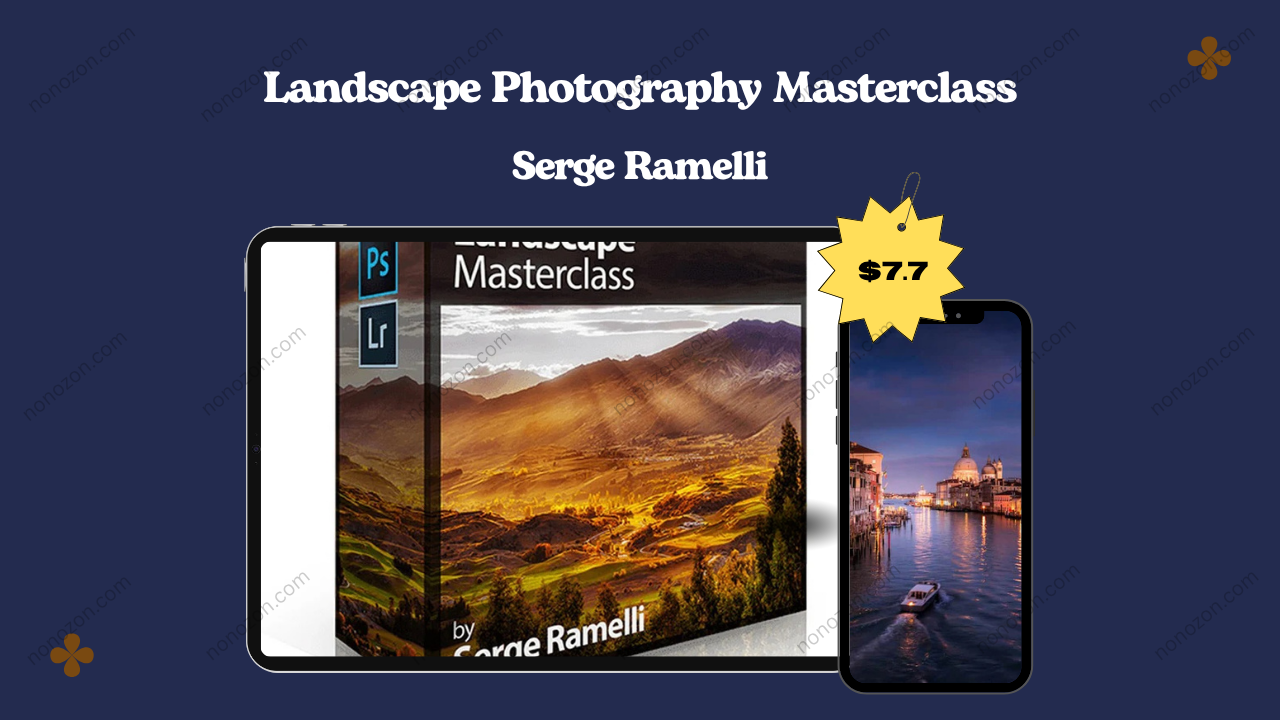
Landscape Photography Masterclass by Serge Ramelli
by Serge Ramelli
Landscape Photography Masterclass Review by Serge Ramelli
Check proof of content here:
Photography is the art of freezing time and preserving the natural beauty of the world. For enthusiasts eager to sharpen their landscape photography skills, Serge Ramelli’s Landscape Photography Masterclass delivers an in-depth, structured experience. Spanning over seven hours, this course is tailored for photographers ranging from beginners to seasoned hobbyists. Ramelli, a celebrated photographer and educator, opens the doors to his creative process, offering powerful tools, editing workflows, and compositional strategies. His teaching demystifies complex concepts, allowing students to not only improve technically but also develop a distinctive artistic voice. This review explores the course structure, highlights, and overall impact on aspiring landscape photographers.
Course Content and Organization
The course is divided into clear, progressive modules, offering learners a path from essential skills to expert-level execution. Each section is crafted to build upon the last, fostering gradual and steady improvement.
Here’s a quick summary of the key modules:
| Module | Topics Covered |
|---|---|
| 1 – Photography Fundamentals | Understanding camera mechanics, exposure triangle, and basic controls. |
| 2 – Composition Tools | Utilizing techniques like the rule of thirds, symmetry, and foreground depth. |
| 3 – Lighting Mastery | Leveraging different times of day for dramatic effect. |
| 4 – Advanced Shooting | Topics like HDR, digital blending, long exposures, and sunsets. |
| 5 – Editing Process | Core workflows using Lightroom and Photoshop. |
| 6 – Field Applications | Real-life scenarios, tips, and exercises from Ramelli’s personal projects. |
Each lesson integrates conceptual knowledge with applicable fieldwork, ensuring that learners don’t just watch—they do. The curriculum flows seamlessly from theory to practice, helping photographers absorb new methods without becoming overwhelmed.
Breakdown of Notable Chapters
The initial chapters focus on foundational skills—understanding aperture, shutter speed, ISO, and lens selection specific to landscapes. Ramelli sets a solid technical base, which is essential for consistent results.
Chapter 04 focuses on capturing the "golden hour," teaching students to take advantage of this visually rich time of day. Ramelli walks through practical camera settings while illustrating how to imbue photos with warmth and emotional tone, effectively transforming everyday scenes into impactful compositions.
Later, in Chapter 11, students dive into astrophotography—a technically challenging yet visually stunning genre. Ramelli shares actionable tips to photograph stars and night skies, offering guidance that simplifies what often seems intimidating. His broad coverage—from sunrises to starlight—ensures that learners are well-equipped for a variety of outdoor conditions.
Instant Download Landscape Photography Masterclass by Serge Ramelli
Key Photography Techniques
The course immerses students in core techniques essential to professional landscape photography. Composition takes center stage, enabling learners to arrange elements intentionally and convey powerful visual narratives.
Highlighted methods include:
Leading Lines – Using paths or natural lines to direct attention through the frame.
Natural Framing – Positioning subjects within organic boundaries like arches or tree lines.
Foreground Detail – Enhancing spatial depth and engagement by adding elements near the lens.
Circumventing the technical realm, the course also delves into lighting conditions for different times of the day, particularly cherishing the golden hour and blue hour as prime opportunities for enchanting landscape photography. Ramelli guides students in recognizing how natural light changes the scene’s mood and texture, illustrating the emotional weight light lends to imagery.
Beyond composition and lighting, the course introduces advanced shooting methods, including HDR (High Dynamic Range) photography, where multiple exposures are combined for a more dynamic image with improved detail across shadows and highlights. The transition into post-processing skills demystifies the editing process using Lightroom and Photoshop, focusing on essential techniques for enhancing landscapes without losing their authenticity.
This thorough examination of varied techniques blankets all aspects of landscape photography, bringing every participant closer to realizing their artistic aspirations.
Editing in Lightroom and Photoshop
Editing is a critical part of the landscape photography process, and Ramelli dedicates substantial attention to this area. His "5-Pillar Landscape Editing Workflow" breaks down the process into manageable, replicable steps:
RAW File Preparation – Emphasizing dynamic range and flexibility for editing.
Initial Adjustments – Exposure, white balance, contrast, and basic corrections.
Targeted Enhancements – Applying local adjustments, dodging, and burning for focal emphasis.
Creative Styling – Incorporating monochrome edits, cinematic tones, and artistic variations.
Preset Use – Leveraging presets for efficiency and visual cohesion across projects.
Through detailed screencasts, Ramelli shares his screen as he edits real images, offering insights into both the thought process and execution. This hands-on format helps bridge the gap between learning and doing.
Additional Resources Provided
The course offers a variety of supplemental materials designed to enrich the learning experience. A major benefit is lifetime access to all course content, allowing students to revisit lessons whenever needed. This feature proves invaluable as learners take on new projects or face challenges in their photography journey.
Another useful offering is the ability to download video lessons for offline viewing. This allows participants to continue their education without needing a constant internet connection, supporting flexible, on-the-go learning. The detailed video content supports better retention and deeper comprehension, especially for those who learn best through visual means.
Additionally, the course promotes interactive learning by enabling students to comment on and discuss each lesson. This fosters community engagement, encourages feedback, and creates a platform for questions. Such interaction not only enriches the educational experience but also builds a network among photographers who share similar passions and goals.
Finally, the course’s 7.5+ hours of lessons are divided into manageable segments, making the content easy to digest. This pacing respects different learning speeds, helping students absorb material without feeling overwhelmed.
Instructor’s Expertise and Style
Serge Ramelli’s expertise and artistic vision clearly shine throughout the course. Drawing from extensive experience in both landscape and urban photography, Ramelli delivers practical and approachable teaching methods. He skillfully breaks down complex techniques into accessible steps anyone can learn through practice.
His engaging style creates a welcoming atmosphere, blending technical instruction with artistic insight. The course goes beyond just mastering camera settings—it also explores the emotional storytelling power of photography. This holistic approach significantly enhances learning, encouraging students to express themselves through their images rather than just capturing pretty pictures.
By providing RAW files for hands-on editing, Ramelli invites experimentation and creativity—key components of compelling photography. His emphasis on developing a personal style inspires students to embrace their individuality and uniqueness within their work.
Overall, the Landscape Photography Masterclass has earned praise for Ramelli’s clear and engaging teaching, making it suitable for photographers at all skill levels while deepening their connection to the art form.
Background of Serge Ramelli
Serge Ramelli’s photography career began in Paris, where he fell in love with capturing the city’s stunning architecture. Over time, his portfolio expanded to include diverse natural landscapes, dynamic urban scenes, and deeply evocative themes that showcase his versatility. His work has been featured internationally in galleries, magazines, and various publications.
A notable aspect of Ramelli’s approach is his use of dynamic range, which led him to favor the Sony A7R series for its ability to capture fine details in highlights and shadows. This choice reflects his understanding of adapting equipment to achieve desired artistic outcomes, a perspective he generously shares with his students.
Ramelli is also an accomplished author of photography books, further enriching his teaching by sharing insights developed over years of dedicated practice. His diverse experience positions him as a respected figure in the photography community, inspiring both beginners and experts.
Through his Landscape Photography Masterclass, Ramelli imparts not only technical skills but also a passion for storytelling and art, encouraging others to reveal their unique viewpoints through photography.
Teaching Methodology and Engagement
Ramelli’s teaching style emphasizes clarity, engagement, and practical application, effectively resonating with learners at all levels. He combines hands-on practice with creative encouragement, fostering a vibrant community of landscape photographers eager to learn and grow together.
Recognizing that photography is a complex craft, he stresses consistent practice. His lessons are designed to simplify challenging concepts through real-world exercises, while providing RAW files for students to experiment with, building confidence and skill.
The course videos are typically concise and focused, often around five minutes long. This format helps students grasp difficult topics without feeling overwhelmed, maintaining attention and motivation. Many students comment on Ramelli’s lively teaching voice, which brings energy and enthusiasm to the material.
The interactive components promote engagement and peer-to-peer connection. As students discuss lessons and share insights, friendships and collaborations naturally emerge, enriching the learning journey. This supportive environment aids retention and personal growth throughout the course.
Effectiveness of Instructional Videos
The instructional videos’ success stems from their clear, focused structure tailored to diverse learning styles. By breaking content into manageable parts, the course helps photographers absorb complex information without overload, improving retention.
Learner feedback often highlights Ramelli’s approachable delivery, which demystifies advanced photography concepts and makes them feel achievable. The combination of clear visuals and an engaging narrative creates an optimal learning atmosphere conducive to both skill-building and inspiration.
Exploring photographic storytelling is a core focus of the course. Ramelli guides students in evoking emotion through images, encouraging them to look beyond technical details and express their unique artistic voices. As a result, the videos become more than instructional—they serve as creative inspiration for students to develop their own photographic language.
In summary, the instructional videos stand as a testament to Ramelli’s effective teaching, transforming traditional lessons into an interactive, artful experience that elevates student engagement and growth.
Feedback from Participants
Feedback on the Landscape Photography Masterclass consistently praises its comprehensive content and Ramelli’s engaging teaching style. Many students commend his ability to break down complex topics into clear, digestible segments, facilitating effective and enjoyable learning.
Numerous testimonials highlight the value of the hands-on approach, particularly the opportunity to edit RAW files alongside Ramelli, which fosters both understanding and confidence.
The course’s collaborative and interactive environment also receives high marks. Participants report a thriving online community where photographers share progress, exchange feedback, and support one another throughout their learning journeys.
Many students observe noticeable improvements in their work after completing the course. They mention enhanced skills in composition, lighting, and post-processing that empower them to pursue creative projects with renewed enthusiasm.
Overall, the overwhelmingly positive feedback underscores the course’s impact and reinforces Serge Ramelli’s reputation as a gifted educator in the photography world.
Camera Settings and Shooting Techniques
Understanding camera settings and effective shooting techniques is fundamental for every photographer, particularly in the landscape photography genre. Ramelli emphasizes the importance of mastering the technical aspects to allow creativity to flourish. Essential topics covered in the masterclass include exposure compensation, aperture settings, and compositional elements crucial for landscape photography.
Recommended Settings for Landscape Photography
The masterclass provides valuable insights into recommended camera settings that significantly enhance the outcome and quality of landscape photographs:
- Aperture: Utilizing smaller apertures (f/8 to f/16) achieves greater depth of field, ensuring that elements both in the foreground and background remain sharp.
- Shutter Speed: This setting should be adjusted according to lighting conditions and desired effects. Longer exposures are ideal for creating seamless water trails or achieving motion blur in clouds.
- ISO: Minimal ISO (typically ranging from 100 to 200) reduces noise, preserving image clarity essential for landscape captures.
- Focus: Correctly focusing on foreground elements is crucial to ensure sharpness throughout the entire scene.
Through these recommendations, Ramelli cultivates a foundation for capturing compelling landscapes while stressing the importance of adapting settings to fit particular conditions and scenes.
Importance of Lighting and Timing
Lighting plays an essential role in photography, distinguishing an outstanding photograph from an ordinary one. In landscape photography, proper lighting not only enhances colors and textures but also sets the overall mood and conveys emotion.
- Golden Hour: This period shortly after sunrise or before sunset provides warm, soft light, ideal for captivating landscape captures. Photographers should prioritize shooting during these times.
- Blue Hour: For early morning or evening shots, this time creates a distinct ambiance, enveloping the scenery in cooler tones that can render mesmerizing twilight photographs.
Timing is equally critical; it’s about choosing the optimal moments to capture stunning visuals. Sudden weather changes, like unexpected cloud formations or shifting light conditions, often present unique photography opportunities to elevate the resulting images.
Moreover, photographers are encouraged to scout locations before actual shooting, enhancing the chance of being in the right place when lighting conditions peak. Carefully analyzing the dependency between light and location dramatically affects the overall composition and success of the landscape shot.
Tips for Composition and Framing
Effective composition is fundamental in landscape photography, drastically influencing how viewers perceive images. Participants learn various principles that drive successful visual narratives.
- Rule of Thirds: Dividing the frame into thirds allows for balanced placements of subjects, ensuring that key elements sit along these intersecting lines for enhanced appeal.
- Framing: Utilizing natural elements as frames directs the viewer’s focus toward the central subject, guiding their eyes within the composition.
- Foreground Interest: Incorporating elements in the foreground not only adds depth to the image but also invites viewers into the scene, making it appear more three-dimensional and engaging.
- Leading Lines: This technique involves using natural lines in the landscape like rivers or roads to draw the viewer's eyes to the main subject.
By employing these compositional techniques, photographers can craft stunning imagery that tells a story. Ramelli ensures participants understand that mastering composition is a key step towards successful landscape photography and encourages practice through various projects.
Unique Approaches to Landscape Perspectives
One way to elevate landscape photography is through unconventional approaches to perspective. Ramelli emphasizes the value of experimentation, encouraging students to play with angles and vantage points to generate captivating imagery beyond the ordinary.
- High and Low Angles: Shooting from elevated positions can provide expansive views of the landscape, while low angles might enhance the significance of foreground elements, creating dramatic depth.
- Reflections: Utilizing water bodies for capturing reflections can introduce stunning symmetry and complexity within the composition.
- Human Elements: Including people or animals in landscape scenes provides context and scale that can create engaging storytelling moments.
These unique perspectives encourage photographers to explore their creativity, challenging the conventional mindset of landscape shoots. By integrating varying angles and approaches, students can constantly evolve their portfolio, manifesting personal style and artistic expression through landscape photography.
Editing and Post-Processing Insights
The masterclass dives deeply into the editing and post-processing realm, emphasizing its critical role in refining landscape photography. Serge Ramelli guides participant practices in using Lightroom and Photoshop effectively, complementing their capturing ability with professional editing techniques.
Step-by-Step Editing Process Explained
Ramelli offers a comprehensive step-by-step editing process that empowers students to master the post-processing phase confidently. Key portions of the editing workflow may include:
- Preparation of RAW Files: Understanding how to optimize RAW images for editing, preserving fine details while navigating adjustments.
- Initial Adjustments: Students are taught how to apply basic edits like exposure, contrast, and white balance adjustments to lay a strong foundation for further enhancements.
- Advanced Techniques: Moving into more detailed editing methods, participants learn the Orton Effect, luminosity masks for nuanced adjustments, and localized adjustments to guide attention within the image.
- Creative Applications: Exploring artistic effects, such as split toning and weather simulation, allows for experimentation with image aesthetics, encouraging personal interpretation of landscape scenes.
This workflow approaches editing methodically, providing students with clarity in their editing practices and enabling them to draw out the beauty present in their captured photos effectively.
Key Lightroom Features Utilized
The Landscape Photography Masterclass emphasizes utilizing key features within Lightroom for an efficient, effective editing experience. Important tools and techniques include:
- Non-Destructive Editing: Photographers are taught to utilize non-destructive editing practices to maintain original files' integrity while allowing alterations.
- Presets: Learn how to create and apply presets to establish consistency and save time across multiple images, a crucial aspect of post-processing efficiency.
- Adjustment Brush and Graduated Filter: Participants explore local adjustments, focusing on different regions of the photograph to enhance colors and tones selectively.
- Basic Color Grading: Concepts surrounding color grading are discussed to broaden the capacity for emotional storytelling within the editing phase.
By honing these features, students are equipped to refine their workflow and intention behind each photograph. This integration fosters confidence and creativity during the editing process.
Color Grading and Effects Techniques
Color grading becomes a vital tool in post-processing, influencing an image's mood and storytelling ability. Ramelli introduces participants to various techniques that allow them to manipulate colors effectively, adding depth and richness to their images.
Common methods include the use of:
- Gradients: Allowing for targeted adjustments across specific areas, such as enhancing dramatic skies or enriching foreground colors.
- Color Balance: Adjusting shifts towards cooler or warmer tones to create desired atmospheres this the photographer can evoke emotion within their imagery.
The workshop espouses balancing creativity with the image's integrity, warning against over-processing and emphasizing the importance of natural color representation. By adhering to a mindful approach, students can maintain authenticity, essential for landscape photography.
Common Post-Processing Mistakes to Avoid
In navigating the intricate world of editing, Ramelli openly discusses frequent pitfalls that photographers should avoid. Common mistakes include:
- Overdoing Contrast: Striking a balance is critical; excessive color contrasts may lead to visual fatigue or misrepresent the subject.
- Unrealistic Saturation: Maintaining realism is key. Colors should reflect true-life representations rather than unrealistic saturation levels that diminish authenticity.
- Neglecting Consistent Color Space: Understanding the significance of color spaces like converting to sRGB is crucial for viewing consistency across devices.
By addressing these mistakes, Ramelli helps participants recognize common editing flaws, fostering an educational environment that prioritizes meaningful, high-quality photography.
Value for Money
When evaluating the value for money of the Landscape Photography Masterclass, it becomes clear that the comprehensive, in-depth content offers an incredibly extensive learning experience. Priced typically at $147, discounts bring it within reach for budding photographers looking to hone their landscape skills.
Course Pricing and Comparison
Potential students can enjoy a promotional price of $57, representing significant savings for the depth of knowledge and skills offered. When compared to other photography courses that may cover more superficial topics or less detailed editing methods, the masterclass stands out for its robust value proposition.
**Course Feature** | **Landscape Photography Masterclass** | **Other Photography Courses** |
**Content Length** | 7.5+ hours | 4-5 hours |
**Editing Focus** | Comprehensive (Lightroom/Photoshop) | Basic Editing Techniques |
**Skill Levels** | All levels (beginner to advanced) | Often beginner-focused |
**Download Availability** | Lifetime access available | Limited or one-time access |
The detailed insights, practical demonstrations, and holistic approach to elements are tailored to build a lasting foundation for landscape photographers. Compared to other courses, the value provided through hands-on experience with thoughtful strategies genuinely sets this masterclass apart.
What’s Included in the Package
Included in the masterclass package are multiple beneficial resources that enhance the value received:
- Comprehensive Video Lessons: Real-life applications result in well-rounded education on landscape photography and photo editing.
- Detailed Checklists and Guides: Essentials for effective shooting and editing processes provided to facilitate easy application of learned skills.
- Access to Exclusive Resources: Resource links to Adobe software insights and additional photo editing tools allow for strengthened learning.
- Direct Interaction and Community: Engage with fellow learners and Ramelli for feedback fosters a sense of community and collaborative learning.
Such extensive resources ensure that students receive ample support while navigating learning challenges. The multidimensional approach pays dividends in long-term knowledge retention and skill development valuable far into the future.
Return on Investment for Photographers
Assessing the return on investment (ROI) suggests that mastering the techniques taught in the masterclass can considerably enhance photographers' capabilities and, consequently, their potential for success in the field.
- Improved Photography: By acquiring comprehensive techniques in both capturing and editing, photographers can elevate their work significantly.
- Portfolio Enhancement: The course equips learners with creative skills to build an impressive portfolio, often leading to increased visibility in the competitive photography market.
- Potential for Monetization: Photographers who successfully capitalize on their improved skills may garner opportunities for commissions, leading to financial return.
All these aspects collectively affirm that the investment in the Landscape Photography Masterclass can yield tangible benefits, supporting photographers in their creative and commercial aspirations.
Discounts and Promotions Available
Regularly priced at $147, the masterclass often features significant promotional discounts, currently available for $57. This reduction provides an excellent entry point for learners interested in expanding their landscape photography skills.
Additionally, the course is included in the Unlimited PRO PLAN membership, allowing access to over 80 other courses and tools. This membership effectively arms serious learners with a wealth of resources while saving a substantial amount compared to enrolling in courses individually.
As such, this pricing structure reflects an undeniable value offering, inviting aspiring photographers to advance their skills without breaking the bank.
Target Audience
The Landscape Photography Masterclass is tailored toward a broad spectrum of photographers eager to enrich their skills in capturing landscapes and urban scenes. This includes:
- Beginner Photographers: Individuals new to photography find the course invaluable in developing essential skills and knowledge.
- Hobbyists: Those aiming to refine their craft often seek education that allows them to express their creativity effectively.
- Travel Enthusiasts: Travelers desiring to document their adventures through landscape photography can greatly benefit from the course’s insights.
More advanced photographers also find tremendous value; the course addresses skills and techniques applicable to various environments, inspiring them to push their creativity further.
Skill Levels Addressed in the Course
The course design successfully accommodates varying skill levels, ensuring that both newcomers and seasoned photographers find value. Core features enabling such inclusiveness include:
- Structured Lessons: Each module builds progressively, ensuring that beginners grasp essential concepts while offering depth for advanced users seeking refinement.
- Detailed Breakdown of Techniques: From basic camera settings to intricate HDR methods, chronologically arranged lessons allow tailored learning experiences based on photographers' stages.
- Hands-On Practice: Practical exercises help students apply what they've learned, fostering confidence and skill retention.
Through these elements, the masterclass becomes a suitable resource for serious learners whose ambitions range from initial exploration to honing advanced techniques, making this a unique offering in the photography education landscape.
Suitable Use Cases for Landscape Photography
Suitability extends far beyond simply providing photography knowledge; the masterclass prepares aspiring photographers for various real-world scenarios:
- Amateur Photographers: Newcomers gain foundational skills to break into landscape photography effectively.
- Artists and Designers: Visual creatives looking to enhance their portfolios with exceptional landscape captures can leverage taught techniques for professional use.
- Event and Travel Photographers: Individuals frequently traveling for leisure or work can test their new skills while documenting their adventures.
Through these use cases, participants can explore the vastness of opportunity that landscape photography presents, discovering individual paths aligned with their passions and career goals.
Community and Support Offered to Students
The sense of community within the Landscape Photography Masterclass serves as a fantastic support mechanism for learners.
- Interactive Learning: Participants can share insights with one another through comments and feedback on lessons, creating valuable exchange moments that enhance understanding.
- Access to Expertise: Having direct access to Serge Ramelli enables students to seek clarification on challenging concepts, reinforcing confidence in mastering techniques.
- Peer Support: Engaging with fellow photographers offers opportunities for collaboration, inspiration, and shared experiences, mitigating the often solitary journey of learning photography.
This commitment to fostering community creates a positive environment conducive to knowledge sharing and personal growth, essential components for any educational course.
Testimonials from Previous Learners
Feedback from previous learners of the Landscape Photography Masterclass reveals a wealth of positive experiences, illustrating the effectiveness of Serge Ramelli's instructional methods.
- Quality of Instruction: Many students express their appreciation for Ramelli’s clear teaching style, often mentioning how his methods simplify complex topics.
- Comprehensive Curriculum: Participants frequently point out that the course covers an extensive range of topics, from photography fundamentals to advanced techniques, enhancing skills across the board.
- Skill Improvement: A common theme in testimonials is the reported increase in photography skills, particularly in understanding light, composition, and the editing process.
These testimonials reinforce the course's value and Ramelli’s credibility as an educator, demonstrating the positive impact on photographers at various stages of their journey.
Conclusion and Recommendations
The Landscape Photography Masterclass by Serge Ramelli stands out as a premier educational resource for both burgeoning and experienced photographers seeking to deepen their understanding of landscape photography.
Overall Assessment of the Masterclass
Structured into several interactive modules, the course offers a comprehensive look into both capturing stunning landscapes and refining them through advanced editing techniques. Participants appreciate the clear instruction, effective learning frameworks, and supportive community that fosters engagement and collaboration.
Although some critiques arise regarding how much of Ramelli’s style resonates with every viewer, it’s essential to note that the course effectively equips students with technical knowledge applicable to various landscape genres. Ultimately, it’s highly recommended for those eager to enhance their landscape photography skills significantly.
Ideal Candidates for the Course
The Landscape Photography Masterclass is particularly ideal for:
- Beginners wanting foundational knowledge: New photographers who seek to learn the essentials in capturing landscapes will flourish in this course’s structured approach.
- Intermediate photographers: Those with some experience but looking to refine their skills will find immense value in the advanced techniques covered throughout.
- Photography enthusiasts: Hobbyists aiming to elevate their craft should consider this comprehensive course a vital investment in their artistic journey.
Final Thoughts on Course Impact
The impact of the Landscape Photography Masterclass traditionally resonates deeply, supporting photographers in discovering new techniques and a more profound appreciation for the art of landscape photography. By equipping learners with both technical skills and creative inspiration, Ramelli’s course enriches their artistic journeys, enabling individuals to express themselves in compelling ways through stunning visual narratives.
Suggestions for Improvement
While the Landscape Photography Masterclass is excellent, potential improvements could enhance the learning experience further:
- Interactive Components: Incorporating live Q&A sessions would provide an avenue for students to present their work for direct critique, making learning more personal and customized.
- Case Studies: Integrating case studies from famous landscape photographers could inspire students by providing real-life references highlighting the principles taught throughout the course.
- Expanded Content for Specific Landscape Types: Offering advanced techniques targeted toward various types of landscapes will add diversity to learning.
These suggestions may elevate the educational experience, lending additional depth to Ramelli’s already valuable masterclass. In conclusion, his thoughtful approach to teaching continues to inspire budding photographers around the globe, nurturing their craftsmanship and vision within the beauty of landscape photography.
Related products



Editing Masterclass for Wedding Photographers - Reflections Academy
by Danilo and Sharon
$1.200.00
$59.50