Mid Century Wegner Papa Bear Chair and Ottoman 3D Model
by PRO EDU
Review of Mid-Century Wegner Papa Bear Chair and Ottoman 3D Model by Pro Edu
Check proof of content here:

The iconic Mid-Century Wegner Papa Bear Chair and Ottoman isn't just admired for its design; it represents a seamless fusion of comfort, elegance, and thoughtful craftsmanship that has resonated with design lovers for generations. Originally conceived by Danish designer Hans J. Wegner in the early 1950s, this duo functions as more than seating—it acts as sculptural decor, elevating any interior. The 3D model by Pro Edu offers a modern digital homage to this timeless furniture, blending historical reverence with high-end rendering. This review covers everything from the chair’s physical characteristics to the technical quality of the 3D model and its use in professional design environments.
Design Overview
Regarded as a high point of mid-century modern furniture, the Papa Bear Chair boasts a unique profile with a welcoming wingback structure and rounded, paw-like arms that seemingly invite you into a cozy embrace—earning it the affectionate nickname.
Its dimensions (around 32" W x 32" D x 39" H, with a 15.5" seat height) make it flexible for diverse environments, from elegant lounges to refined workspaces. One can easily envision lounging with a novel, supported gently by the contours of this striking chair. The accompanying ottoman—measuring approximately 27.5 inches wide—adds to this sense of indulgence, acting as a perfect footrest.
The chair is often crafted in durable hardwoods like oak, walnut, or cherry, and it offers a range of upholstery materials, from luxurious leathers to richly textured fabrics. This adaptability ensures that the design fits seamlessly into various interior schemes, showcasing the timeless appeal of mid-century aesthetics.
Iconic Features of the Papa Bear Chair
This piece is known not just for its looks, but also for specific design elements that elevate its desirability among collectors and design professionals.
Key Features
| Feature | Description |
|---|---|
| Broadened Armrests | Designed for comfort, they deliver a cradling sensation, ideal for relaxation. |
| Solid Wood Frame | Constructed from strong woods, offering durability and an authentic vintage touch. |
| Variety of Upholstery Options | Customizable to suit various settings and preferences. |
| High-Quality Craftsmanship | Over 100 intricate steps are involved in crafting each piece. |
These elements give the chair its unique presence—not just physically but emotionally—often invoking a sense of nostalgia and deep comfort. It’s not simply a seat, but a heartfelt experience rendered in form and material.
Ergonomic Aspects of the Ottoman
Known as model AP29, the ottoman elevates the user experience by aligning perfectly with the chair’s proportions and design.
Ideal Sizing: With its 27.5” width, 16” depth, and 15.5” height, it complements the chair while enhancing comfort.
Supportive Build: Like the chair, it features a robust frame, ensuring it remains stable under weight.
Soft padding and matching upholstery complete this ottoman’s appeal, ensuring that relaxation feels holistic and well-supported—fitting the ideals of functional beauty espoused in mid-century modernism.
Material Choices and Craftsmanship
The choice of materials narrates a story of quality and enduring beauty. Original Papa Bear Chairs often use premium hardwoods like ash or walnut, not only contributing to aesthetics but guaranteeing resilience.
Upholstery options are just as considered—from soft bouclé to rich leather, each variant affects both tactile feel and visual tone. For instance, wool offers warmth and durability, while leather gives the piece a stately, refined finish.
Craftsmanship is a defining element here. The extensive production process—featuring expert joinery and fine upholstery work—demonstrates a commitment to excellence rarely seen in modern furniture production.
Instant Download Mid Century Wegner Papa Bear Chair and Ottoman 3D Model by PRO EDU
3D Model Quality
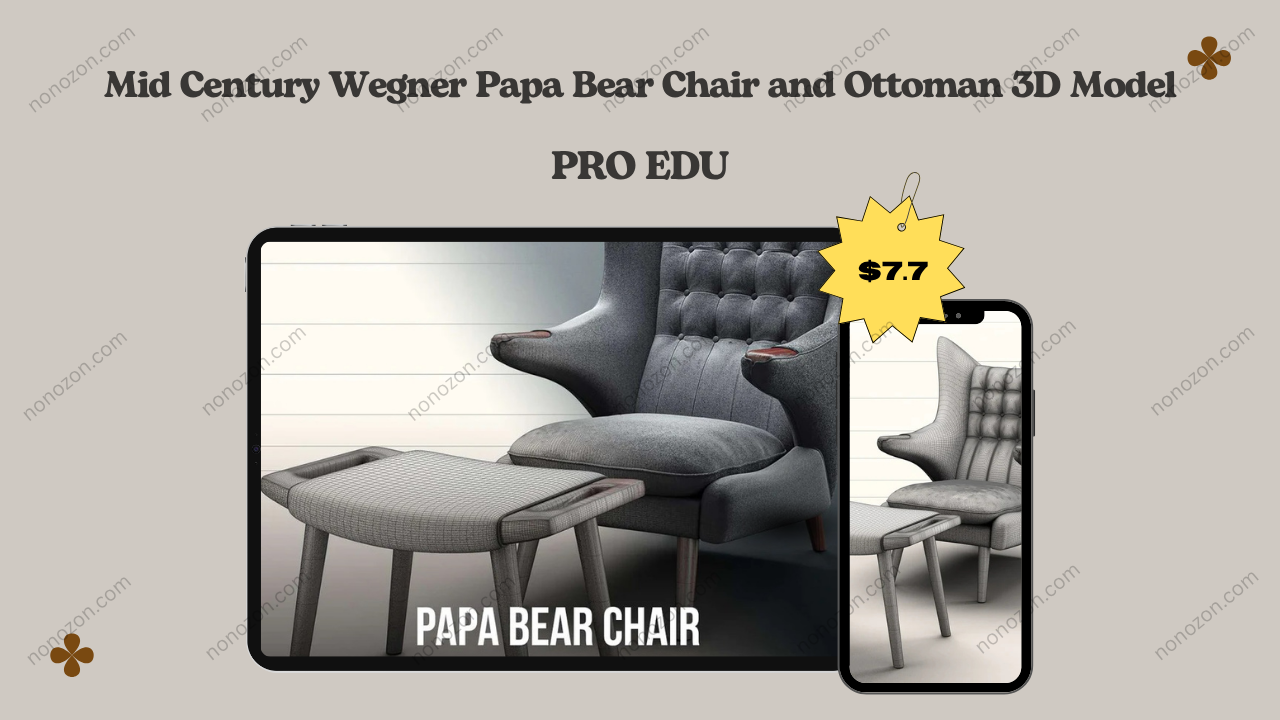
Transitioning to the realm of digital representations, the 3D model of the Mid-Century Wegner Papa Bear Chair and Ottoman crafted by Pro Edu is designed with realism and detail as its cornerstone. The intention is to elevate this iconic design in a virtual space, assisting designers and architects in visualization while making their projects come alive.
Constructed with meticulous attention to detail, the geometry of the model remains true to the original's design specifications, adhering closely to the dimensions and forms that defined the chair's historical aesthetic. This precision is crucial for achieving a lifelike look in rendering software, where accuracy can greatly affect the perceived quality of the outcome.
Realism and Detail in 3D Rendering
The application of Physically Based Rendering (PBR) techniques adds a layer of authenticity. Textures mimic the look and feel of real materials with impressive precision.
Geometric Precision: Clean topology and non-overlapping UVs ensure efficient and accurate rendering.
Visual Depth: The contours of the armrests and the cushioned seat are modeled to convey softness and structure alike.
Such attention to detail enables designers to zoom in and explore the model at close range without losing realism—ideal for architectural presentations or high-end visualizations.
Textures and Fabric Representation
Texturing plays a crucial role in translating this piece into the digital space.
Material Realism: The visual texture of fabric conveys warmth and softness, aided by smart use of light interaction.
Detailed Stitching: Careful mapping of seams and fabric drape mimics the construction methods of the original.
The textures not only support design realism but evoke the tactile qualities that are so central to the chair’s physical charm.
Lighting and Shadow Effects in the Model
Lighting enhances realism and mood.
Natural Shadowing: Shadows help define the model’s volume and structure within a scene.
Light Interaction: The model reflects light in a way that suggests soft, organic materials—reinforcing the sense of luxury.
Altogether, the lighting work frames the chair in a realistic and compelling way that mirrors how it might appear in a real room.
Comparison with Original Chair
Although the 3D model is impressive, it naturally has both parallels and differences when measured against the physical chair.
Similarities with Authentic Wegner Design
Faithful Dimensions: Accurately scaled to match the original.
Design Accuracy: Signature details like high backrests and wide arms are well preserved.
Visual Cohesion: The model captures the iconic silhouette and proportions that define Wegner’s masterpiece.
Differences in Pro Edu's 3D Model
Material Sensation: The warmth and tactile feedback of real wood and fabric can’t be replicated digitally.
Texture vs. Touch: Visual fidelity can’t offer the haptic sensation of authentic upholstery.
Craft Detail: Subtle wood grains and unique joinery are harder to portray with perfect accuracy.
User Experience and Comfort Comparison
- Sensory Experience: Digital models cannot simulate the tactile richness—such as the fabric’s softness or the chair’s supportive give—which plays a big role in the emotional attachment users form with the real piece.
- Emotional Connection: Physical furniture connects with users through memory, sensation, and time—qualities a digital model cannot fully reproduce.
- Practical Applications: That said, the 3D model proves invaluable in professional design contexts, helping architects and creatives visualize spaces with precision and style.
Applications and Use Cases
The Papa Bear Chair isn’t just a decorative object; it’s a powerful design statement, whether physical or digital.
Ideal Settings for the Chair and Ottoman Model
Modern Living Spaces: Complements sleek interiors.
Home Offices: Adds elegance and comfort to work zones.
Showrooms: Elevates brand identity through stylish staging.
Reading Nooks: Perfect for creating intimate, cozy corners.
Virtual Staging and Interior Design Uses
Real Estate: Helps properties look more inviting in listings.
Interior Design Concepts: Offers versatile placement in digital mood boards and room mock-ups.
Design professionals appreciate how this model helps communicate design vision and functionality with clarity.
Educational Purposes for Design Students
Visual Breakdown: Allows students to study proportions and material usage in detail.
Practical Modeling: Great for experimenting with layout, lighting, and rendering techniques.
Accessibility and Availability
A significant element surrounding the Wegner Papa Bear Chair and Ottoman 3D model revolves around its accessibility across various platforms.
Where to Purchase the 3D Model
Platforms: Available on Sketchfab, TurboSquid, and similar marketplaces, featuring ready-to-render assets.
Student Access: Educational pricing or free versions are sometimes available for learning environments.
Pricing Structure and Payment Options
Authentic Chair Cost: Begins at around £19,255 depending on specifications.
Flexible Payments: Retailers may offer financing for physical products.
Compatibility with 3D Software
Software Support: Fully compatible with Blender, SketchUp, and other major platforms.
Ease of Integration: Easily added into professional workflows for interior and product visualization.
User Reviews and Feedback
Considering feedback from users highlights the model's quality and usability. With many users praising the detail and integration capabilities, it establishes its place within digital design communities.
Customer Experiences with the 3D Model
Users commend the model’s realism and ease of integration into 3D environments. The photorealistic textures especially receive praise.
Recommendations for Improvement
Some users suggest expanding lighting presets or including additional file formats to improve workflow compatibility.
Community Reception in Design Forums
In design forums, the community reception has been generally positive, pointing to its capacity for enhancing visual projects and enabling intricate presentations. Suggestions for improvement often suggest enhancing compatibility and providing comprehensive user guides for optimal usability.
In conclusion, while the Pro Edu 3D model of the Wegner Papa Bear Chair and Ottoman impeccably reflects the spirit of Hans Wegner's design, embracing its timelessness through digital representation, the nuances of the tangible experience set the authentic chair apart. Users benefit from both forms, each serving distinct purposes in the realms of comfort, art, and design.
Related products
Creating a Visual Identity Manual from Scratch by Gilian Gomes
by Creating a Visual Identity Manual from Scratch by Gilian Gomes
$39.00
$7.70