
The Wheel Strategy With Options
by Dan Sheridan
Get The Wheel Strategy With Options by Dan Sheridan Digital Download!
You can check proof of content here
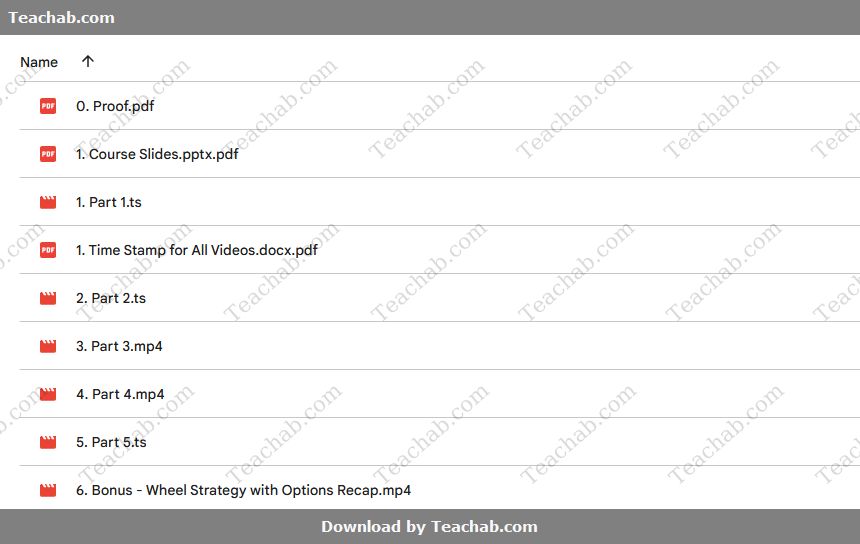
Download immediately The Wheel Strategy With Options by Dan Sheridan
Overview

A Comprehensive Look at Dan Sheridan’s Wheel Strategy for Options Traders
In the fast-paced landscape of options trading, Dan Sheridan’s Wheel Strategy shines as a structured method for those aiming to generate reliable income while potentially acquiring stocks at favorable prices. Merging clarity with efficiency, this approach appeals to both entry-level traders and experienced investors. The strategy unfolds through a recurring three-part sequence: initiating trades with cash-secured puts, handling stock assignment and premium collection, and then recycling the process to establish a consistent stream of income. This article breaks down the core elements, explores risk controls, and offers actionable guidance on implementation to help traders determine its value within their portfolios.
Understanding the Core Mechanics
At the heart of the Wheel Strategy is a repetitive, rules-based system beginning with the sale of cash-secured put options on a stock the trader wouldn’t mind owning. When executed, this transaction yields an upfront premium, which represents the trader’s immediate return. If the stock remains above the strike price, the option expires worthless, and the trader keeps the premium. However, if the stock closes below the strike price, assignment occurs, and the trader purchases the stock at the agreed-upon price.
Once assigned the shares, the next phase kicks in—selling covered call options against the owned stock. This move continues the income cycle by generating new premiums. Should the stock stay below the call strike price, the trader retains both the shares and the premium. If the price exceeds the strike, the stock is sold at a profit, completing the cycle and paving the way to restart by selling puts again.
Cash-Secured Put Highlights:
Ensures capital is available for potential share purchases.
Offers a built-in layer of downside protection through premium income.
This repetitive pattern gives the strategy its name—“the wheel”—highlighting its cyclical and disciplined nature.
Introducing the “All Options Wheel” Strategy Variant
Expanding on the traditional method, Dan Sheridan also designed the All Options Wheel Strategy, which incorporates a more capital-efficient framework, especially attractive to traders with smaller accounts.
A key innovation in this version is substituting put credit spreads in place of naked puts. This shift reduces margin requirements and defines the risk, creating a more accessible entry point without compromising income potential. The spread typically involves selling an out-of-the-money put while simultaneously purchasing a lower-strike put, capping losses while preserving returns.
Additionally, this variation introduces in-the-money call options as stock substitutes, allowing traders to mimic stock ownership while avoiding actual share purchases. This technique helps reduce exposure to large price swings and enables better use of capital.
Key Advantages of the All Options Wheel:
Lower Capital Barrier: Requires less money to initiate.
Greater Yield Efficiency: Spread trades enhance return-to-risk ratios.
Tactical Flexibility: Uses options to replicate stock positions for adaptable portfolio management.
Managing Risk in the Wheel Strategy
Though inherently conservative compared to high-leverage strategies, the Wheel Strategy still carries risks that must be actively managed to preserve gains and prevent outsized losses.
Strike price selection is crucial. Choosing appropriate levels can limit exposure and enhance assignment probabilities aligned with the trader’s goals. Equally important is maintaining adequate cash reserves to meet obligations if assigned, ensuring the strategy remains intact during volatile periods.
Risk can also be mitigated through diversification. Spreading trades across multiple stocks and sectors can minimize the downside impact if one position underperforms.
Common Risk Control Methods:
Strike Management: Aligning strikes with volatility and fair value assessments.
Cash Allocation: Reserving funds for potential stock assignments.
Position Diversification: Engaging in multiple symbols to balance risk.
Applying these practices helps safeguard capital while sustaining the long-term viability of the Wheel.
Strategic Benefits of the Wheel Approach
The Wheel Strategy delivers several appealing advantages for those seeking a disciplined, income-generating structure.
Consistent Cash Flow: The primary draw is premium collection from both put and call options, generating regular revenue.
Favorable Share Acquisition: When assignment occurs, it often results in owning stocks at lower-than-market prices, potentially creating a margin of safety if the shares recover or appreciate.
Built-in Flexibility: The repeatable nature of the strategy ensures that income opportunities remain available, even when stocks aren’t assigned or called away.
| Advantage | Explanation |
|---|---|
| Income Generation | Steady premiums from puts and calls |
| Discounted Share Acquisition | Buy shares below current market value |
| Strategic Flexibility | Continuous cycles support income and control |
With careful application, these features make the Wheel Strategy a highly pragmatic option in varying market conditions.
Risks and Limitations to Consider
Despite its structured appeal, the Wheel is not immune to pitfalls.
A major concern arises if a stock drops sharply below the strike price. In such scenarios, the trader may be forced to buy shares at prices significantly above market value—eroding returns and increasing exposure.
Another drawback is the capped upside. Covered calls place a ceiling on profits, meaning the trader may forgo large gains if a stock rallies sharply after assignment.
Additionally, traders risk capital stagnation if options consistently expire without execution, locking funds in positions that underperform or fail to appreciate.
| Risk Factor | Impact |
|---|---|
| Stock Price Declines | Potential for losses on assigned shares |
| Limited Profit Potential | Upside capped by call strike |
| Opportunity Cost | Tied-up capital may miss higher-return setups |
Recognizing these constraints allows traders to tailor their strategy and reduce negative outcomes.
Applying the Strategy Effectively
To implement the Wheel Strategy successfully, traders need a combination of analytical skills, planning, and adaptability.
Start with thorough research—select stocks with stable fundamentals and manageable volatility. Use technical and macroeconomic insights to gauge optimal timing for puts and calls.
Be ready to adjust positions dynamically. For example, “rolling” options (extending expiration or modifying strike prices) can preserve profitability or reduce risk. After assignment, deploying covered calls promptly ensures continued income flow.
Most importantly, remain disciplined. Consistently following a rules-based process helps prevent emotional trading errors.
Implementation Roadmap:
Identify Target Stocks: Focus on stability and quality.
Sell Cash-Secured Puts: Initiate the income cycle.
Monitor and Adjust: React to shifts with strategy refinements.
Sell Covered Calls: Use after assignment to extend gains.
With proper execution, the Wheel can be both profitable and sustainable.
Final Thoughts
Dan Sheridan’s Wheel Strategy provides a practical, repeatable framework for income generation through the strategic use of options. By alternating between cash-secured puts and covered calls—or their advanced equivalents in the All Options Wheel—traders can benefit from steady cash flow and the opportunity to acquire quality stocks at favorable prices.
Nevertheless, success depends on a trader’s ability to manage risks, maintain capital flexibility, and make data-informed decisions. With discipline and a well-researched approach, the Wheel Strategy offers a compelling path for building consistent returns in today’s markets.