
Buy, Borrow, Die Tax Strategy Course
by Sharon Winsmith
Buy, Borrow, Die Tax Strategy Course Review
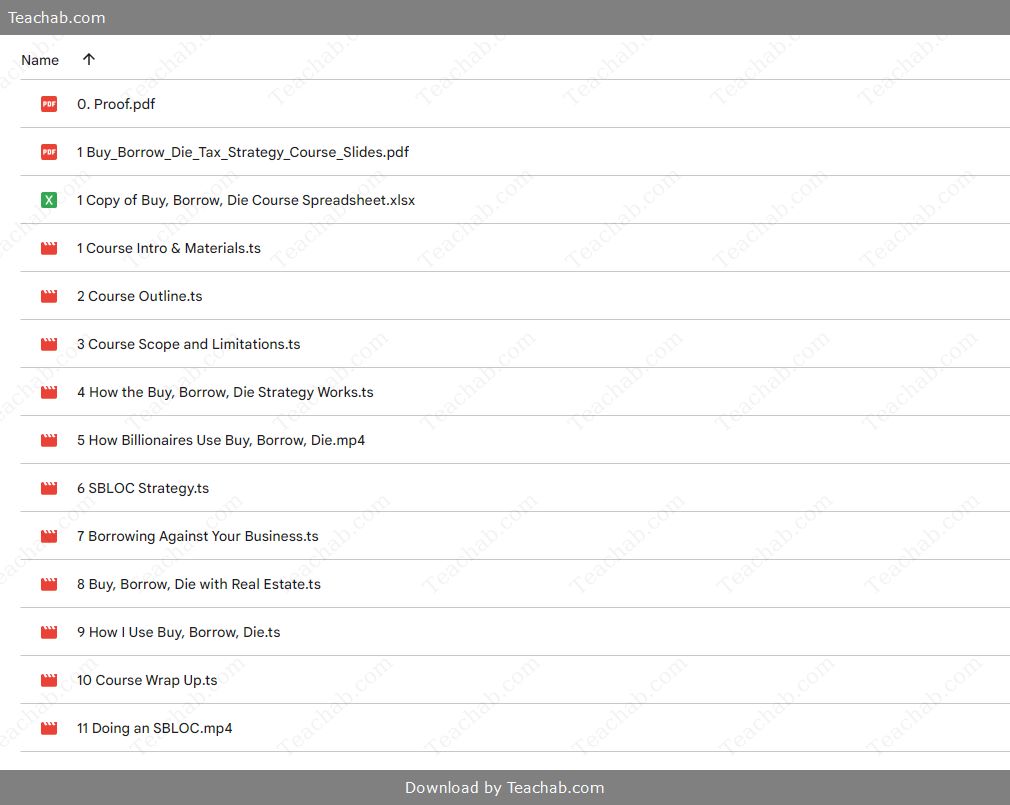
Check proof of content here:
In the intricate domain of wealth optimization and tax efficiency, the Buy, Borrow, Die strategy emerges as a masterstroke of financial planning—especially for high-net-worth individuals. Popularized by tax strategist Sharon Winsmith, this method provides a powerful avenue for wealth to grow uninterrupted by taxes, while offering liquidity and ensuring a seamless generational transfer of assets.
Envision a scenario where your investments continually appreciate, you can access cash without selling those assets, and your heirs inherit your wealth without the weight of capital gains taxes. This isn’t financial fiction—it’s a sophisticated, legal tax strategy already embraced by the wealthy to preserve and amplify their fortune.
The strategy revolves around a triad of key steps: buy appreciating assets, borrow against them rather than selling, and upon death, pass them on—triggering a stepped-up basis that effectively erases prior capital gains. In this review, we’ll examine Winsmith’s course in depth, evaluating its core lessons, benefits, and real-world application.
By the end, you’ll have a solid understanding of how this approach facilitates long-term wealth growth while significantly reducing tax exposure—making it a compelling framework for serious investors and strategic planners.
Key Benefits of the Buy, Borrow, Die Strategy
Far from being a niche tax maneuver, the Buy, Borrow, Die method offers a structured financial blueprint that helps individuals manage and grow wealth strategically. Below are some of the key advantages explored in the course:
1. Capital Gains Tax Deferral: At the heart of this approach is the ability to defer capital gains tax indefinitely. By holding onto assets—rather than selling them—individuals avoid triggering taxable events. Instead, they borrow against the appreciated value, gaining access to funds without paying taxes.
2. Immediate Liquidity Without Sale: The strategy allows individuals to unlock liquidity by taking out loans secured by their assets. This means they can finance purchases, invest further, or fund lifestyle needs—all while their underlying investments remain intact and continue to appreciate.
3. Stepped-Up Basis for Heirs: Upon death, the asset’s tax basis is adjusted (or “stepped up”) to its fair market value at the time of inheritance. Heirs can then sell these assets with little to no capital gains tax—making this a powerful tool for intergenerational wealth transfer.
4. Long-Term Compounding: Since assets aren't sold prematurely, they benefit from uninterrupted compounding over time. This positions investors to reap the full rewards of long-term capital appreciation, which is essential for substantial net worth growth.
5. Asset Control and Protection: This method encourages long-term ownership, which often translates into greater control and security over one’s portfolio. Maintaining ownership, rather than cycling in and out of the market, reduces exposure to taxes and poor timing decisions.
Together, these benefits demonstrate why the Buy, Borrow, Die strategy is more than a tax trick—it’s a mindset shift that encourages prudent, future-focused wealth management.
Wealth Building Potential
What sets this strategy apart is its multi-generational outlook. It's not just about making money—it's about keeping it, growing it, and passing it on wisely. The course sheds light on how the method reinforces sustainable, exponential wealth building:
Strategic Asset Acquisition
The journey begins with acquiring assets likely to increase in value—real estate, high-growth equities, or even business equity. Choosing wisely here lays the groundwork for future borrowing and wealth leverage.Borrow, Don’t Sell
By leveraging existing holdings through debt instruments like margin loans or asset-backed lines of credit, individuals gain access to capital without incurring taxes. This borrowed money can be reinvested or used for personal purposes, all while keeping the portfolio intact.Maximized Compounding
Holding assets long-term—rather than liquidating—means they enjoy the power of compounding. The wealth snowballs year after year, creating generational capital rather than short-term gains.Efficient Inheritance
The culmination of this strategy is the seamless transfer of assets to the next generation, free from capital gains tax due to the stepped-up basis. This ensures the family legacy isn't eroded by taxation.
As Winsmith illustrates, the Buy, Borrow, Die framework is a dynamic blueprint for those seeking to build and preserve wealth intelligently, far beyond what traditional investing allows.
Instant Download Buy, Borrow, Die Tax Strategy Course by Sharon Winsmith
Tax Mitigation Techniques
The course does an excellent job of demystifying how the strategy fits within the existing tax code, showing that true tax optimization lies not in evasion, but education and strategic compliance. These are the key tax-mitigation tactics addressed:
Deferred Tax Liability
Selling triggers taxes. But by holding appreciating assets and borrowing instead, individuals delay taxation indefinitely—or eliminate it entirely through inheritance.Collateralized Lending
Borrowing against assets like real estate or securities gives access to liquidity without the tax implications of selling. Securities-backed lines of credit (SBLOCs) or home equity loans are commonly used for this purpose.Estate Planning & Stepped-Up Basis
Upon inheritance, the cost basis of the asset is “stepped up” to its current market value. This critical mechanism reduces the heir’s future tax exposure, often resulting in zero capital gains tax when sold.Complementary Use of Tax-Deferred Accounts
Winsmith explains how retirement accounts, trusts, and other vehicles can bolster this strategy. Used together, they create a layered tax shield, offering multiple avenues for tax-efficient investing and wealth preservation.Smart Use of Debt
Understanding how to source low-interest debt and manage it responsibly is central to this strategy’s success. The course outlines how and when to use leverage, helping participants avoid common pitfalls.
These legal strategies form a robust framework that ensures individuals aren't just growing wealth—they’re doing so with minimal tax drag and maximum efficiency.
Course Content Overview
Sharon Winsmith’s course is thoughtfully structured to walk users through both the big picture and the granular execution of the Buy, Borrow, Die approach. Here’s a snapshot of what learners can expect:
Foundational Understanding
Participants are introduced to the strategy’s philosophical and legal foundations, gaining clarity on how the components interlink and how the tax code supports the approach.Implementation Roadmap
From identifying ideal asset types to sourcing collateralized loans and managing debt, the course provides a practical, step-by-step implementation guide.Tax Law & Compliance
This section dives deep into IRS regulations, estate tax rules, and real-life examples of successful applications—equipping students to use the strategy legally and confidently.Risk Management
Acknowledging that leverage and inheritance planning carry risk, Winsmith offers tools and techniques to mitigate market exposure, interest rate fluctuation, and regulatory risk.Tools, Templates & Case Studies
The course includes customizable planning templates and real-life case studies, offering not just theory but practical, high-value takeaways from actual implementations.
Whether you're a financial advisor or an individual with a growing portfolio, this course equips you with a clear, applicable blueprint for tax-smart wealth management.
Detailed Analysis of Buy, Borrow, Die
Ultimately, the Buy, Borrow, Die method is a strategic cycle of wealth retention, deeply rooted in legal financial planning. It’s an elegant solution to the problem of asset erosion through taxation—and it thrives on long-term thinking:
Buy: The strategy starts with identifying appreciating assets. Real estate and equities that historically deliver strong returns are favored. Success depends on market savvy and careful selection.
Borrow: Instead of liquidating, the owner taps into their asset’s value through structured loans. These borrowed funds are tax-free and can be used for lifestyle, business, or further investment.
Die: Upon death, the stepped-up basis takes effect. Heirs inherit the asset at current market value, effectively resetting the tax clock and erasing past gains for tax purposes.
Repeat: The next generation can repeat the cycle—buying, borrowing, and eventually passing on assets.
It’s a self-sustaining ecosystem of tax-efficient wealth accumulation.
This strategy goes beyond just being a tax play—it reflects a holistic wealth philosophy that integrates investment growth, estate planning, risk management, and legacy design. Winsmith’s course presents this complex yet compelling strategy with clarity, making it accessible even to those newer to advanced tax planning.
In-Depth Discussions on Billionaire Practices
Examining the adoption of the Buy, Borrow, Die strategy by high-profile billionaires provides invaluable perspectives for course participants. Entrepreneurs and investors like Jeff Bezos and Elon Musk are exemplary models of utilizing this tax strategy to their advantage.
- Leveraging for Liquidity: These billionaires often leverage their substantial investment portfolios through securities-backed lines of credit. This allows them to borrow against their’s appreciated stock holdings to fund new ventures or investments without incurring capital gains taxes.
- Long-Term Growth Focus: The world’s wealthiest individuals are not just looking to generate short-term profits but rather emphasize long-term financial growth. They employ the Buy, Borrow, Die strategy to position their investments favorably over decades, cultivating returns that compound significantly while deferring tax liabilities.
- Maintaining Control Over Wealth: By holding onto their assets and borrowing against them, these billionaires continue controlling their wealth, allowing it to grow. This reflects a broader philosophy where maintaining ownership while accessing liquidity is prioritized over selling assets and creating tax events.
- Passing on Wealth: The strategy culminates in seamless wealth transfer, as heirs benefit from the stepped-up basis. This promotes a culture of building wealth across generations without the fear of tax consequences, ensuring that family legacies endure.
- Real-World Applications: Through case studies and examples, course participants can scrutinize how these billionaires strategize their financial decisions, providing inspiration and applicable wisdom to integrate into their own wealth management practices.
In-depth discussions on billionaire practices offer a pragmatic lens through which participants can hone their understanding of the Buy, Borrow, Die strategy, fostering an appreciation for the sophistication behind elite financial management.
Implementation Guidance
To effectively harness the Buy, Borrow, Die strategy, structured implementation guidance is critical. Implementing this framework requires careful planning and execution tailored to an individual’s unique financial landscape. Here’s a step-by-step model that reveals clear avenues for applying this ambitious financial strategy:
- Initiating Purchases: The core of the strategy starts with acquiring appreciating assets. This may involve comprehensive research into desirable markets targeting real estate or stocks that historically yield robust returns. The decision-making in this phase shapes the trajectory of future wealth accumulation.
- Strategic Holding Period: Following acquisitions, the principle of holding these assets comes into play. This involves resisting the impulse to sell assets prematurely to generate cash flow. Instead, individuals are encouraged to view their holdings through the lens of long-term growth, allowing investments to appreciate without incurring taxes.
- Engaging in Borrowing: At the appropriate moment, individuals can explore borrowing against their asset portfolio. This serves two primary functions: first, unlocking liquidity needed for additional investments or expenditures while avoiding capital gains tax, and second, retaining ownership and oversight over their investments.
- Establishing End-of-Life Plans: Finally, planning for the future encompasses strategies regarding succession planning and ensuring that heirs are prepared for the transition. Organizing estate plans that capitalizes on the stepped-up basis is vital, simplifying the handoff and fortifying financial legacy.
- Engaging Professionals: Working with financial advisors and tax strategists is advisable, particularly to navigate nuanced regulatory landscapes. Engaging experts can aid in maximizing advantages and ensuring compliance with pivotal tax laws.
These implementation steps ground participants in the pragmatic aspects of the Buy, Borrow, Die strategy, drawing a clear path from acquisition to successful wealth transfer.
Step-by-Step Models for Application
Incorporating the Buy, Borrow, Die philosophy requires attention to detail and execution of systematic models. Below is a thorough breakdown into step-by-step models that individuals can follow for effective application:
- Research and Select Assets:
- Investigate potential assets, focusing on those demonstrating historical volatility and appreciation patterns.
- Criteria may include local real estate markets or stocks with upward trajectories.
- Execution of Purchases:
- Implement purchasing strategies, ensuring thorough financial assessments.
- Make careful consideration regarding funding methods (i.e., cash purchases versus financing).
- Monitoring Asset Performance:
- Regularly monitor selected assets for performance indicators and market trends.
- Stay informed through financial news and analytics to track appreciation.
- Establish Borrowing Mechanisms:
- Research and initiate engagements with lenders for the purpose of securing loans against appreciating assets.
- Evaluate various loan types, such as mortgages or SBLOCs, and select the one that fits individual circumstances best.
- Maintain Documentation for Heirs:
- Develop a comprehensive record of all investments and asset allocations, ensuring transparency for heirs.
- Discuss the strategy with heirs, preparing them for future financial management and succession.
These step-by-step models provide practical guidelines tailored to individuals looking to seamlessly blend the Buy, Borrow, Die strategy into their financial routines.
Best Practices for Securities-Backed Loans
For individuals looking to deepen their understanding of the Buy, Borrow, Die strategy, comprehending the best practices for Securities-Backed Loans (SBLOCs) is imperative. Here are foundational practices against which borrowers should measure their engagements:
- Understand Loan Dynamics:
- Fully grasp how SBLOCs work, including borrowing limits based on asset values and the specific terms associated with interest rates and repayment schedules.
- Conduct Comprehensive Risk Assessments:
- Scrutinize market conditions to determine whether the backing securities are stable enough to avoid margin calls or forced sales during downturns.
- Diversify Assets:
- Maintain a well-diversified investment portfolio. Diversification among different modalities helps mitigate risk exposure in any one sector or investment.
- Target the Right Audience:
- Recognize that SBLOCs are primarily for accredited investors and affluent individuals; crafting messaging accordingly helps clarify the product's relevance and potential use cases.
- Engage Financial Advisors:
- Consulting with financial advisors ensures users understand the full spectrum of products available while balancing risks against potential returns.
By implementing these best practices, individuals can navigate the complexities of securities-backed loans adeptly. This ensures that they unlock liquidity for investment opportunities responsibly while minimizing risks inherent to leveraging assets.
Target Audience Analysis
Understanding the ideal participants for Sharon Winsmith's course on the Buy, Borrow, Die strategy is vital in assessing how beneficial the offering is for potential enrollees. Here’s a detailed analysis of the target audience:
- High Net-Worth Individuals: This course primarily caters to wealthy individuals aiming to optimize their wealth management and tax strategies. The target demographic typically possesses significant financial assets spanning investments and real estate.
- Established Entrepreneurs: Business owners whose financial operations involve intricate tax strategies can also greatly benefit. This group often must address unique tax considerations distinct from personal finances due to their business ventures.
- Financial Professionals: Accountants, tax advisors, and financial planners seeking to deepen their expertise in advanced wealth management strategies will find this course invaluable. It equips them with tools to better serve their client base.
- Sophisticated Investors: Experienced investors fervently engaged in stock trading, real estate development, or alternative investments can refine their strategies through practical insights embedded in the course.
- Non-Beginners: Because the course addresses intricate concepts, it’s suited for individuals with a foundational knowledge of financial and tax principles; beginners may find the course's breadth overwhelming.
The distinct target audience underscores the critical need for advanced discourse regarding wealth management and tax strategies, revealing the course's relevance to individuals committed to maximizing their financial potential.
Ideal Participants for the Course
Diving deeper into the characteristics of ideal participants, the following aspects emerge as essential determinants for enrolling in Sharon Winsmith's Buy, Borrow, Die course:
- Affluent Individuals: Those in positions of wealth must be keen to explore advanced strategies that can assist them in navigating tax liabilities while simultaneously focusing on financial growth and stability.
- Business Magnates: Entrepreneurs with established business regimes would benefit from targeted knowledge regarding tax manipulation strategies that align personal and corporate financial objectives.
- Experienced Financial Advisors: As professional advisors pursue continuing education to bolster their client advisement capacities, this course becomes a practical resource for enriching their insight into wealth management.
- Investment Savvy Individuals: A background in investments or property management is advantageous, enabling participants to comprehend concepts and terminology readily and apply those in actionable contexts.
- Visionary Thinkers: Individuals open to unconventional financial strategies, who are also actively engaged with their financial journeys and have an inclination towards informed decision-making, present the most fitting candidates.
These attributes encapsulate the ideal participants' profiles who would gain precedence in engaging with the curriculum of the Buy, Borrow, Die course, thus enhancing their theoretical understanding and practical applications.
Not Recommended for Beginners
While the Buy, Borrow, Die strategy presents substantial advantages, it is crucial to recognize limitations in target demographics, specifically regarding novices. Here’s an analysis of why this course isn't recommended for beginners:
- Lack of Foundational Knowledge: Beginners often lack an understanding of basic financial concepts. The advanced nature of the course content could overwhelm newcomers, leading to confusion rather than clarity.
- Absence of Experience: Those unfamiliar with investment vehicles or financial management principles may find it challenging to grasp the sophisticated strategies discussed in the course, resulting in ineffective application.
- Risk of Misinterpretation: Without a fundamental grounding, participants might misinterpret essential strategies, misapplying them and potentially incurring undue financial or tax liabilities.
- Need for Guidance: Beginners often require extra support from seasoned advisors to contextualize information and develop customized approaches, a luxury that structured deep-dive courses lack.
- Constrained Application: Lacking competency in foundational principles limits a participant's ability to employ learned strategies effectively in real-world scenarios, rendering course information impractical.
Thus, engaging with the Buy, Borrow, Die course is most prescriptive for seasoned investors, finance professionals, and affluent individuals who possess the knowledge base to gain meaningfully from the content offered.
Expert Opinions on the Course
The Buy, Borrow, Die tax strategy course taught by Sharon Winsmith has garnered significant attention within wealth management and financial planning spaces. Here are some expert opinions reflecting the value and artistry of the course:
- Insightful Instruction: Many credit Sharon Winsmith for her ability to distill complex ideas into actionable insights. Financial advisors expressing admiration note how her teaching style adopts a narrative approach, rendering technical concepts accessible to those eager to learn.
- Strategic Acumen: Experts highlight the significance of learning from successful models observed among high-net-worth individuals, noting that understanding such strategies positions participants to replicate proven successes within their contexts.
- Practical Applications: Advisors concur that this course arms individuals with practical strategies seamlessly woven into everyday financial discussions. The dual focus on wealth building and tax efficiency has sparked interest among various ranks of financially-minded individuals.
- Engagement with Contemporary Issues: Commentary from industry professionals reveals that the course addresses challenges faced by today’s investors like regulatory changes and market volatility allowing participants to engage relevantly with current economic paradigms.
- Legacy Planning: From a succession planning perspective, experts emphasize the strategic value of understanding how to transfer wealth across generations without incurring substantial tax liabilities. This framework is particularly appealing as it fosters enduring wealth creation.
These expert views validate that Sharon Winsmith’s Buy, Borrow, Die course offers profound insights, effectively bridging the gap between financial theory and tangible application, positioning participants to enhance their understanding and strategic execution.
Insights from Sharon Winsmith
Sharon Winsmith has emerged as a compelling figure in the tax strategy space, particularly due to her expertise in the Buy, Borrow, Die framework. Here’s a closer look at her insights and perspectives that illuminate her approach:
- Importance of Tax Strategy: Winsmith underscores the necessity for individuals to appreciate tax strategy as an integral component of holistic wealth management. She advocates for employing forward-thinking strategies that minimize tax liabilities while ensuring the sustainability of assets over generations.
- Application of Knowledge: She emphasizes the outstanding importance of actionable knowledge; participants should aim to apply learned principles directly into their financial lives. Winsmith believes that the practical implementation of strategies is as crucial as comprehending the underlying concepts.
- Navigating Challenges: In addressing common pitfalls faced by individuals, she offers wisdom on risk aversion in borrowing strategies, highlighting how to navigate complex tax implications inherent in the Buy, Borrow, Die approach.
- Relevance and Adaptability: Winsmith recognizes the inevitable shifts in financial landscapes due to market changes or legislative actions. She encourages participants to remain adaptable and receptive to evolving structures that impact wealth management strategies.
- Interpersonal Connections: Engaging with financial professionals and peers within the industry is paramount, as Winsmith places value on building a network that fosters learning and sharing of experiences.
Through these insights, Sharon Winsmith clearly articulates her belief in informed strategic financial planning while effectively traversing the challenges of compliance and tax efficiency. Her expertise galvanizes course participants to build a robust foundation for navigating wealth management proficiently.
Perspectives from Financial Advisors
Financial advisors play a pivotal role in interpreting and applying strategies like Buy, Borrow, Die. Their insights into Sharon Winsmith's course render it a valuable educational opportunity. Here are some perspectives shared by industry experts:
- Effective Tax Management: Advisors praise the course for its emphasis on tax management techniques, empowering participants to create personalized strategies that align with overall financial goals while mitigating tax implications.
- Client Service Value: Investment professionals note the desired uptick in their clients' financial success after integrating knowledge from the course. Many articulate that it equips them with cutting-edge tools to better service affluent clientele.
- Holistic Approach: They commend the integration of various financial principles within the course, asserting that it extends beyond just tax strategy to encompass the full spectrum of wealth management elements savings, investments, and estate planning.
- Risk Awareness: Financial advisors emphasize the significance of the course highlighting the potential risks associated with the Buy, Borrow, Die strategy. This awareness fosters a culture of reflecting on risks that individuals must consider during their financial journeys.
- Long-Term Client Relationships: Finally, many express that equipping clients with advanced strategies cultivates long-term relationships. Clients who are educated on such topics tend to feel empowered in their financial decision-making, increasing their reliance on advisors.
The perspectives of financial advisors reveal that the Buy, Borrow, Die course designed by Sharon Winsmith fills an essential gap in the education of wealthy individuals, ensuring they are well-equipped to navigate their financial futures effectively.
Course Accessibility and Format
Accessibility and course format are crucial factors determining user engagement and success. Sharon Winsmith’s Buy, Borrow, Die course is thoughtfully designed to cater to various learning preferences and needs. Here’s a look at its accessibility and structure:
- Online Learning Features: The course is delivered entirely online, allowing participants the flexibility to learn at their own pace. This accessibility ensures that busy professionals can manage their time effectively while engaging with course materials.
- Structured Content Delivery: Organized into manageable modules, the course content is delivered in a step-by-step fashion, covering essential topics progressively. This organization facilitates better retention and understanding of complex financial ideas.
- Multimedia Resources: Participants benefit from a mix of multimedia presentations, including video lectures and interactive tools that enhance engagement. This variety caters to different learning styles, ensuring deeper comprehension.
- Inclusive Accessibility Features: The course prioritizes accessibility by incorporating features such as closed captioning for video materials and text-based resources, aligning with best practices in online education.
- Resource Availability: Access to supplemental materials, worksheets, and case studies further aids participants in applying knowledge gained to their specific financial situations, promoting applicability in their personal contexts.
As such, the course is not only informative but constructed with the end-user in mind, ensuring maximum engagement and impact as participants navigate the intricate world of advanced tax strategies.
Online Learning Features
The shift to online learning has transformed educational landscapes, and the Buy, Borrow, Die course reflects this evolution with a multitude of features designed for enhanced learning engagement. Here’s a deep dive into the online learning features of the course:
- Interactive Content: Engaging multimedia tools like interactive quizzes and polls reinforce participant retention and understanding of complex strategies presented in the curriculum. These tools make learning more dynamic and enjoyable.
- Video Presentations: Led by Sharon Winsmith, video lectures are carefully crafted to provide deep dives into various facets of the Buy, Borrow, Die strategy. These presentations allow participants to directly connect with the instructor’s insights.
- Discussion Forums: Participants have access to discussion boards where they can share insights, ask questions, and engage with peers, which fosters community and collective learning experiences.
- On-demand Access: The course structure allows individuals to access materials at their convenience. This flexibility means that participants can review content as often as needed, reinforcing their learning process.
- Comprehensive Resource Library: Each module is accompanied by reading materials and resources that delve deeper into the covered topics, enhancing the course experience and solidifying learners' understanding.
The online features of the Buy, Borrow, Die course capitalize on modern technological conveniences, ensuring participants are equipped with top-notch educational resources throughout their learning journey.
Content Delivery Methods
Content delivery methods play a pivotal role in facilitating effective learning experiences. Sharon Winsmith's Buy, Borrow, Die course employs various methodologies designed to engage and educate participants comprehensively:
- Lectures and Demonstrations: The course relies heavily on lectures where Winsmith articulates intricate tax strategies, supplemented by real-world examples to provide context and practical insights.
- Case Studies: Participants are often presented with case studies illustrating successful applications of the Buy, Borrow, Die strategy. These case studies serve to reinforce concepts and illustrate their practical application within existing frame conditions.
- Interactive Learning Modules: Learning modules incorporate interactive elements, encouraging learner engagement through activities that apply theoretical knowledge to practical scenarios.
- Supplemental Multimedia Resources: Video content is often complemented by infographics and slide decks to offer participants a multi-faceted understanding of each topic. This commitment to diverse content keeps engagement levels high.
- Accessibility to Instructor Feedback: Learners may have opportunities for periodic Q&A sessions where Winsmith addresses participant queries, providing personalized insights that bridge the gap between theory and real-world application.
Collectively, these delivery methods create an enriching environment where participants feel empowered to absorb complex materials and actively apply insights gathered into their wealth management practices.
Course Investment and Value
Investing in the Buy, Borrow, Die tax strategy course warrants consideration of not just the cost but also the value provided in return. Here's an exploration of the investment and its associated value:
- Financial Cost: The course is priced competitively considering the depth of the content delivered. It remains accessible to individuals who can recognize the long-term savings obtained through tax minimization strategies.
- Time Investment: With roughly 2.5 hours of content, participants may find the overall time investment to be reasonable for the knowledge gained. Approaching this certificate with an open mind often pays dividends that surpass the time commitment.
- Potential Savings: By implementing tactics learned within the course, participants could potentially save substantial amounts on tax liabilities a beneficial return on investment that far exceeds enrollments costs.
- Strategic Financial Growth: Beyond financial savings, the course enhances participants' decision-making capabilities, equipping them with strategies to grow and manage their wealth adeptly, leading to enhanced financial independence.
- Long-Term Benefits: Acquiring knowledge in the Buy, Borrow, Die strategy isn’t merely a short-term gain; it creates a foundation for lasting financial growth and sustainability, making it a valuable course for participants focused on generational wealth.
In essence, the course represents a smart investment toward personal and financial growth, driving home the notion of financial empowerment through education.
Financial Considerations for Enrollment
When it comes to enrolling in the Buy, Borrow, Die tax strategy course, understanding the financial considerations is essential for prospective participants. Here’s an in-depth look at the pertinent factors:
- Tuition Fees: Detailing the cost of enrollment upfront allows individuals to assess whether the investment fits their budget while recognizing the potential value resulting from strategic money management.
- Budgeting for Additional Resources: Participants should also consider budgeting for additional resources, such as supplementary readings or tools recommended throughout the course. This investment in resources can further enhance learning outcomes.
- Opportunity Costs: Evaluating opportunity costs is imperative. Individuals should assess what they stand to gain by investing their time and resources in the course versus alternative uses of their funds and time.
- Long-Term Financial Planning: The principles taught throughout the course can lead to substantial financial benefits. Participants are encouraged to embed the course knowledge into their financial plans, improving prospects for wealth management long-term.
- Return on Investment (ROI): Ultimately, calculating the course's ROI requires evaluating anticipated cost savings from tax minimization and wealth growth trajectory against enrollment costs, providing a clearer picture of the financial stakes involved.
Understanding these financial considerations positions participants to make informed decisions regarding enrollment and harness the value offered through Sharon Winsmith’s course effectively.
Comparison with Other Tax Strategy Courses
When evaluating the Buy, Borrow, Die tax strategy course against other tax strategy offerings, various parameters emerge that distinguish Winsmith’s course. Here are key comparative elements:
- Content Specialization: The focus on a singular, nuanced strategy distinguishes this course from others that cover broader topics. The concentration on the Buy, Borrow, Die tactic allows for detailed exploration, facilitating deeper understanding.
- Target Audience: This course appeals primarily to high-net-worth individuals and seasoned investors, whereas others may appeal to a wider audience, addressing foundational tax planning for individuals at various financial stages.
- Outcome Orientation: Participants can anticipate actionable outcomes within Winsmith’s course that directly relate to wealth enhancement and tax savings. Comparatively, some other courses may focus on a plethora of information without fostering a path to practical implementation.
- Expertise Variety: Sharon Winsmith brings her unique expertise in tax strategies for affluent individuals, whereas other tax courses may feature instructors from varying backgrounds, offering a mix of experiences and knowledge bases.
- Learning Formats and Engagement: Winsmith’s course emphasizes engaging formats, including interactive elements and varied learning modalities. While other courses may provide comprehensive content, they may lack the dynamism that this specialized approach embraces.
Through this comparative analysis, Sharon Winsmith’s Buy, Borrow, Die strategy course stands out as a tailored offering specifically suited for individuals eager to deepen their understanding of wealth management focused on minimizing tax liabilities effectively.
In conclusion, the Buy, Borrow, Die tax strategy course offers invaluable knowledge and actionable strategies for individuals seeking to maximize their financial potential while minimizing tax burdens. Through Sharon Winsmith's expert guidance, participants are equipped to navigate complex financial terrains adeptly, ensuring sustainable wealth accumulation and transfer across generations. By leveraging the full spectrum of benefits this course entails, individuals can set themselves on a rewarding path toward financial success and legacy building.