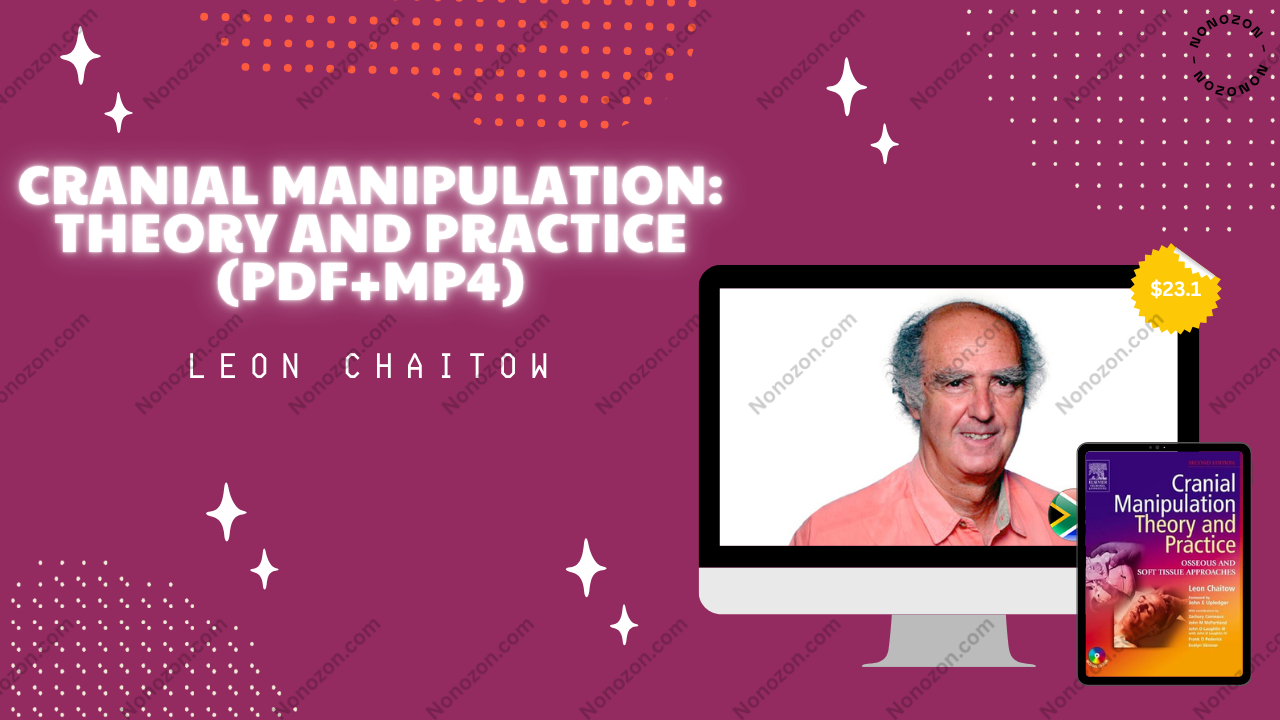
Cranial Manipulation: Theory and Practice (PDF+MP4)
by Leon Chaitow
Get Cranial Manipulation: Theory and Practice (PDF+MP4) by Leon Chaitow Digital Download!
You can check proof of content here
Download immediately Cranial Manipulation: Theory and Practice (PDF+MP4) by Leon Chaitow
Overview
Comprehensive Review: Cranial Manipulation: Theory and Practice by Leon Chaitow
Cranial Manipulation: Theory and Practice, authored by Leon Chaitow, offers a thorough and practical guide to the field of cranial therapy. Now in its second edition (2005), the book integrates both osseous and soft tissue approaches, elevating cranial manipulation from a niche technique to a vital tool in modern manual therapy. Designed for both experienced practitioners and students, the book provides a solid foundation in theory, while emphasizing hands-on learning to build clinical confidence.
Overview and Structure
This book blends foundational knowledge with applied instruction, covering everything from the origins of cranial work to advanced treatment protocols. Enriched with contributions from six seasoned practitioners, it offers a multi-perspective approach that broadens its relevance across different manual therapy disciplines. Chaitow structures the book to guide readers progressively—from theory to tactile application—emphasizing not just what to do, but why and how it works.
Combines theory, clinical insight, and practical instruction
Features exercises for palpation, assessment, and hands-on techniques
Emphasizes learning by doing to build both competence and confidence
Historical Roots and Core Principles
The book begins by outlining the historical development of cranial manipulation, tracing its evolution through osteopathy, chiropractic care, and other integrative health practices. This background helps frame cranial therapy as both a traditional and evolving discipline.
Key principles highlighted in the text include:
Holistic Thinking: Emphasizes how cranial systems interact with the rest of the body
Research-Based Methods: Supports techniques with available clinical studies and practitioner reports
Interdisciplinary Integration: Demonstrates how cranial work complements other health modalities
By grounding these principles in real-world examples, the book makes the material relevant and accessible, even to those new to cranial therapy.
Clinical Applications and Patient Benefits
The book’s strength lies in its clinical relevance. Chaitow discusses how cranial techniques can be applied to a wide range of patient concerns, from musculoskeletal dysfunction to neurological complaints.
Common treatment areas include:
Headaches and migraines
Tinnitus and jaw pain (TMJ disorders)
Postural imbalances and stress-related symptoms
Reported patient benefits include:
Pain reduction and improved range of motion
Deep relaxation and decreased nervous system tension
Improved mental clarity and emotional well-being
This patient-centered orientation reflects the growing appeal of cranial manipulation in integrative healthcare settings.
Integration with Other Disciplines
A standout aspect of Chaitow’s work is its emphasis on collaboration. He explores how cranial manipulation fits within broader healthcare frameworks, encouraging synergy between manual therapists, dentists, osteopaths, and chiropractors.
Comparison of Techniques:
| Technique Type | Focus Area | Unique Features |
|---|---|---|
| Cranial Manipulation | Head and neck | Gentle, precise methods for cranial balance |
| Chiropractic | Spine and joints | High-velocity adjustments to restore alignment |
| Osteopathy | Whole-body systems | Focuses on structural balance for systemic health |
| Dental Techniques | Jaw and bite function | Addresses cranial impacts of occlusion and jaw motion |
This overview helps readers understand how cranial therapy complements other approaches while offering distinct value of its own.
Hands-On Skill Building
To translate theory into practice, Chaitow provides a range of exercises designed to sharpen tactile awareness and assessment accuracy. These exercises are suitable for both students and experienced clinicians looking to refine their technique.
Highlighted exercises include:
Palpation Skills: Developing sensitivity to subtle cranial changes
Assessment Protocols: Identifying tension, asymmetry, or dysfunction
Treatment Practice: Simulated scenarios to build confidence and flow
These structured activities promote practical understanding and long-term skill development in real clinical settings.
Visual Learning with MP4 Content
To support diverse learning preferences, the book includes MP4 videos that visually demonstrate key cranial techniques. These visual tools reinforce learning and ensure that complex hand positions and techniques are clearly understood.
Benefits of the video component:
Visual clarity for complex movements
Better retention through repetition
Confidence-building by watching professionals in action
This multimedia approach makes the book even more effective as a hands-on training tool.
Final Thoughts
Cranial Manipulation: Theory and Practice is more than just a textbook—it’s a hands-on manual for mastering cranial therapy. With its blend of academic depth, clinical relevance, and skill-building exercises, it is a valuable resource for manual therapists across disciplines. The integration of theory, practical application, and visual support ensures that readers can effectively implement what they learn in their own practice.
Whether you're beginning your journey in manual therapy or seeking to expand your current skillset, Leon Chaitow’s book offers the knowledge, context, and tools needed to apply cranial manipulation confidently and competently in today’s interdisciplinary healthcare environment.