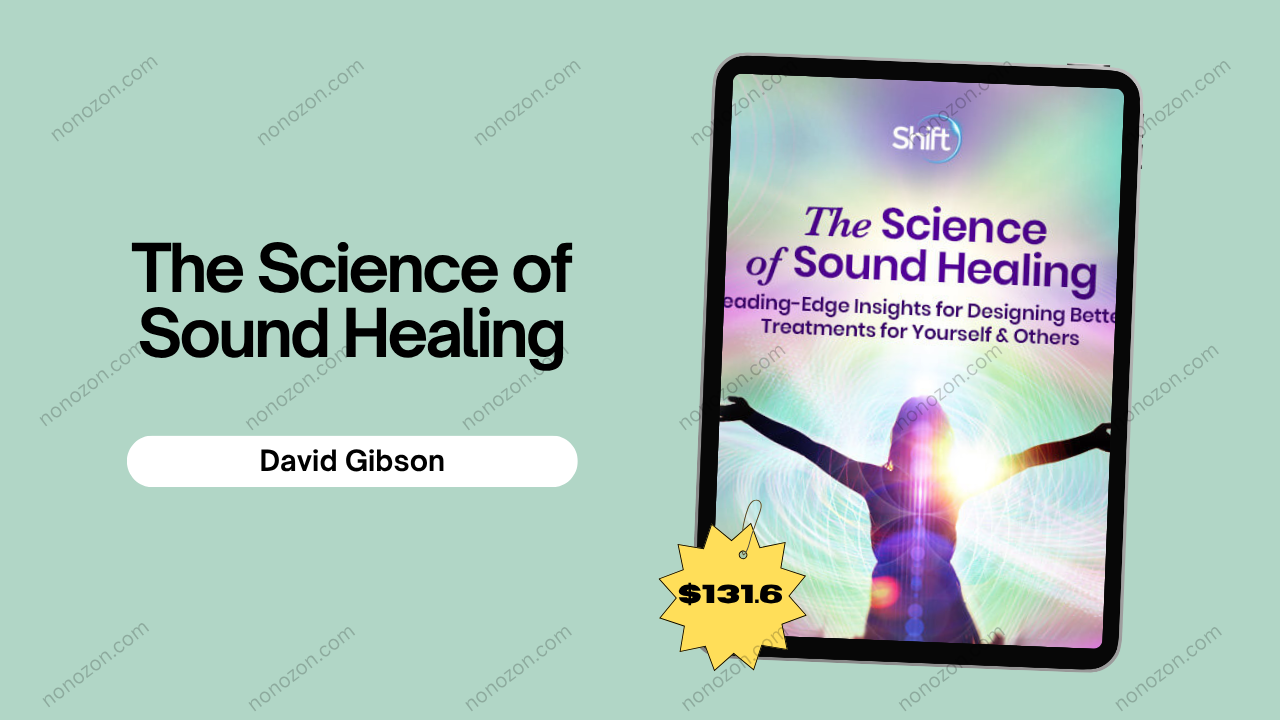
The Science of Sound Healing
by David Gibson
The Science of Sound Healing: An Exploration of David Gibson's Insights
Check proof of content here:
In recent years, sound healing has emerged as a compelling alternative for those seeking holistic paths to wellness. One of the cornerstone works in this space is The Science of Sound Healing by David Gibson. The book offers an in-depth look at how sound—both ancient and modern—can be a powerful tool for transformation and well-being. Gibson masterfully fuses age-old practices with contemporary scientific findings, presenting a rich exploration of how sound influences the human body, mind, emotions, and spirit.
Rather than treating sound as a mystical concept, Gibson shows us its practical applications, grounded in real-world results. His work serves as a bridge between esoteric traditions and modern healthcare, illustrating that sound healing isn’t fringe—it’s becoming foundational in integrative wellness. The book is a call to explore how we can use sound to restore balance and harmony on all levels of our being.
Understanding Sound: The Fundamental Concepts
The Mechanics of Sound and Healing
To fully grasp sound healing’s potential, we must first understand the nature of sound itself. At its core, sound is a vibration—a mechanical wave that moves through air, water, or solid objects. These vibrations carry specific frequencies, which is where their healing potential lies. Gibson points out that resonance is the key principle: just like how a tuning fork can cause another to vibrate sympathetically, the human body responds to matching frequencies in powerful ways.
This principle—entrainment—suggests that external sound can "pull" internal rhythms into balance. It’s not magic; it’s physics. This foundation is crucial for crafting sound therapies that are not just relaxing, but biologically effective.
The Hierarchy of Vibration
Gibson introduces the concept of a “hierarchy of vibration,” a layered understanding of how different frequencies affect us on various levels. Lower frequencies have grounding, soothing effects, while higher frequencies tend to activate and awaken our energetic systems.
Here's a simplified breakdown to illustrate how different frequency bands relate to healing responses:
| Frequency Range | General Effect | Examples |
|---|---|---|
| 0–100 Hz | Calming, grounding | Deep drums, sub-bass tones |
| 100–400 Hz | Emotional regulation | Humming, chants, vocal drones |
| 400 Hz–4 kHz | Energizing and uplifting | Flutes, overtone singing, violins |
| 4 kHz–20 kHz | Expansive, subtle | Crystal singing bowls, wind chimes |
Understanding how different sounds operate along this spectrum allows practitioners to apply specific frequencies to targeted mental or physical conditions.
Instant Download The Science of Sound Healing by David Gibson
The Impact of Sound on Health and Well-Being
Gibson asserts that we are fundamentally vibrational beings. Just as we are composed of cells and molecules, we are also made of frequencies that interact with external vibrations. This perspective opens the door for therapeutic sound to influence health at a cellular and energetic level.
Scientific research increasingly supports this. Studies have shown that sound frequencies can reduce inflammation, alleviate anxiety, and even accelerate tissue repair. For instance, clinical trials cited in journals like The Journal of Alternative and Complementary Medicine confirm that sound therapy contributes to significant pain reduction in chronic conditions. Likewise, findings from the International Journal of Neuroscience highlight how sound can help stabilize mood and reduce emotional distress.
Gibson builds on these findings with clarity and care, demonstrating how sound is a legitimate tool for health optimization, not just a spiritual novelty.
Practical Applications of Sound Healing
Instruments of Healing
A strong feature of Gibson’s book is its emphasis on how to select and use sound healing instruments based on their energetic properties. He groups instruments into categories like calming versus activating, and provides insights into their best-use cases.
Below is a snapshot of the most commonly used tools and their intended effects:
| Instrument | Calming or Activating | Primary Application |
|---|---|---|
| Tuning Forks | Activating | Chakra work, energy revitalization |
| Crystal Singing Bowls | Calming | Deep relaxation, anxiety reduction |
| Gongs | Activating | Energy clearing, emotional release |
| Frame Drums | Grounding | Rhythm entrainment, spiritual centering |
| Human Voice (Toning) | Dual-purpose | Personalized healing, energetic alignment |
This classification helps both newcomers and seasoned practitioners create sessions that are tailored to the individual’s physical or emotional needs.
Guided Practices and Meditative Engagement
What makes The Science of Sound Healing stand out is its inclusion of guided practices and step-by-step meditations. Gibson doesn’t just present theory—he encourages direct engagement. Readers are invited to try specific sound-based techniques that enhance awareness, reduce stress, or stimulate healing.
For instance, he walks the reader through a meditative sound bath using crystal bowls. The tones produced during this session are designed to entrain the brain into a deep alpha or theta state, inducing profound calm. These exercises serve to deepen understanding by turning passive reading into an active, sensory experience.
Bridging Esoteric Practices and Modern Healthcare
Sound Healing in Contemporary Practice
As the demand for integrative and non-invasive therapies grows, sound healing is finding its way into mainstream settings. Gibson highlights this shift by showcasing how sound is now employed in hospitals, hospices, wellness centers, and trauma recovery programs.
Where it was once seen as a fringe or New Age practice, sound therapy is now part of clinical protocols, particularly in stress reduction and emotional regulation. Studies show that patients undergoing surgery or chemotherapy benefit from reduced anxiety and quicker recovery when exposed to therapeutic sound.
The integration of sound into traditional healthcare frameworks is a major theme throughout Gibson’s book, showing how far this ancient art has come—and how much potential it still holds.
Personal Journeys of Transformation
One of the most impactful parts of the book is its personal accounts of transformation through sound. These real-life stories illustrate how deeply sound can influence someone’s healing journey—from managing chronic pain to overcoming long-standing emotional wounds.
A notable example includes a cancer survivor who used sound therapy during chemotherapy. By incorporating specific tones into her treatment routine, she experienced reduced side effects, improved sleep, and an overall better quality of life.
These testimonials ground the theoretical content in lived experience, making the book both informative and emotionally resonant.
Concluding Thoughts
David Gibson’s The Science of Sound Healing is more than just an educational guide—it’s a paradigm-shifting work that integrates the mystical and the measurable. By combining empirical research, practical tools, and intuitive exercises, the book becomes a valuable resource for anyone looking to harness the power of sound in their healing practice or personal life. As interest in energy medicine and holistic health continues to rise, Gibson’s insights serve as both a map and a manual. Through the universal language of sound, we are reminded of our innate capacity to heal, harmonize, and reconnect—with ourselves and the world around us.