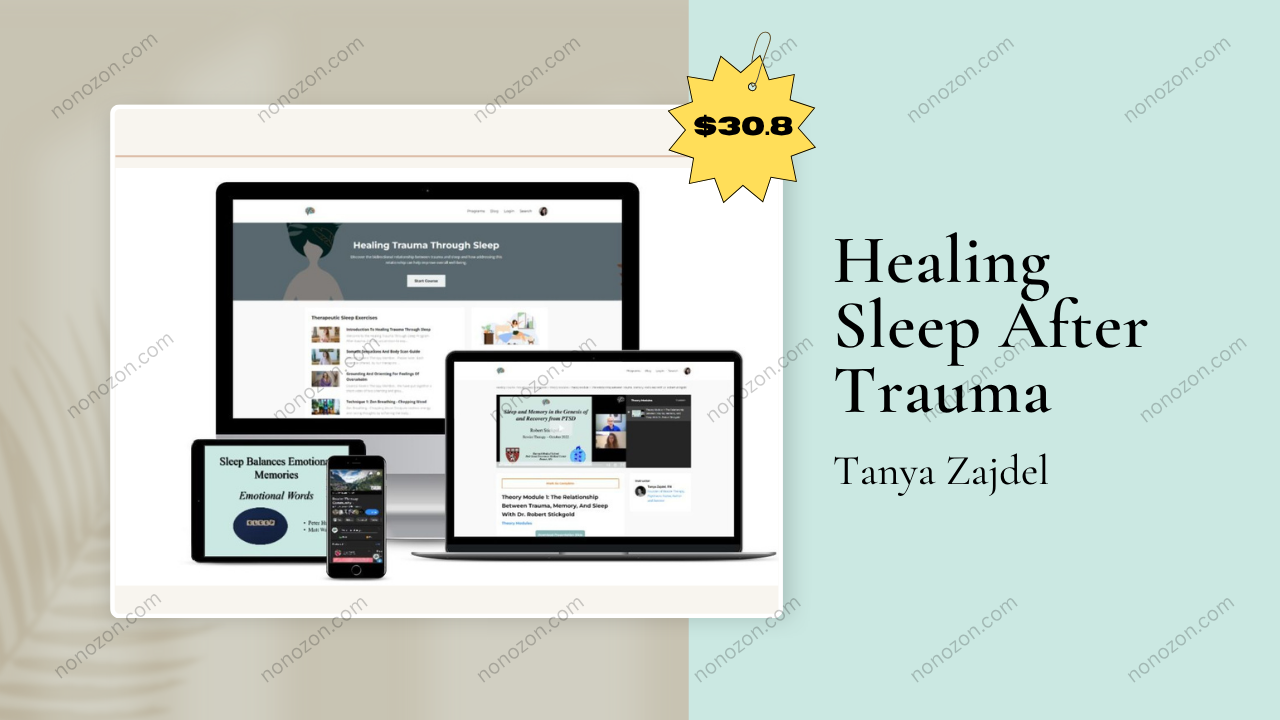
Healing Sleep After Trauma
by Tanya Zajdel
Healing Sleep After Trauma by Tanya Zajdel: Review
Check proof of content here:
The relationship between trauma and sleep extends far beyond clinical research—it touches the daily reality of those recovering from distressing events. Tanya Zajdel’s Healing Sleep After Trauma program provides a deeply supportive roadmap for individuals dealing with disrupted sleep due to emotional or psychological trauma. It takes a comprehensive, mind-body approach to help participants reestablish healthy sleep patterns while simultaneously fostering emotional healing and resilience.
Rather than simply offering quick fixes for insomnia, this program presents a holistic system that integrates nervous system regulation, somatic practices, and trauma education. It is designed not only to restore sleep but to guide survivors through a process of rebuilding safety, self-trust, and peace in their bodies and minds.
In this review, we will explore the program’s core elements, the science behind trauma-related sleep issues, participant feedback, and the tools Zajdel offers to support lasting transformation.
Understanding the Connection Between Trauma and Sleep
Sleep disturbances are a common yet often overlooked aftermath of traumatic experiences. Whether from isolated incidents or prolonged exposure to stress and adversity, trauma can derail the body’s ability to enter and maintain restful sleep.
For many, sleep becomes a triggering or fearful experience. Scientific studies consistently link trauma with conditions like insomnia, recurring nightmares, and frequent awakenings. These disturbances stem from a persistent state of hyperarousal—the nervous system remains locked in a survival mode, even when the danger has passed.
This chronic alertness disrupts circadian rhythms, making it difficult to relax, fall asleep, or stay asleep through the night.
Effects of Trauma on Sleep Quality
Trauma disrupts both the quantity and quality of sleep. Survivors often endure a cascade of symptoms, from restlessness and interrupted sleep to vivid, anxiety-inducing dreams.
Think of the sleep cycle like a fragile ecosystem—trauma acts as a violent storm that throws everything off balance. Even when external conditions improve, the internal disarray may persist.
Here’s a breakdown of trauma-related sleep issues:
| Sleep Disturbance | Description |
|---|---|
| Insomnia | Trouble initiating or maintaining sleep, reducing overall rest and recovery. |
| Nightmares | Disturbing dream content often linked to re-experiencing trauma. |
| Sleep Fragmentation | Constant nighttime awakenings that prevent the body from completing sleep cycles. |
| Hypersomnia | Oversleeping yet still waking unrefreshed, contributing to mental fatigue. |
Research shows that trauma experienced during childhood—especially Adverse Childhood Experiences (ACEs)—can lead to long-lasting sleep challenges that persist into adulthood. This perpetuating cycle makes programs like Zajdel’s essential in creating meaningful and long-term change.
The Role of the Nervous System in Sleep Disruption
A key element in understanding trauma-induced insomnia lies in the behavior of the nervous system. When trauma activates the sympathetic nervous system (the "fight-or-flight" response), the body becomes locked in a loop of hypervigilance.
Imagine winding up a mechanical toy and never letting it unwind. This overactivation makes it nearly impossible to relax, fall asleep, or stay asleep. PTSD, anxiety, and even physical tension often accompany this chronic arousal.
The program counters this with specific, evidence-based techniques:
Mindfulness & Breathwork: To promote parasympathetic activation and inner calm.
Cognitive Behavioral Therapy (CBT): For addressing unhelpful thought patterns related to sleep and trauma.
Somatic Techniques: Helping the body discharge stored tension and create a sense of internal safety.
These tools help shift the body away from survival mode and into a space where rest becomes possible again.
Instant Download Healing Sleep After Trauma by Tanya Zajdel
Importance of REM Sleep in Healing Trauma
REM sleep—when dreams occur and emotional processing unfolds—is essential for trauma recovery. It’s in this stage that the brain consolidates memories, processes emotions, and restores psychological balance.
Without enough REM sleep, individuals often feel emotionally fragile, stuck in old patterns, and more prone to re-experiencing trauma. It’s like trying to reorganize a cluttered room without ever having the time or mental clarity to do so.
Zajdel’s program includes strategies that support natural REM cycles, helping participants not only sleep longer but sleep better. This allows the body and brain to finally begin the work of true restoration.
Healing Techniques Offered in the Program
The foundation of the Healing Sleep After Trauma program lies in its integrative approach—merging somatic practices with therapeutic guidance and educational insight.
Somatic and Body-Based Exercises
Zajdel introduces participants to short, impactful exercises (typically around 10 minutes) that gently support the nervous system’s return to calm. These include:
Zen Breathing – Chopping Wood: A rhythmic breathing technique designed to anchor the body in the present.
Deep Sleep Yoga: Simple stretches to release muscular tension and activate relaxation.
Bedtime Neurosensory Repatterning: Exercises that soothe the senses and prepare the brain for sleep.
Somato Emotional Release: Movement-based practices to express and release emotional residue held in the body.
These tools invite the body back into a state of trust—where sleep can occur without fear or resistance.
Expert-Guided Therapeutic Practices
In conjunction with somatic techniques, Zajdel presents expert-guided therapeutic practices designed to facilitate recovery from trauma and restore sleep quality. These practices offer individuals structured methods to regulate their emotional states while also being manageable within their daily routines.
Therapeutic Practices Include:
Therapy Ball Release Techniques: For loosening chronic physical tightness associated with trauma.
Middle-of-the-Night Interventions: Practical methods to manage and soothe wakefulness when anxiety strikes.
These simple yet powerful interventions are designed to be used anytime symptoms arise, making healing accessible in real time.
Theory Modules on Trauma and Sleep
Zajdel doesn't just offer techniques—she educates. The program includes insightful modules that explain the science behind trauma and sleep, empowering participants with understanding and context.
Key Educational Modules:
Trauma, Memory & Sleep: Unpacking how trauma is stored in the body and expressed during sleep.
Healing Our Relationship With Sleep: Reframing sleep not as a battleground, but as a healing ally.
Sleep Architecture: A look into how trauma distorts natural sleep cycles—and how to restore them.
This psychoeducational element helps participants feel seen, validated, and equipped with the knowledge to support their journey.
Benefits of the Healing Sleep Program
The myriad benefits of Tanya Zajdel's Healing Sleep Program resonate deeply with its participants. This program serves not only as a means to cope with trauma but also as a holistic approach to enhance emotional resilience and alleviate the compounding effects of trauma on sleep.
Strengthening Emotional Resilience
One of the standout benefits is the program’s ability to rebuild emotional resilience. Through consistent use of body-centered practices, participants learn to better regulate their emotions and respond calmly to internal or external stressors.
Many report increased confidence, stability, and a deeper connection with their own bodies—a foundation that supports sustainable recovery.
Reducing Anxiety and Insomnia
By addressing the root causes of sleep disruption, the program helps alleviate the intense anxiety that often accompanies trauma. This, in turn, reduces insomnia, creating a self-reinforcing cycle: better sleep leads to reduced anxiety, and reduced anxiety leads to better sleep.
Participants often describe a newfound sense of ease—falling asleep faster, sleeping longer, and waking with more clarity and energy.
Improving Overall Quality of Life
Overall well-being is not merely a measure of physical health but also encompasses mental, emotional, and psychological health. Zajdel’s program positions itself holistically, focusing on improving emotional health while providing practical sleep solutions. Participants report increased feelings of safety, calmness, and a myriad of positive psychological benefits.
By participating in the program, individuals create a sustainable strategy for self-care, fostering not just better sleep but enhanced daily functioning and agility in managing stress. The culmination of these efforts manifests as an enriched quality of life, allowing trauma survivors to thrive in their environments.
Expert Contributions and Credentials
Understanding the depth and efficacy of a program often hinges on the expertise of its creator. Tanya Zajdel stands firmly in her credentials as a robust mentor in trauma recovery, backed by a wealth of experience in nursing and therapeutic practices.
Tanya Zajdel’s Expertise
Tanya Zajdel brings a rich blend of clinical knowledge and lived experience to the program. As a registered nurse and trauma-informed educator with a PhD in philosophy, she seamlessly combines neuroscience, psychology, and somatic therapy.
Her personal journey through trauma adds depth and compassion to her work, allowing her to create content that resonates on both a scientific and emotional level. She draws from modalities such as CBT, EMDR, and somatic experiencing to create a well-rounded and deeply empathic program.
Zajdel’s approach is both grounded and transformative—meeting participants where they are while gently guiding them forward.
Insights from Sleep Specialists
Insights from reputable sleep specialists augment Zajdel's work, further validating the program’s comprehensive structure. Professionals from organizations like the American Academy of Sleep Medicine underscore the crucial relationship between trauma and sleep quality.
Experts advocate for clinical assessments to focus not only on sleep history but also on individual trauma narratives. This crossover emphasizes that trauma resolutions are integral to managing long-term mental health. Through collaborative approaches among practitioners in various fields psychology, social work, and sleep medicine this multifaceted focus presents a powerful framework for improved recovery outcomes.
Collaborative Approaches in Trauma Healing
Community and collaboration lie at the core of effective trauma healing. Zajdel emphasizes this necessity, promoting partnerships among diverse health professionals who understand the multifaceted nature of trauma and its effects on psychological and physical health.
Support networks formed through peer-to-peer interactions foster a sense of community among participants, creating trust and opportunities for shared learning. As acknowledged by various experts, such collaborative frameworks enhance positive healing outcomes and provide survivors with the necessary resources to navigate their experiences effectively.
Participant Feedback and Outcomes
The value of any program ultimately reflects participant satisfaction and tangible outcomes. Feedback from individuals who have engaged with Zajdel’s program provides insight into its effectiveness and practical application in real-life situations.
Success Stories from Program Graduates
Numerous testimonials highlight the positive impact of the Healing Sleep After Trauma Program on the participants' lives. Many graduates report significant improvements in their sleep patterns, including reduced instances of waking during the night and fewer intrusive nightmares.
A number of graduates express gratitude for now being able to process their trauma more effectively, resulting in lower levels of anxiety and stress a true testament to the program's ethos of healing from the inside out. Each story of restored sleep embodies the powerful potential of Zajdel's methodology, showcasing the program as a beacon of hope for trauma survivors seeking solace in their lived experiences.
Common Challenges Faced by Participants
While many benefited greatly from the program, common challenges persist as participants navigate their healing journeys. Troubling feedback often reflects ongoing struggles with:
- Sleep disturbances: many found that while their sleep improved, complete restoration took longer than anticipated.
- Emotional regulation: coping with emotional triggers remained a challenge for some, suggesting a need for continuous support.
Despite these challenges, many participants express optimism, noting that gradual progress is still progress. The supportive framework of the program helps foster resilience among participants, encouraging them to view their healing processes as deeply personal and unique journeys.
Impact on Daily Life and Functioning
Ultimately, the most profound outcomes reported involve significant enhancements in daily life. Increased levels of productivity, better emotional regulation, and a renewed sense of purpose are common themes in participant feedback. Rejoining the world with more engagement and intention allows individuals to foster ties with loved ones while pursuing personal interests or professional growth.
Participants often remark that they feel more equipped to confront challenges head-on, positively influencing various aspects of their lives from personal relationships to work dynamics. The connection between improved sleep and overall well-being cannot be overstated, with many noting how quality rest enhances their vitality and zest for life.
Accessibility and Structure of the Program
Tanya Zajdel’s “Healing Sleep After Trauma” program is designed with accessibility in mind, exemplifying a modern approach to integrating trauma recovery and personal healing into everyday life.
Online Format and Self-Paced Learning
The program’s online format allows participants to engage with its content at their own pace. This flexibility is immensely beneficial for individuals who may have demanding schedules or scattered routines, permitting the freedom to absorb the material when it is most suitable for them.
The program includes a wealth of resources, including video lectures, exercises, and community forums all accessible at the click of a button. This self-directed model empowers participants to take charge of their recovery journey, increasing their sense of autonomy a crucial aspect of healing from trauma.
Cost and Value Proposition
The total cost of participating in the Healing Sleep After Trauma Program is approximately $240, which allows individuals to access lifetime resources and updates. This provides enduring value, as individuals can revisit materials whenever they need to refresh their insights or explore specific techniques.
By working through the therapeutic methods offered within the program, participants enhance the return on their investment, seeing improvements that extend into numerous facets of their lives. The structuring of the program around proven psychological principles reinforces its value proposition, making it a compelling option for those seeking to reconcile their trauma.
Support and Community Engagement
In addition to the self-paced curriculum, the program boasts an inclusive community environment. Participants can share insights and experiences with one another, creating a sense of belonging and mutual support among those on similar healing journeys.
This camaraderie serves as an ongoing reinforcement of the program’s teachings, allowing individuals to engage in communal practices that amplify their learning experiences. The rich exchange of ideas and support creates a powerful atmosphere conducive to healing, enabling participants to build lasting connections.
Comparing with Other Trauma Healing Approaches
When considering trauma healing methodologies, one quickly recognizes a spectrum of approaches available to survivors. Tanya Zajdel's program incorporates unique elements that distinguish it from traditional techniques while aligning well with many emerging trauma-informed care trends.
Overview of Alternative Therapies
Though traditional therapeutic approaches remain popular, alternative therapies such as yoga, meditation, and emotional freedom techniques (EFT) have gained traction for addressing trauma. These methods highlight a holistic emphasis on healing, often eschewing the traditional recounting of trauma in favor of integrative techniques that foster overall well-being.
Key differences between traditional trauma therapies and alternative approaches include:
- Cognitive vs. Holistic: Traditional therapies often focus on cognitive restructuring, while alternative methods embody comprehensive healing.
- Client Empowerment: Many alternative therapies emphasize individual empowerment and resilience rather than solely addressing symptoms.
Research indicates that integrating these varying modalities enhances patient engagement, often leading to improved treatment outcomes.
Advantages of a Somatic Approach
The somatic approach to healing, which Zajdel's program encapsulates, directly addresses the physical manifestations of trauma. These methodologies emphasize the nuanced mind-body connection that allows individuals to experience healing without being overwhelmed by past experiences.
The primary benefits of this approach include:
- Safety in Process: Techniques like titration and pendulation allow clients to manage their responses, preventing emotional flooding.
- Bodily Awareness: Fostering bodily awareness promotes emotional regulation and self-soothing practices.
Through somatic practices, participants have found healing pathways leading to restoration and empowerment, which are central to Zajdel's teachings.
Integrating Multiple Healing Modalities
Tanya Zajdel’s program also embodies the concept of integrating multiple healing modalities, creating a balanced framework that addresses trauma from various angles. With evidence suggesting the efficacy of combining therapies, Zajdel’s integration of somatic practices alongside expert-led theoretical instruction showcases thoughtful program design.
Next Steps and Enrollment Information
For those interested in joining the Healing Sleep After Trauma Program, there are clear steps to navigate the enrollment process.
How to Join the Healing Sleep Program
- Visit the Official Website: Navigate to Tanya Zajdel's website, Rewire Trauma Therapy, for information on the program.
- Enrollment Options: Review enrollment procedures, including any introductory workshops or free resources highlighting the offered techniques and methodologies.
- Direct Contact: Utilize the site's contact feature for personalized queries, or email [email protected] for further assistance related to program specifics.
Resources for Ongoing Support
Following participation, individuals are encouraged to seek continuous support. Various avenues help maintain progress:
- Personal Therapy: Engage with a licensed therapist familiar with trauma-informed practices.
- Support Groups: Connect with local or online groups to foster community engagement and share strategies.
- Further Learning: Explore additional courses or workshops focusing on trauma recovery to expand upon what was learned in the program.
FAQs About Program Enrollment and Participation
Inquiries about the Healing Sleep After Trauma Program often arise concerning enrollment procedures and expected processes. Here’s a brief FAQ:
- What is the program's structure?
- The program is self-paced, available online, comprised of both theory modules and practical exercises.
- How do I access the materials?
- Upon enrollment, participants receive lifetime access to recorded content and continuously updated resources.
- Are there any prerequisites?
- There are no prerequisites for the program; it is open to all individuals seeking healing from trauma.
- How do I handle challenges during the program?
- Engage with community resources, attend group discussions, and reach out to Zajdel's team for additional support.
In summary, Tanya Zajdel’s Healing Sleep After Trauma Program offers a systematic and compassionate approach to overcoming the challenges posed by trauma and sleep disturbances. Through expert insights, practical techniques, and community support, participants are empowered to reclaim their sleep and, ultimately, their lives. This program stands out as a beacon of hope for those navigating the tangled aftermath of trauma.
Related products


Perception as a Key to Embodying and Repatterning the Nervous System Part 1 and 2 (2023 Spring Series and The Role of the Brain)
by Bonnie Bainbridge Cohen
$495.00
$123.90